Get all your news in one place.
100's of premium titles.
One app.
Start reading
Medical Daily
Medical Daily
Cole Mercer

Experimental Pancreatic Cancer Vaccine Triggered Targeted Immune Responses in 18 of 20 High-Risk Patients

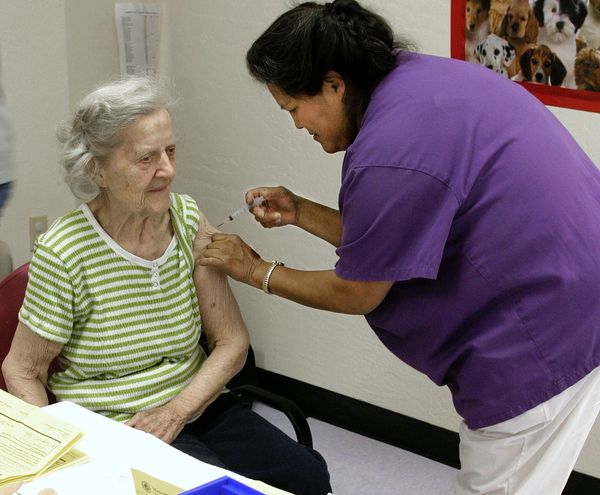
An experimental vaccine aimed at preventing pancreatic cancer before it forms produced a targeted immune response in 18 of 20 people at high inherited risk, according to first-in-human testing of a mutant KRAS vaccine published in Cancer Discovery.

The finding is a biological signal, not evidence that cancer was prevented. The trial measured whether the vaccine, called mKRAS-VAX, could train the immune system to recognize mutated KRAS protein, and it did. Whether that translates into fewer pancreatic cancers years from now is an entirely separate question this study was never designed to answer.

For families carrying an inherited predisposition to pancreatic ductal adenocarcinoma, a disease with few effective options once established, that distinction is the difference between measured hope and premature relief.


Immune Signal Is Not the Same as Prevention

The phase 1 study enrolled 20 people with a hereditary predisposition to pancreatic cancer who also had a pancreatic abnormality identified on imaging, typically a small cyst. Participants received four doses of the peptide vaccine over 13 weeks between April 2022 and February 2026.

Vaccination elicited a significant mutant KRAS-specific T-cell response in 18 of 20 participants, or 90 percent. Investigators classified anyone with more than a 2.5-fold increase as a responder, and reported a median 18.2-fold increase in T-cell responses pooled across all six targeted antigens, with a wide range across individuals. Longitudinal sequencing showed vaccine-induced clones persisted in blood for up to two years, and the vaccine generated both CD4-positive and CD8-positive responses along with memory T cells.

Over a median follow-up of roughly 16.5 months, no participant developed pancreatic cancer or a high-risk lesion warranting surgery. That reads as encouraging until you consider the arithmetic. Twenty people at elevated risk, followed for under a year and a half, would not be expected to produce many cancers regardless of treatment. There was no control group.

The senior researchers were careful about this. Elizabeth Jaffee, deputy director of the Johns Hopkins Kimmel Cancer Center and co-senior author, said in the institution's announcement that "This is just the beginning" and that the findings suggest the immune system is getting activated.


Reasoning Behind Targeting KRAS

Pancreatic ductal adenocarcinoma typically develops over a decade or more from precursor lesions, which is what makes interception conceptually possible. Most cancers are caught after that window has closed.

Mutant KRAS is present in more than 90 percent of pancreatic cancers and in most of their precancerous lesions. That makes it an unusually stable target: rather than trying to anticipate a tumor's individual mutations, a vaccine can aim at the driver that is almost always there.

The vaccine tested here is an off-the-shelf synthetic long peptide vaccine targeting six common KRAS mutations at once, meaning it is not manufactured individually for each patient. The same vaccine was first tested in 2020 in patients who had already undergone surgery and were at high risk of recurrence.

Cancer interception, the term used for this approach, sits between prevention and treatment. It targets people who have a measurable abnormality and elevated risk but no cancer, a group that currently has surveillance imaging and little else.


Who the 20 Participants Were, and Who Funded the Work

The study population was narrow by design, and that narrowness limits how far the results extend. Participants were adults with inherited cancer susceptibility genes or a strong family history, plus a pancreatic lesion visible on imaging. Nobody in this trial resembled a person with average risk and no family history. These findings say nothing about whether such a vaccine would help the general population, and no one should read them as a case for broad screening or vaccination.

Safety was the trial's primary business, and the results were reassuring at this scale. All treatment-related adverse events were grade 1 or 2, most commonly injection-site reactions and self-limiting fatigue. No grade 3 or higher events were reported.

Readers deserve one more piece of context. Two senior authors are founders of and hold equity in Adventris Pharmaceuticals, which has licensed the vaccine technology from Johns Hopkins University, according to the authors' disclosed financial interests. That does not invalidate the findings, but it is relevant when weighing how the results are framed.

On the cysts themselves, co-author Michael Goggins said investigators observed stability or regression in association with the induction and durability of KRAS-specific T-cell responses, but cautioned that larger studies are needed to show the effect was actually caused by the vaccine. Cyst behavior in a small uncontrolled group is not evidence of an anticancer effect, since these lesions can change on their own.


Realistic Timeline and What Families with Risk Can Do

A phase 1 trial establishes safety and biological activity. Corresponding author Neeha Zaidi described the work as "the first proof of concept" for vaccine-based interception of pancreatic cancer in humans, and a follow-up trial is currently enrolling to test whether vaccine-induced T cells actually reach precancerous tissue rather than merely circulating in blood.

Demonstrating that a vaccine prevents cancer requires far larger studies followed over many years, because the outcome being measured is an event that mostly does not happen. That work has not been completed, and any approval remains distant.

People with a strong family history of pancreatic cancer or a known germline mutation should not wait for a vaccine. The established path is genetic counseling and, for those who qualify, enrollment in a surveillance program using MRI or endoscopic ultrasound at a center experienced in high-risk pancreatic screening. Major academic cancer centers run these programs, and a referral usually starts with a primary care clinician or oncologist.

Surveillance carries its own trade-offs, including incidental findings and anxiety, and is generally recommended only for people meeting specific risk criteria rather than anyone with a single affected relative.

Anyone interested in trials can search ClinicalTrials.gov and discuss eligibility with a treating physician. No one should pursue unapproved products marketed as cancer vaccines outside a registered trial.

Symptoms that warrant prompt evaluation regardless of risk status include new jaundice, persistent upper abdominal or mid-back pain, unexplained weight loss, and new-onset diabetes in an adult without other explanation.

The bottom line: the confirmed finding is a durable KRAS-specific immune response in 18 of 20 high-risk participants with an acceptable safety profile, the people most affected are families with inherited pancreatic cancer risk, and the central uncertainty is whether an immune response prevents anything.


Frequently Asked Questions

What did the trial show? A peptide vaccine called mKRAS-VAX, targeting six common KRAS mutations, produced a significant mutant KRAS-specific T-cell response in 18 of 20 participants at high inherited risk of pancreatic cancer.

Does this mean the vaccine prevents pancreatic cancer? No. The study measured immune response and safety. It had no control group and followed participants for a median of about 16.5 months, which is far too short and too small to show prevention.

Who was in the study? Twenty adults with a hereditary predisposition to pancreatic cancer who also had a pancreatic abnormality identified on imaging, typically a small cyst.

Why target KRAS? Mutant KRAS is present in more than 90 percent of pancreatic cancers and in most precancerous lesions, making it a consistent target across patients.

Was it safe? All treatment-related side effects were grade 1 or 2, most commonly injection-site reactions and self-limiting fatigue. No grade 3 or higher events were reported.

Do the researchers have a financial stake? Yes. Two senior authors founded and hold equity in the company that licensed the vaccine technology from Johns Hopkins, a disclosure that accompanies the published paper.

What should families with pancreatic cancer history do now? Ask a clinician about genetic counseling and whether they qualify for a high-risk surveillance program at an experienced center.

Sign up to read this article
Read news from 100's of titles, curated specifically for you.
Already a member? Sign in here
Related Stories
Top stories on inkl right now
One subscription that gives you access to news from hundreds of sites
Already a member? Sign in here
Our Picks
Fourteen days free
Download the app
One app. One membership.
100+ trusted global sources.