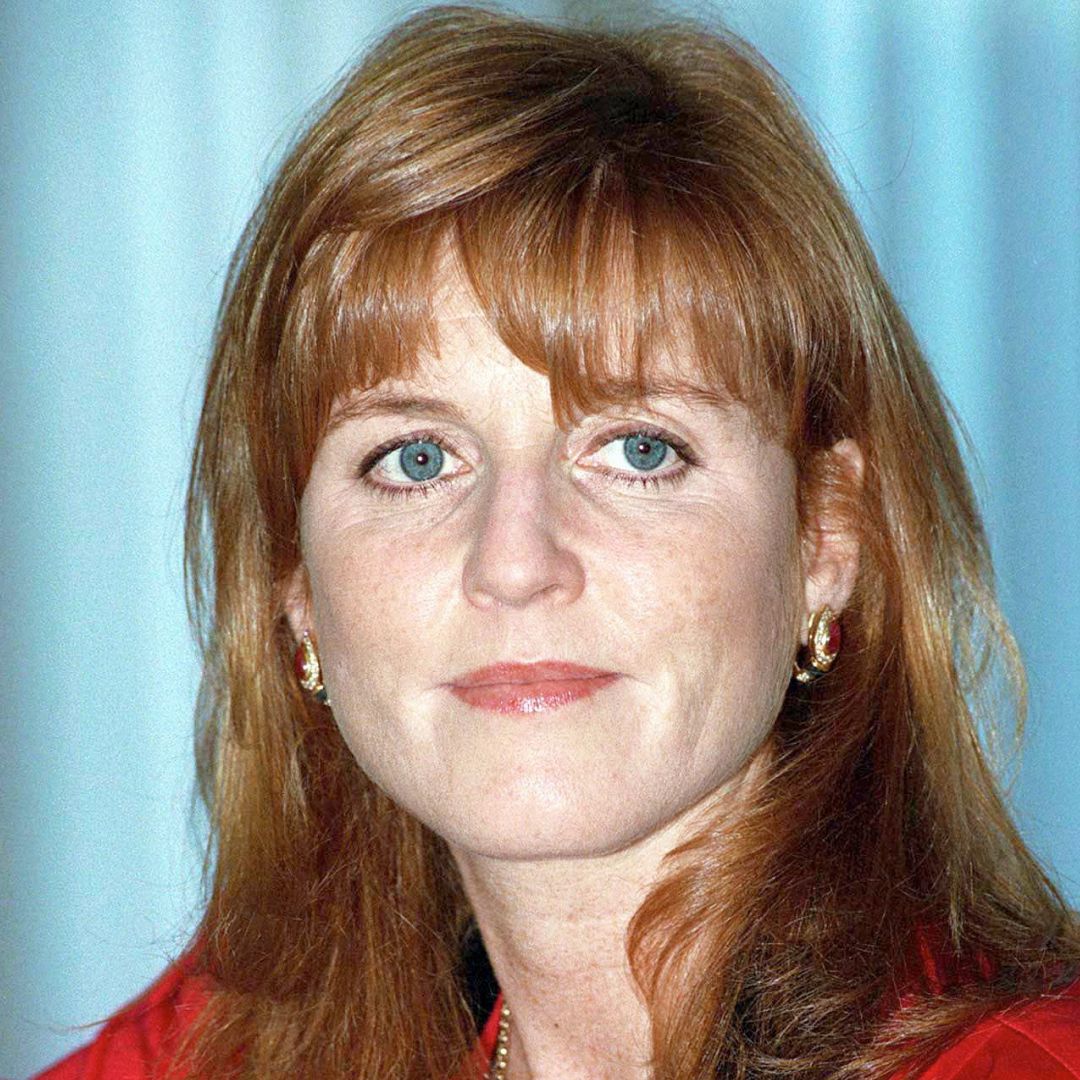
While social media is proclaiming 2026 to be the new 2016, for Sarah Ferguson, it's looking a lot more like 1996. The late '90s marked Sarah and Andrew Mountbatten-Windsor's divorce, a turning point when the former Duchess of York lost her HRH status and suffered a significant fallout from the charities and brands she worked with at the time. Thirty years later, the situation seems strikingly familiar in the wake of Sarah and Andrew's links to Jeffrey Epstein.
When Andrew Mountbatten-Windsor was stripped of his titles in October 2025, Sarah also lost her own Duchess of York title. Although the former couple has been divorced since 1996, Ferguson could still use her duchess title, and leaned on it both "socially and financially," per Andrew Lownie, author of Entitled: The Rise and Fall of the House of York.

Lownie tells Marie Claire that for Ferguson, "her title was everything to her," but now "she no longer has that calling card." Faced with "her loss of reputation and a bleak financial future," Sarah must now reinvent herself once again. Reports indicate that the former Duchess of York is looking for a home near Windsor as the eviction date for Sarah and Andrew at their longtime home, Royal Lodge, looms.

It was March 17, 1996 when Andrew was given orders to divorce Ferguson. The couple had been separated since 1992, but after four years of scandalous headlines about Fergie, Queen Elizabeth "finally lost patience with the duchess," a palace source told Lownie in his book, adding, "It all had to end."
Similarly to 2025, the then-duchess had to give up her HRH styling with the divorce. No longer being called Her Royal Highness was said to be "a particular blow" for Sarah, per Lownie. He quoted Ferguson's friend Madame Vasso as saying that Fergie "always stressed how important being an HRH was to her, not least because she felt it gave her the respect she believed was her due as a member of the Royal Family."
Ferguson's romantic escapades and questionable business dealings had already damaged her reputation, but her divorce from Andrew sealed the deal in '96. A charity insider said at the time, per Entitled, that businesses didn't "want to be associated with someone with such a bad press" and there was "no longer any feel-good factor in being connected to the Duchess of York."
Although Ferguson experienced a comeback both in the Royal Family and in public life in recent years, the charity insider's sentiment rings true once again in 2026.

Ferguson was once again invited to Easter and Christmas with the royals after Queen Elizabeth's death, and she saw success penning historical novels and taking part in talk shows. The former Duchess of York was even credited as having "saved Christmas" in 2024 by convincing Andrew to stay home from Sandringham in the wake of his Chinese spy scandal.
But in September 2025, a 2011 email she sent to convicted sex offender Jeffrey Epstein revealed that she called him a "supreme friend" and apologized for speaking out against him in the press.
While Ferguson has weathered many a media storm in the past four decades and always managed to reinvent herself, Lownie tells Marie Claire that this time, Sarah "has run out of lives and is totally discredited."
"No sensible business or charity wants to have any association with her," he says. "I've described her in the past as the 'Houdini of the Royal Family' but even in Australia and U.S. she has no future. She has been caught out in too many lies."

In the '90s, Sarah turned to writing nonfiction as a way to stay afloat, securing a deal with Simon & Schuster for her first memoir, My Story, which was published in late '96. And after Ferguson was "caught selling access to Andrew" in 2010, Lownie notes that the ex-duchess "recovered from that, as in 1996, by reinventing herself."
While the author says that Fergie "went on chat shows playing the part of victim, claiming she had learnt her lesson" and "blaming her childhood and anyone she could think of," it's unlikely to work this time.
He adds, "There are rumors of discussions with crisis management companies and presenting herself as an example of how even from the lowest position, one can rebuild one's life, but I think few will buy it as anything more than a cynical attempt at survival."