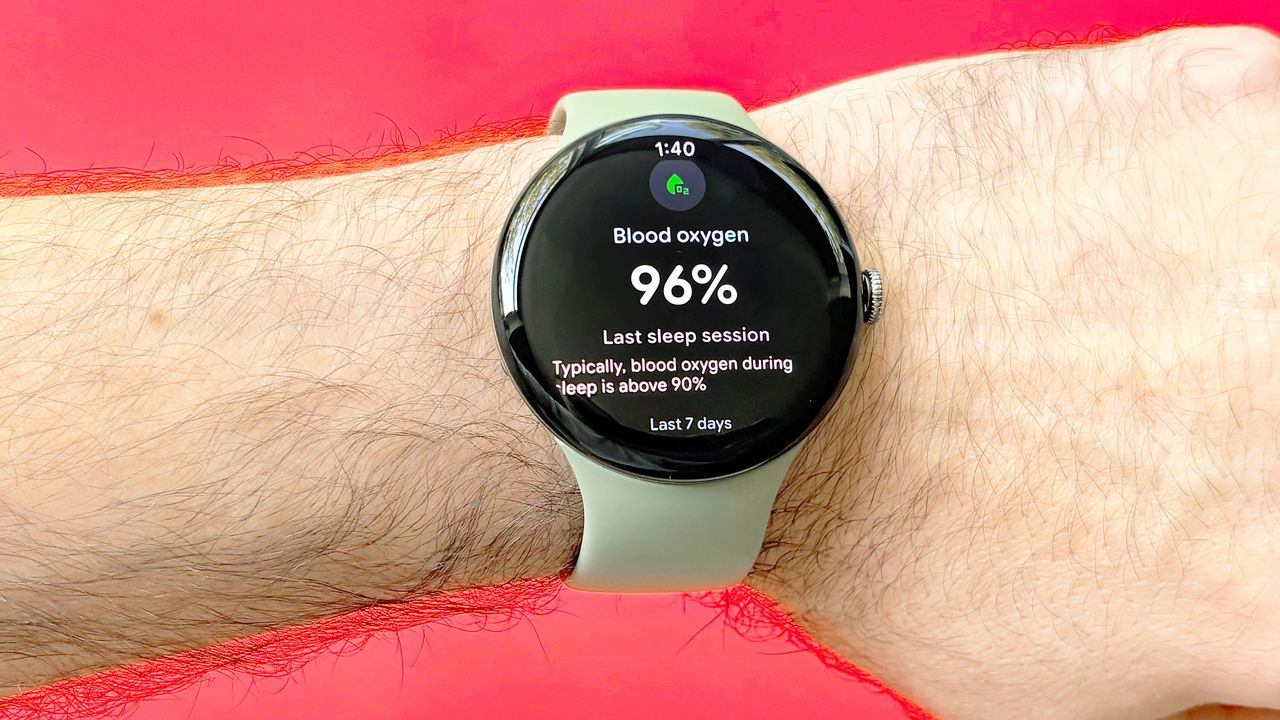
Google's on-wrist safety features go above and beyond your standard fall and crash detection. In fact, I'd argue that the new Pixel Watch 5 offers better safety tech than other brands on the market, especially with the introduction of Breathing Emergency Detection and Blood Pressure Trends, not to mention 2024's Loss of Pulse Detection (which no brand has yet replicated).
But what's Google's end-game with this ever-growing list of just-in-case features? I wanted to find out. So, I sat down with Pramod Rudrapatna, a Google product manager, and Jake Sunshine, a Google researcher, both of whom worked closely on the latest Breathing Emergency Detection tool.

Our conversation touched on how Google tests such a potentially lifesaving piece of tech to ensure true positives are logged, and false positives aren't. We also discussed Google's changing view on the benefits of wearable tech, and whether holding your breath might trigger Breathing Emergency Detection (it won't, but don't try).
I additionally learned which other Google wearables will get these shiny new safety tools via future firmware (and it's not just older Pixel Watches).
'Like an airbag on your wrist'
"Conceptually, [the Pixel Watch 5 ] is like an airbag on your wrist."
Google may not have invented fall/crash detection; that was Apple, but in 2026, Google has expanded the safety toolkit far beyond the competition, with features like Loss of Pulse Detection and now Breathing Emergency Detection (which is still waiting for FDA approval in the U.S. as of publication).
"The Pixel portfolio has been many 'firsts of its kind.' Loss of pulse was a first in the wearable category, and breathing emergency joins that family," says Rudrapatna. "We're looking at population-level problems," he adds.
Smartwatch makers have been incredibly focused on expanding fitness and training tools over the past few generations of product launches. Google is still focused on helping you work out, but that's perhaps no longer the brand's main focus.
"We're really trying to shift the Overton window about what these devices can do —moving beyond just fitness and wellness to really build them with potentially life-saving capabilities," says Sunshine.
Put another way, Sunshine says that the Pixel Watch is "conceptually, like an airbag on your wrist. A lot of testing has to go into it to make sure that it's performant for both true-positive and false-positive scenarios."
Like your vehicle's airbag, the aim is to never actually need Loss of Pulse or Breathing Emergency Detection. But the fact that it's there provides peace of mind.
Tackling an 'invisible' health crisis
"Breathing emergency detection solves a population-level problem. There are hundreds of thousands of people impacted by these breathing emergencies."
Breathing emergencies are, unfortunately, pretty common, and similar to loss of pulse emergencies, response time is everything. Like fall and crash detection, Loss of Pulse and Breathing Emergency Detection automatically send for help and/or contact a loved one when triggered.
That's important because a lot of the time, these health crises are "invisible," meaning they occur without warning and often when no one else is around to help. This is where Google comes in.
"Breathing emergency detection solves a population-level problem. There are hundreds of thousands of people impacted by these breathing emergencies, which can be caused by various reasons, including accidental drug overdose, severe pneumonia, and choking," says Rudrapatna.
Balancing true-positives from false ones
"We're looking for a signature that really shouldn't be present in otherwise healthy individuals."
But how does Google ensure the feature actually works when a breathing emergency occurs? Likewise, what has Google implemented to minimize false positives?
"We're looking for a signature that really shouldn't be present in otherwise healthy individuals: sudden drops in blood oxygen levels where it was normal in the recent past, combined with an inability to respond as well as if they are not moving," says Sunshine.
Okay, but how does Google actually test such a feature? Are test subjects holding their breath in a lab?
"These events are, by definition, rare and quite dangerous, so we have to work with specialized labs where people can be made safely hypoxic — basically having their oxygen levels drop rapidly but in a controlled environment," confirms Sunshine.
On the flip side, "We don't want to annoy users [and] we don't want to overburden our emergency medical services, which are precious public assets. We bring together algorithm innovation and user-centered design to minimize false positives," adds Rudrapatna.
One of these design implementations is a thirty-second countdown timer that begins if/when a breathing emergency or loss of pulse is detected. Users simply need to cancel the alert before the countdown finishes; otherwise, the Pixel Watch will automatically contact emergency services on your behalf.
What Google's Health Guardian tools are, and are not
"It's meant to tackle issues that are invisible in nature — things people don't know are happening."
There are, of course, limitations to Google's suite of on-wrist "Health Guardian" tools. For example, there's no guarantee that the Pixel Watch 5 will pick up each and every instance of a cardiac or breathing emergency.
Rather, Google's goal is to make a meaningful dent in the number of these emergencies that go unnoticed or aren't responded to.
Similarly, other new features like Blood Pressure and Insulin Resistance Trends aren't a replacement for a proper blood pressure cuff or a blood glucose test. Instead, they are meant to clue users to important holistic trends that they may not otherwise be aware of.
"What it's not is that it's not meant to screen, diagnose, or be used for conditions like hypertension or diabetes, or to change your medication pattern. It's meant to tackle issues that are invisible in nature — things people don't know are happening," says Rudrapatna.
'Our goal is to bring it to as many devices as possible'
"Our goal is to bring it to as many devices as possible."
While Google's lifesaving tech, including Loss of Pulse and Breathing Emergency Detection, may not be as ubiquitous as car airbags in 2026, its purpose is the same.
"If you invent the airbag, you don't want your loved one to ever have to use it. But still, we know that given a large enough population, there are going to be people who do need these systems," says Sunshine.
So, outside of the Pixel Watch 5, which other Google wearables are slated to support groundbreaking new safety tools?
"Our goal is to bring it to as many devices as possible," says Rudrapatna, "but our focus now is to bring these capabilities to our premium line of Pixel watches... we're also bringing that to the Pixel Watch 4."
No word on whether the Fitbit Air will support Breathing Emergency Detection, but Google has confirmed that Blood Pressure and Insulin Resistance Trends will both be supported by the $99 screen-free tracker.
Ultimately, brands like Apple, Garmin, and Samsung have their work cut out for them if they want to keep up with Google when it comes to on-wrist safety. And I suspect Google will remain at the head of the pack for the next several launch cycles.
More from Tom's Guide
- Exclusive: Garmin Cirqa PM says ‘it just felt like we had all of the pieces in place’ to launch a screen-free fitness tracker
- An ‘iPhone moment’ for your eyes — why Xpanceo is betting big on smart contact lenses as the future of AR
- Exclusive: Google design director says Fitbit Air reception proves they 'made the right decision' going screen-free