The latest scandal involving recruitment examinations for local government positions is yet another reminder that corruption remains deeply entrenched in Thai society. Worse still, the methods used by those behind such schemes have become increasingly sophisticated.
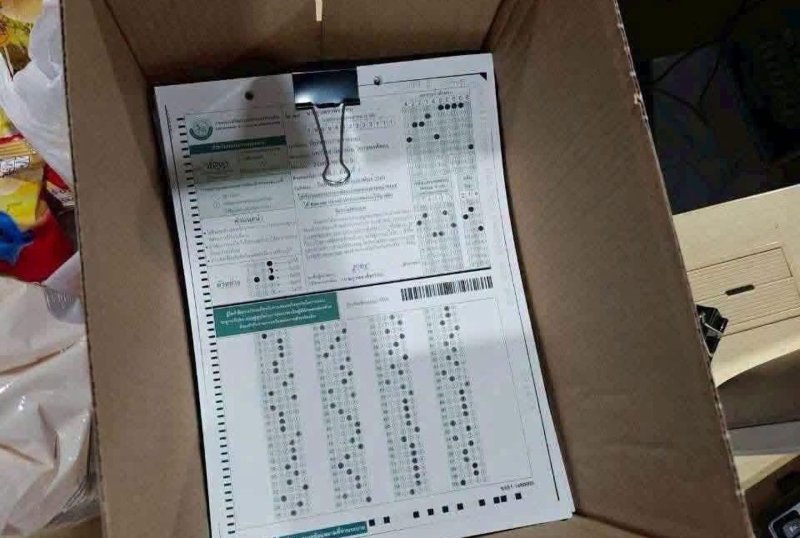
During recent raids, authorities seized answer sheets, computers and electronic devices allegedly used to manipulate examination scores in favour of candidates who had paid bribes. Reports suggest the network demanded between 350,000 baht for general positions and as much as 800,000 baht for highly sought-after posts.
The case recalls a string of major examination fraud scandals over the past two decades involving the recruitment of teachers, district officials, tambon officers and police. Some remain before the courts, while others have taken years to conclude.
The latest case at the Department of Local Administration (DLA) should not be viewed simply as a recruitment scam. It represents the first step in a much deeper cycle of corruption.
The salaries offered by local government positions are only a fraction of the bribes allegedly paid to secure them. Candidates who spend hundreds of thousands of baht to obtain a government job inevitably face pressure to recover that investment. The risk is that corruption simply continues throughout their careers, whether through bribery, kickbacks or abuse of office.
A fraudulent recruitment system ultimately produces a bureaucracy staffed by people who entered public service through dishonest means. In that sense, the DLA scandal is not an isolated incident but part of a long-running cycle of corruption.
Major examination scandals have surfaced almost every decade, although the methods have evolved. Earlier schemes relied on leaked examination papers, impersonators or altered answer sheets. More recently, fraudsters have exploited technology, using hidden earpieces, electronic receivers and computerised score manipulation to help candidates pass.
One of the largest scandals involved the selection of district officers for a training programme in 2009. The National Anti-Corruption Commission found that 122 officials, ranging from the director-general of the Department of Provincial Administration to examination officers and candidates, had participated in the scheme.
Court proceedings lasted more than a decade before the Criminal Court sentenced the former department chief to three years in prison, while the department secretary and 103 candidates received suspended two-year jail terms. Numerous officials were dismissed, although many later won appeals in the Administrative Court.
Another major scandal involved teacher recruitment examinations in 2003. Investigators found that candidates paid between 300,000 and 400,000 baht for leaked examination questions and answers distributed through a network involving tutorial schools. Electronic devices were also used to facilitate cheating.
Officials from the Office of the Basic Education Commission, regional education offices, examination organisers and tutorial schools were implicated. Hundreds of examination results were annulled, teachers were dismissed, and several people were imprisoned.
Soon afterwards, another recruitment scam emerged involving 31 tambon administration organisations in Maha Sarakham. Candidates allegedly paid brokers between 500,000 and 600,000 baht to have their scores manipulated. More than a decade later, parts of the case are still before the courts.
One of the most damaging scandals involved police recruitment examinations in 2023, further eroding public confidence in law enforcement.
Provincial Police Region 9 uncovered irregularities in examinations for non-commissioned officers, leading to more than 100 examination results being invalidated. Investigators later expanded the probe to commissioned officer examinations, identifying 73 officers allegedly involved.
Seventeen suspects, including brokers and coordinators, were arrested. The Royal Thai Police annulled examination results and launched both criminal and disciplinary proceedings. The case has yet to be concluded.
The public is now watching closely as investigations into the DLA scandal continue, with the National Anti-Corruption Commission also examining the case.
The scale of the operation suggests careful planning and coordination. Authorities must determine not only who carried out the fraud but also whether it has occurred before and whether senior officials were involved. The examination organiser, Srinakharinwirot University, should fully cooperate with investigators and clarify any issues relating to its role in administering the examination.
The government under Prime Minister and Interior Minister Anutin Charnvirakul must ensure the investigation reaches everyone responsible, regardless of rank. Public confidence will only be restored if those truly responsible are held accountable and no scapegoats are created.
Chairith Yonpiam is assistant news editor, Bangkok Post.