Get all your news in one place.
100's of premium titles.
One app.
Start reading
AAP
AAP
Adrian Black

EV loans double as pressured drivers dodge petrol pump

The start of war in the Middle East has triggered a surge in EV loan applications in Australia. (Joel Carrett/AAP PHOTOS)

US-led attacks on Iran and their subsequent impact on oil prices have turbocharged Australian demand for electric vehicles.

Loans for EVs have doubled during March after the attacks began on February 28, as Australians seek to dodge soaring petrol and diesel prices, data from National Australia Bank shows.
Finance enquiries from businesses for EVs are up 88 per cent.

"Australian business owners are practical," NAB business banking executive Shane Ditcham said. 

EV surge
The rush for fuel has seen hundreds of Australian petrol stations run dry. (Lukas Coch/AAP PHOTOS)

"When conditions shift, they pivot."

Unleaded petrol and diesel prices have soared in March, after the attacks on Iran prompted the Islamic republic to effectively close the Strait of Hormuz, a choke-point for a fifth of global oil supply.

Unleaded petrol prices have jumped between 61 and 92 per cent in Australian capital cities since February 20, while the cost of diesel has more than doubled, according to Australian Consumer and Competition Commission data.

Asia sources more than half its oil from the Middle East, and Australia, with only two refineries in operation nationally, imports more than half its refined fuel from Asian trading partners, including Singapore, South Korea and Malaysia.

With both Iran and the US seemingly gridlocked and with very different demands to achieve any potential ceasefire, local small businesses and larger operations were looking to future-proof their margins.

"For many businesses, this is about cost certainty and resilience," Mr Ditcham said.

"For businesses where vehicles come back to the same place each night, especially, EVs can make sense because energy costs are more predictable. 

EV surge
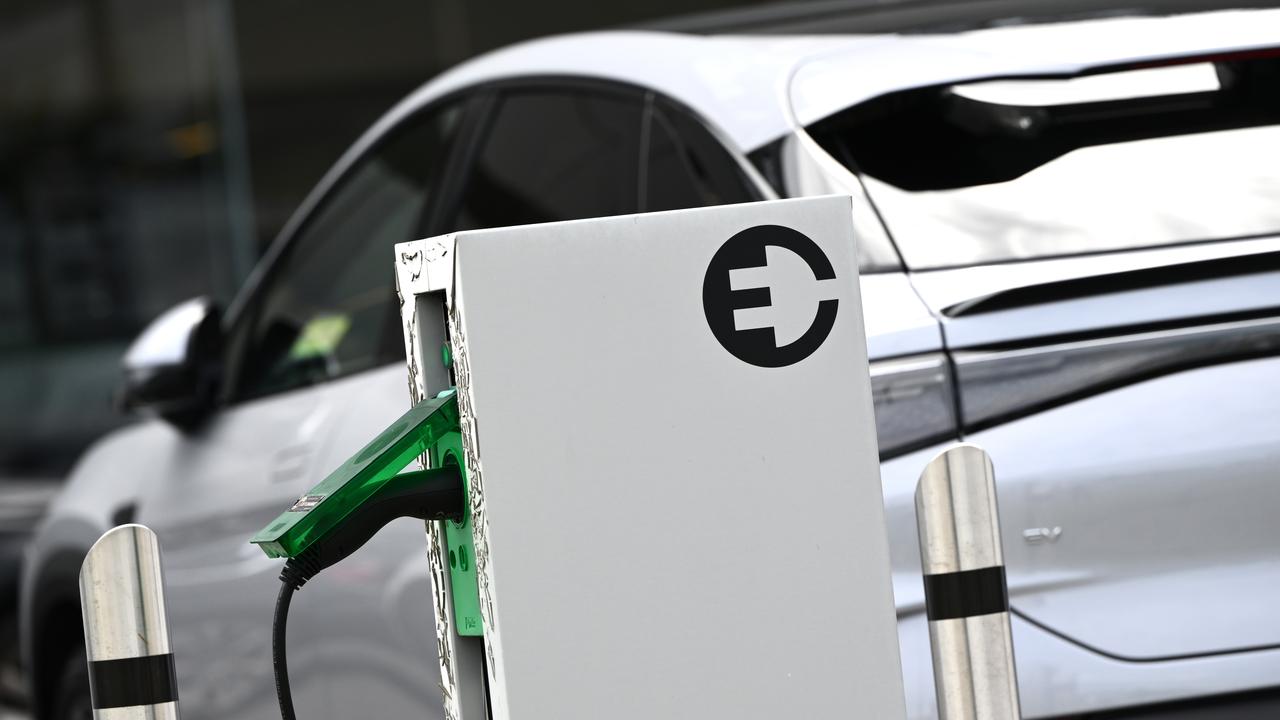
Charging activity for electric vehicles has also surged during March. (Jono Searle/AAP PHOTOS)

"That can be a real advantage when margins are under pressure."

Charging activity also surged in March, according to Doug McNamee, CEO at fast-charging network JOLT.

"We have seen a dramatic increase in charging usage over the last three weeks compared with the same period last year," Mr McNamee said.

"New sign-ups are up over 30 per cent on the month prior."

Meanwhile, drivers of combustion-engine vehicles were changing their behaviour to soften the blow from sky-high fuel prices, with more than half of Australian petrol and diesel vehicle drivers cutting back on driving in March, according to a NRMA survey.

"Australians are cutting back on or adapting the way they are using the family car and prioritising their trips will go a long way to helping," NRMA spokesman Peter Khoury said. 

The survey of 1800 NRMA members found that around one in eight were walking or taking public transport more often due to surging fuel prices.

EVs surge
Peter Khoury says Australians are starting to heed the message not to panic buy petrol. (Bianca De Marchi/AAP PHOTOS)

Fuel shortages at service stations also appeared to be stabilising, the insurance provider said. 

"The crucial message about not panic buying or hoarding fuel is getting through," Mr Khoury said.

On Thursday, federal Energy Minister Chris Bowen told parliament six cancelled fuel ships bound for Australia had been replaced with alternative supplies.

At least 332 service stations nationwide had no diesel, while 177 had run out of unleaded petrol.

Sign up to read this article
Read news from 100's of titles, curated specifically for you.
Already a member? Sign in here
Related Stories
Top stories on inkl right now
One subscription that gives you access to news from hundreds of sites
Already a member? Sign in here
Our Picks
Fourteen days free
Download the app
One app. One membership.
100+ trusted global sources.