Get all your news in one place.
100's of premium titles.
One app.
Start reading
The Economic Times
The Economic Times

Europe’s dangerous dependence puts it on Xi and Trump’s menu

“If we’re not at the table, we’re on the menu,” was Mark Carney’s warning to fellow “middle powers” earlier this year. Looking at this week’s US-China summit, the European Union will know exactly what the Canadian leader was getting at.

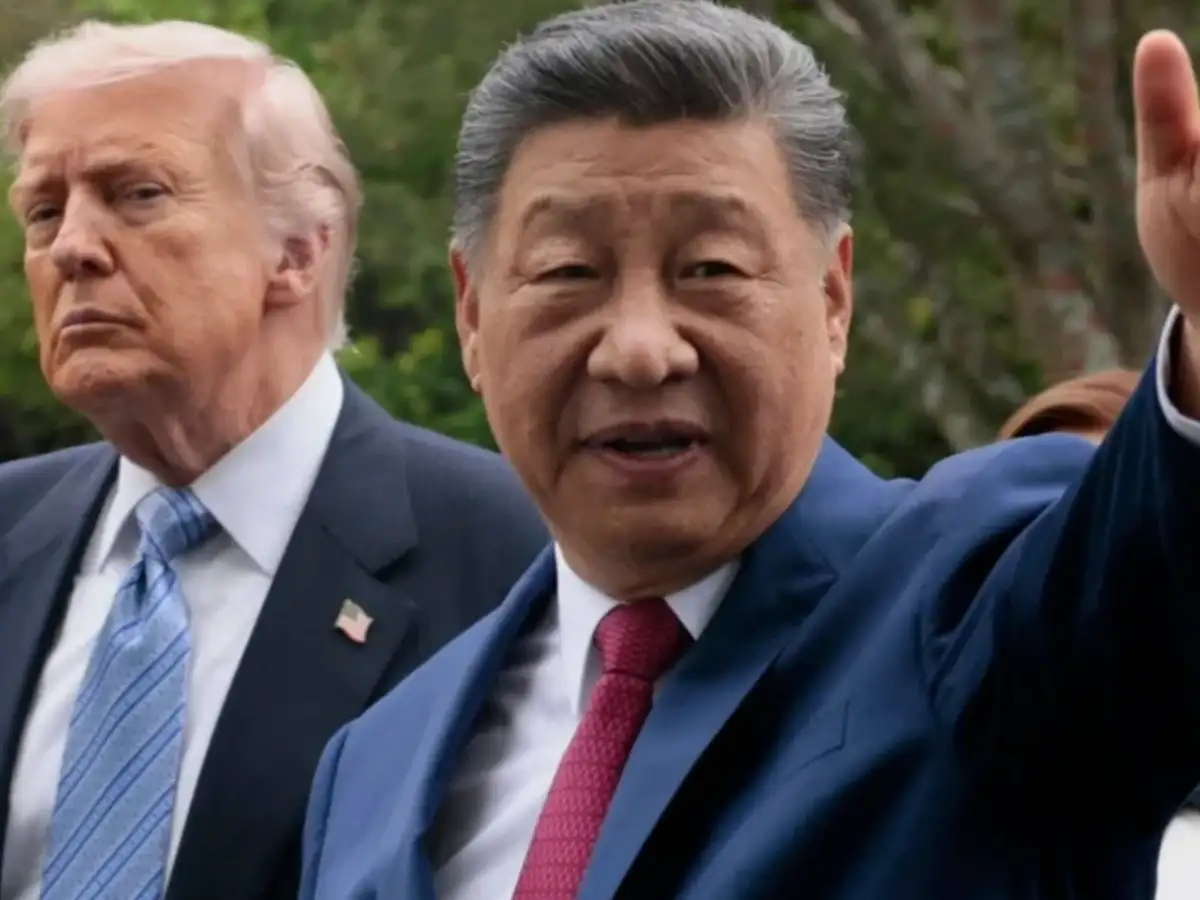
As Donald Trump and Xi Jinping prepare to discuss artificial intelligence, trade and global instability, Europe is being reminded once again of its relegation to bystander status after years of punching below its weight in defense and technology. The EU’s dependence on US military kit such as the F-35 fighter jet, its lack of tech champions and its internal squabbles have left it inaudible in the Middle East, uninvited to Ukraine-Russia peace talks and pretty helpless when access to powerful American AI models gets cut off abruptly.

Also Read: Not source of EU's problems, but a partner: Beijing

Even though Europe has doubled defense spending since 2020 — and encouraged the likes of Dutch chip specialist ASML Holding NV to buddy up with French AI darling Mistral — the gulf with the US and Asia has widened.

Being an entree at the Xi-Trump geopolitical feast is a real peril for the EU and its chief, Ursula von der Leyen. No wonder she’s worrying about “dangerous dependencies” like US gas or a trade deficit with China of €1 billion ($1.1 billion) a day. New tariff arrangements between Washington and Beijing could result in yet more cheap Chinese goods landing in the Old Continent, where the “China shock” is already hollowing out industry and fueling populist anger.

Europe’s trade protections haven’t stopped the likes of BYD Co. from taking a record share of its car markets. Guangzhou Automobile Group Co. has unveiled plans to sell a dozen new electric and hybrid brands in France by 2030.

The EU leans heavily as well on Silicon Valley and Seattle giants such as Amazon.com Inc., which control 70% of the region’s cloud-computing business. On AI, the bloc might be reduced to the role of rule-taker if the US and China ever make joint decisions on pacing the development of the most advanced models. That’s far from a given as both sides fight for tech supremacy, but there’s not much Brussels can do if it’s fearful of the technology’s most dangerous capabilities. The EU won’t get clout without more AI of its own.

Overshadowing all of this is the chance of trade weaponization worsening. Trumpian arm-twisting and bullying on everything from Greenland to the North Atlantic Treaty Organization is not the only risk. The EU gets about 70% of its rare-earth imports from China, and Beijing has been happy to use this stuff as leverage against Europe.

Antonio Barroso of Bloomberg Economics reckons a more stable US-China relationship and any extended trade truce at the summit could give Xi more room to squeeze the EU, which has been mulling tougher action against Beijing’s seemingly unstoppable export machine. Europe’s trade-reliant economy looks particularly vulnerable right now.

An increasingly special relationship with Canada should offset some of this pressure, given Ottawa’s access to vast fossil-fuel reserves and critical minerals. Yet Carney’s hoped-for club of middle powers is no panacea. Such partnerships are inherently unstable, even when they don’t straddle hemispheres — as the EU itself can attest.

Neither would a Carney deal remove the need for Brussels to speed up its laborious consensus-building or improve its ability to make tough decisions on trade. Indeed, there’s an existing deal with Canada that still needs ratifying.

To its credit, the bloc is at least finally talking about supply-chain resilience, defense spending, power-grid investments and plans to “use all tools” to counter trade imbalances with China. The real challenge is to turn the talk into concrete action and to properly wield its heft as a single market. The US and China need to find out that bullying carries an economic cost, as one European chief executive told me recently.

Also Read: After Trump-Xi handshake, Bessent says US-China 'Busan Agreement' extended till January 10

Any defensive measures such as a tariff wall against Chinese imports must also be accompanied by serious investments in critical industries to build leverage. Jean Tirole, a Nobel-winning economist, recommends in a new book that Europe should double down on tech and build an ecosystem around ASML, a key supplier to American and Asian chipmakers. “The aim is to control a part rather than the whole of the semiconductor value chain,” he writes. “Having a bargaining chip in international negotiations is a geopolitical imperative.”

Europe also has options on security — beyond Germany’s rearmament — if it’s bold enough to pursue them vigorously. Giuseppe Spatafora of the EUISS think tank points to promising partnerships with Ukraine such as the missile-defense project Freyja, as well as closer ties with Canada in the Arctic.

EU officials are themselves due to visit China next month. Clarity of purpose will be essential, especially at a time when populist parties are making alarming poll gains in France and Germany. There may not be many chances left to move from menu to table seat.

(Disclaimer: Recommendations, suggestions, views, and opinions given by experts are their own. These do not represent the views of The Economic Times.)

Sign up to read this article
Read news from 100's of titles, curated specifically for you.
Already a member? Sign in here
Related Stories
Top stories on inkl right now
One subscription that gives you access to news from hundreds of sites
Already a member? Sign in here
Our Picks
Fourteen days free
Download the app
One app. One membership.
100+ trusted global sources.