
Get all your news in one place.
100's of premium titles.
One app.
Start reading
Euronews
Euronews
Liam Gilliver

European country vows to give homeowners ‘free electricity' instead of switching off wind turbines

The case for renewable energy is stronger than ever, as the war on Iran continues to highlight the dangers of fossil fuel dependency.

While Brent crude, the world benchmark for oil prices, dipped yesterday morning (26 March) amid rising hopes of de-escalation, barrel prices have exceeded $100 (around €86.38) per barrel several times since the conflict began. Before the US-Israel war on Iran, oil prices were under €63 per barrel.

Much of the surge has been blamed on the Strait of Hormuz’s effective closure. This is one of the world’s biggest fossil fuel chokepoints, carrying around one-fifth of global oil supplies.

Analysts warn that oil prices won’t “snap back” straight after the war ends, especially if more energy infrastructure is targeted.

It’s why petrol and energy prices have surged across Europe, resulting in calls to open up drilling licenses in the North Sea.

However, an analysis from the University of Oxford has found that maximising oil and gas extraction here would only save UK households up to £82 (€95) per year. A UK fully powered by renewable energy, on the other hand, could save households up to £441 (€510) a year on their energy bills.

How much renewable energy does Europe waste?

Despite geopolitical tensions bolstering the appeal of green energy, Europe continues to waste billions of wind and solar energy.

Last year, Britain wasted a staggering £1.47 billion (around €1.78 billion) by turning down wind turbines and paying gas plants to switch on.

Yesterday, wasted wind has cost Britain more than £1.31 million (around €1.5 million). Around £95,091 (€109,831) of this comes from switching off wind turbines (curtailment), while the rest comes from buying energy elsewhere, which often relies on fossil fuels.

In Germany, compensation costs for the curtailment of renewable energy hit €435 million last year. While this is a 22 per cent decrease compared to 2024 (€554 million) – it highlights the mass scale of green energy being wasted across Europe.

Curtailment rates rose to record levels in several EU nations including Spain and France during the first nine months of 2025, strengthening calls to tackle bottlenecks and improve energy infrastructure across the continent.

Why is Europe wasting so much renewable energy?

When wind speeds get too strong, the electricity grid is often filled with more green energy than it actually needs.

“This creates rush hour traffic on the grid and the energy can’t get to where it’s needed,” Octopus Energy, a UK energy firm, states. “As a result, we pay to make it again - often with dirty fossil fuels - as well as paying to switch the wind off.”

Improving the grid will be the biggest help to reduce wasted electricity, but this is both expensive and complicated. Europe’s grid was originally planned around coal, and later gas – meaning it is designed to move electricity from centrally located plants.

Many wind farms are located in remote and offshore locations, meaning it is more difficult to transport the electricity they produce.

Experts warn that Europe’s power grid is increasingly becoming the bottleneck to achieving Net Zero. A 2025 study by Aurora Energy Research calls for rapid grid expansion to tackle rising connection queues, congestion and limited cross-border capacity.

According to the report, congestion management costs in Europe neared €9 billion in 2024, while 72TWh of mainly renewable energy was curtailed due to bottlenecks. This is roughly equivalent to Austria’s annual electricity consumption.

While grid investment in Europe has increased by 47 per cent over the past five years to around €70 billion annually, experts warn it still falls short of what’s required.

Is free energy the solution?

Amid calls to fix Europe’s outdated energy grid, the UK’s Department for Energy Security and Net Zero has unveiled plans to supply homes with discounted power on windy days.

“Sometimes there is too much wind for our outdated grid to handle, especially in Scotland and the East of England,” the government wrote on X (formerly Twitter).

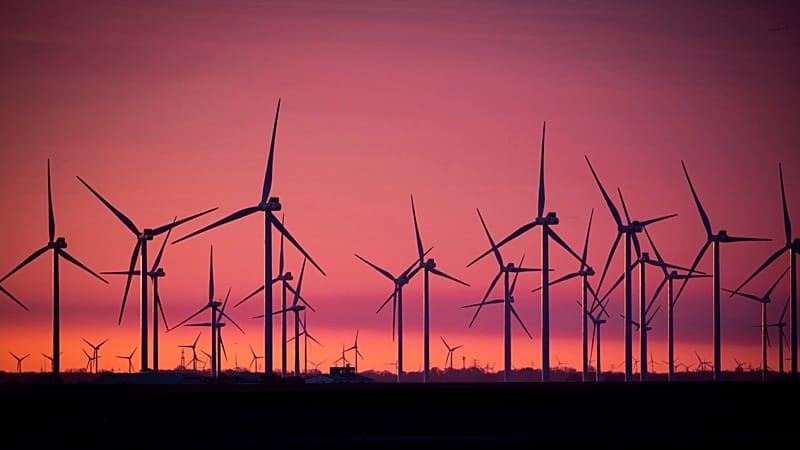
“Rather than paying wind farms to switch off we’re trialling a new system where people who live near these constrained areas get cheaper - or even free - electricity.”

Greg Jackson, CEO of Octopus Energy, which has long been pushing for reforms to provide cheaper energy rather than curtailing wind power, argues that trials are “hugely ineffective” - even though he was “pleased” with the announcement.

“Permanent changes would mean you could buy an electric car, or a heat pump, or batteries to use power when it’s cheap – or build a data center,” he says

“These would all shift demand far more effectively than we will see in any trial. Indeed, trials could be pretty ineffective without this.”

Jackson is now urging the government to make its proposal permanent, providing consumers with confidence in investing in electrification.

Sign up to read this article
Read news from 100's of titles, curated specifically for you.
Already a member? Sign in here
Related Stories
Top stories on inkl right now
One subscription that gives you access to news from hundreds of sites
Already a member? Sign in here
Our Picks
Fourteen days free
Download the app
One app. One membership.
100+ trusted global sources.