Get all your news in one place.
100's of premium titles.
One app.
Start reading
The Independent UK
The Independent UK
Sport
Miguel Delaney

European countries fume over home advantage in ‘extremely unfair’ World Cup qualifying

European countries feel that Uefa's mere 16 places in a 48-team World Cup are not enough, amid some disquiet about the nature of having home advantage for play-offs of such immense stakes.

Some senior officials have been describing the latter as "extremely unfair", and feel neutral venues could be explored for the future. It is a situation that could also be influenced by having more teams.
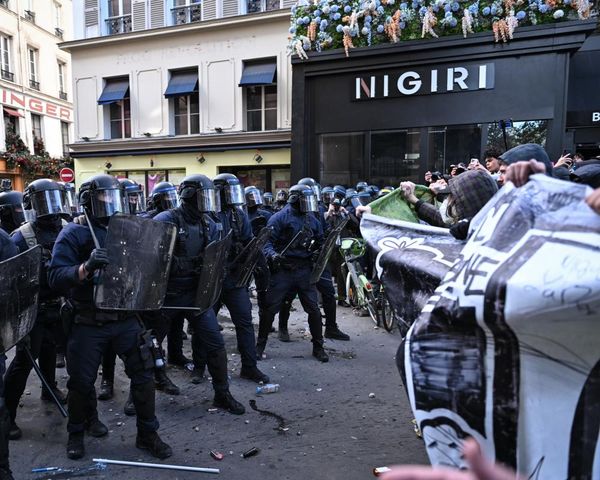
With this World Cup expanding to 48 teams for the first time, Uefa was given a mere three extra places, going up from 13 to 16. It is understood that this has been a long-running issue for European associations, who do not feel that increase is fair representation.

Such arguments have nevertheless fallen on deaf ears so far. Other continents point to how Europe is still by far the best represented continent, with 16 sides, although South America has six of its 10 teams in the competition. Europe has just 16 of 55.

A moral historical point is also made about how this is essentially a correction of decades when European countries dominated representation, and that a greater distribution of places is needed to help develop the game in the rest of the world. The counterpoint to that is that if one of Fifa's aims is to increase revenue for wider good, a bigger European country is likely to be more lucrative than one of the smaller populated Concacaf teams that qualify, and that the entertainment quality of the event would be less diluted. It is also felt that the proportions should be the same as for the Club World Cup.

In a much more political argument, it is pointed to how Asia and Africa now represent Fifa president Gianni Infantino's voter base, and that he doesn't enjoy the same support in Europe. It is consequently seen as highly unlikely that places are apportioned to Uefa.

Gianni Infantino’s voter base is largely made up of Asia and Africa, meaning he is less likely to cater towards the more opposing Uefa associations (AFP/Getty)

The debate about home advantage in these play-offs is more specifically a Uefa issue, however, since it is they who come up with the system that Fifa then approve.

Of the 12 individual European play-offs over the past week - eight semi-finals and four finals - eight were won by the home team.

Some officials now hope that this will be addressed, so that neutral venues are used in future. A number feel that it is extraordinarily "unfair" that a prize of such stakes - really, the biggest in international football - should involve one team enjoying home advantage.

Uefa are viewed as unlikely to revert to two-legged qualifiers due to the lack of space in the calendar.

This system was first used for the Euro 2020 qualifiers, as an adaptation to the introduction of the Nations League. Qualifying groups were shortened, with the greater number of top-two teams then requiring play-offs to also be staggered, so that previously two-legged individual match-ups became staggered semi-final systems. The structure has since been used for the 2022 and 2026 World Cups, as well as Euro 2024.

That is unlikely to be changed for World Cups due to how the European countries do actively want the higher revenues that come from the Nations League. It is nevertheless hoped that neutral venues will be discussed for future play-offs.

Uefa themselves have been in ongoing discussions over how to evolve qualification for the European Championships, with the exact format for 2028 to be confirmed in May.

Sign up to read this article
Read news from 100's of titles, curated specifically for you.
Already a member? Sign in here
Related Stories
Top stories on inkl right now
One subscription that gives you access to news from hundreds of sites
Already a member? Sign in here
Our Picks
Fourteen days free
Download the app
One app. One membership.
100+ trusted global sources.