Get all your news in one place.
100's of premium titles.
One app.
Start reading
The Conversation
The Conversation
Environment
Bernd Lenzner, Postdoctoral Researcher, Bioinvasions, Global Change and Macroecology Group, Universität Wien

European colonialism has had a lasting legacy on how plants are distributed around the world

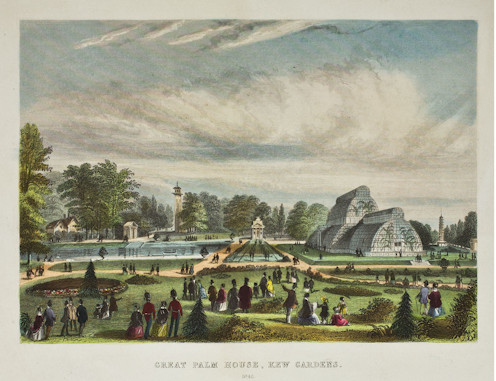
Kew Gardens in London was at the centre of a huge colonial plant trade. 'The world's metropolis', Thomas Hosmer Shepherd, 1855

A few years ago, one of us (Guillaume) moved to the town of Stellenbosch, in South Africa, and found himself walking through town while being shaded from the sun by European oak trees. The region is famous for its wine, and the oaks were imported centuries ago to make wood for casks. But the difference in climate caused the trees to grow too fast, making their wood unsuitable. The oaks were left to disperse and are now a symbol of a town many thousands of miles from where they evolved.

As avid nature enthusiasts, it can be rather surprising to explore the natural landscape in another region of the world, only to find the same species as at home. This will happen especially often if you are from Europe. But why is this the case?

Sign up to read this article
Read news from 100's of titles, curated specifically for you.
Already a member? Sign in here
Related Stories
Top stories on inkl right now
One subscription that gives you access to news from hundreds of sites
Already a member? Sign in here
Our Picks
Fourteen days free
Download the app
One app. One membership.
100+ trusted global sources.