Get all your news in one place.
100’s of premium titles.
One app.
Start reading
The Guardian - UK
The Guardian - UK
Technology
Alex Daniel

Europe’s next-generation fighter jet project may collapse if row continues, says warplane maker

New Generation fighter model presented at the Paris–Le Bourget airport
A model of the New Generation fighter. Dassault Aviation and Airbus have been locked in a dispute over who will build the aircraft. Photograph: Geoffroy van der Hasselt/AFP/Getty Images

France and Germany’s next-generation fighter jet project could soon be “dead”, one of the two companies tasked with delivering it has warned, amid a worsening corporate rift over who gets to build the aircraft.

Dassault Aviation, France’s leading warplane maker, said Airbus’s defence arm – which represents Germany and Spain – needed to cooperate on the €100bn programme otherwise it would collapse.
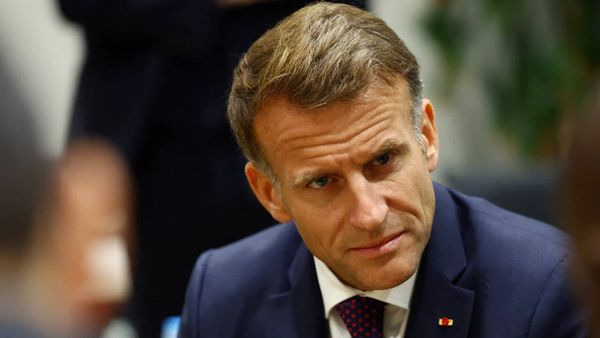
“Airbus doesn’t want to work with Dassault, full stop. I take note. I never said I didn’t want to work with Airbus or with the Germans,” said Éric Trappier, Dassault’s chief executive, via an interpreter while presenting the company’s financial results on Wednesday.

“If Airbus maintains its position of not wanting to work with Dassault, the matter is dead,” he added.

The two companies have been locked in a dispute over how to share the work on the jet component of the Future Combat Air System (FCAS), with Dassault claiming it should take the lead and that Airbus should take a backseat.

The wide-ranging project, which will also include autonomous drones and a futuristic “combat communications cloud”, was announced nearly nine years ago but has since come to represent Europe’s inability to cooperate effectively on defence as the region seeks to rearm.

Trappier said: “Dassault was the selected leader … I understand that Airbus doesn’t like that decision but we are making sure that we comply with the contract.”

He also disputed the assertion by the German chancellor, Friedrich Merz, that the planned warplane did not suit Germany’s needs. The German military did not need a nuclear-capable fighter, while France did, Merz said last month, insisting it was “not a political dispute” but a technical one between the two countries.

Trappier said: “I’ve heard what the chancellor said. I know that he’s now talking about having two planes instead of one. And that could be explained by the fact that there are different operational needs [between the two countries].

“My highest authorities here in France say we have similar operational needs and that there is agreement at an operational level.”

Last month, Guillaume Faury, Airbus’s chief executive, also suggested splitting the scheme into two separate warplanes to keep the other components alive.

France, Germany and Spain are expected to decide soon whether to move to the next stage of the programme, or drop the jet and move forward with the other elements.

There have also been suggestions Germany could leave the project in favour of Britain’s rival global combat aircraft programme (GCAP), also known as Tempest. The warplane, which is being developed with Italy and Japan, is due to take to the skies five years earlier than the FCAS, in 2035.

Tufan Erginbilgiç, the boss of Rolls-Royce, which is building the engines for the British jet, told the Guardian he would “definitely be open” to Germany joining the scheme.

Sign up to read this article
Read news from 100’s of titles, curated specifically for you.
Already a member? Sign in here
Related Stories
Top stories on inkl right now
Our Picks
Fourteen days free
Download the app
One app. One membership.
100+ trusted global sources.