
Get all your news in one place.
100's of premium titles.
One app.
Start reading
Euronews
Euronews
Liam Gilliver

Europe’s energy grid can’t keep up with the renewables boom. Which country will suffer the most?

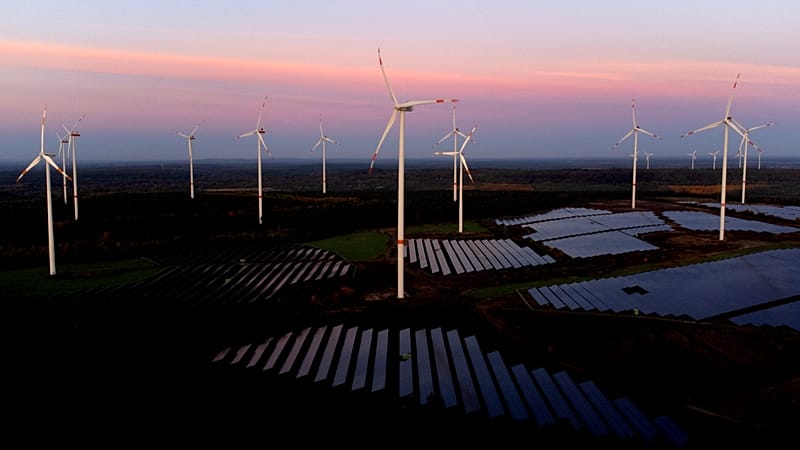
Bottlenecks triggered by Europe’s outdated energy grid are putting more than 120 GW of anticipated renewables at risk.

Planned clean energy projects used to power millions of households in 20 EU countries could be “stranded”, a new report by energy think tank Ember warns.

The analysis found that one in every two grid operators has “insufficient grid capacity” to connect upcoming wind and solar projects to the grid – including rooftop solar panels.

Experts have described barriers to rapid renewable rollout as a “matter of urgency” amid the war on Iran, which has seen oil and gas prices soar.

“With power costs spiking, Europe’s grids are a crucial enabler in the race to install renewables to replace imported fossil fuels and protect households against volatile prices,” says Elisabeth Cremona, an energy analyst at Ember.

“Grid bottlenecks are no longer simply a technical issue. They are a security risk.”

Which European countries will suffer the most?

The report found the most severe constraints are found in Austria, Bulgaria, Latvia, the Netherlands, Poland, Portugal, Romania and Slovakia.

However, it is worth noting that several major power systems such as Germany and Italy do not publish grid capacity data, meaning the issue could be much larger than analysts fear.

Grid barriers are impacting both large renewable projects and household installations, the report warns. Across the 17 countries that report their grid capacity, more than two-thirds of new wind and large-scale solar planned by 2030 are currently at risk.

Insufficient grid capacity could also delay 16GW of rooftop solar installations, impacting more than 1.5 million households across Europe.

For context, a power plant with a capacity of 1 GW could power approximately 876,000 households for one year, if they consume the average of 10,000 kWh of electricity per year.

The analysis also found that some of Europe’s grids are positioned well to accommodate new electricity demand from household electrification.

Six out of the eight reporting countries have enough grid capacity for up to one-third of households to connect a new heat pump. However, Poland and Spain would face major limitations, as distribution grid capacity for new demand is limited.

“Following the 2022 energy crisis, investment in rooftop solar surged as households sought protection from volatile energy prices,” Cremona says.

“As countries once again see the urgency of replacing imported fossil fuels with domestic renewables, we can’t afford for grids to get in the way.”

Why is Europe’s grid ‘insufficient’?

Investment in Europe’s grid has increased by almost 50 per cent over the past five years to €70 billion annually. However, experts argue this still falls short of what is needed to clear up bottlenecks.

A 2025 report from Aurora Energy Research found that congestion management costs in Europe neared €9 billion in 2024, while 72TWH of predominantly renewable energy was curtailed due to bottlenecks. This is equivalent to Austria’s annual electricity consumption.

Europe’s grid was originally built around coal, and later gas – which tends to operate from centrally located plants. However, green energy such as wind and solar tend to be located in remote areas, meaning Europe now needs to find an efficient way to transport the electricity being produced to homes and businesses.

Will lower energy prices help fix the grid?

It means that several European countries are producing more renewable energy than the grid can handle, meaning they’re often paying to shut down wind turbines (curtailing) and resorting back to polluting fossil fuels.

The UK has unveiled a trial to tackle this issue, by supplying homes with discounted or free electricity on windy days, rather than shutting down turbines.

It follows mounting criticism that Britain spent a staggering £1.47 billion (approximately €1.67 billion) last year switching off turbines and paying gas plants to switch on.

Greg Jackson, CEO of energy firm Octopus Energy, argues that the trial needs to become permanent so consumers have confidence to invest in electrification.

“Permanent changes would mean you could buy an electric car, or a heat pump, or batteries to use power when it’s cheap,” Jackson says. “These would all shift demand far more effectively than we will see in any trial.”

Sign up to read this article
Read news from 100's of titles, curated specifically for you.
Already a member? Sign in here
Related Stories
Top stories on inkl right now
One subscription that gives you access to news from hundreds of sites
Already a member? Sign in here
Our Picks
Fourteen days free
Download the app
One app. One membership.
100+ trusted global sources.







