Get all your news in one place.
100’s of premium titles.
One app.
Start reading
InsideEVs
InsideEVs
Technology

Europe Is About To Get An Even Cheaper City EV—And It's Not From China

  • Dacia's new city EV will be sold alongside the recently updated Spring.
  • The new electric model will be built in Europe and share its underpinnings with the Renault Twingo.
  • Dacia will reveal the model in the second quarter of 2026.

Romanian car manufacturer Dacia currently sells the Spring, one of Europe’s most affordable electric cars. But that compact city EV is built in Wuhan, China, through a Renault-Dongfeng joint venture and is imported into Europe.

But Dacia is working on a more home-grown EV that will be sold alongside the Spring—and could be one of the biggest moves yet by a European automaker to counter China's rise in the space. 

The new Dacia model was developed in record time—just 18 months, according to the manufacturer—and Automotive News says it will be unveiled sometime in the second quarter of this year. Under the skin, the still unnamed electric city car will be related to the recently revealed Renault Twingo, but it will be around €2,000 cheaper, with an expected starting price of around €18,000.

That’s marginally more than the Spring, whose starting price in France today is €16,900. The Spring was given a major makeover in 2024 and updated again in 2025 when it gained a lithium-iron-phosphate (LFP) battery and more power.

According to Dacia’s sales boss Frank Marotte, “Our aim is basically to maximize the offer of EV in the [minicar segment],” adding that “What we see is that the A-segment and probably in the future the B-segment are moving very fast toward BEV models.”

Regarding the Spring, Marotte noted that it “is meant to be the cheapest, but the transaction price at the end might be different depending on the incentives which are available on the markets. In some cases, the new model might be cheaper.” He is likely referring to the new model, which will be built in Slovenia alongside the new Twingo and will qualify for the European Union’s new “E-car” category, which allows manufacturers to build cars at lower cost than they do today.

That’s very similar to Japan’s kei car regulations, which make that type of vehicle considerably more affordable to own and operate than a regular-sized car. However, what fits the definition of an E-car has not yet been defined, so it could only include even smaller models, something like the Dacia Hipster, or it could also encompass larger cars like the Twingo and its Dacia twin.

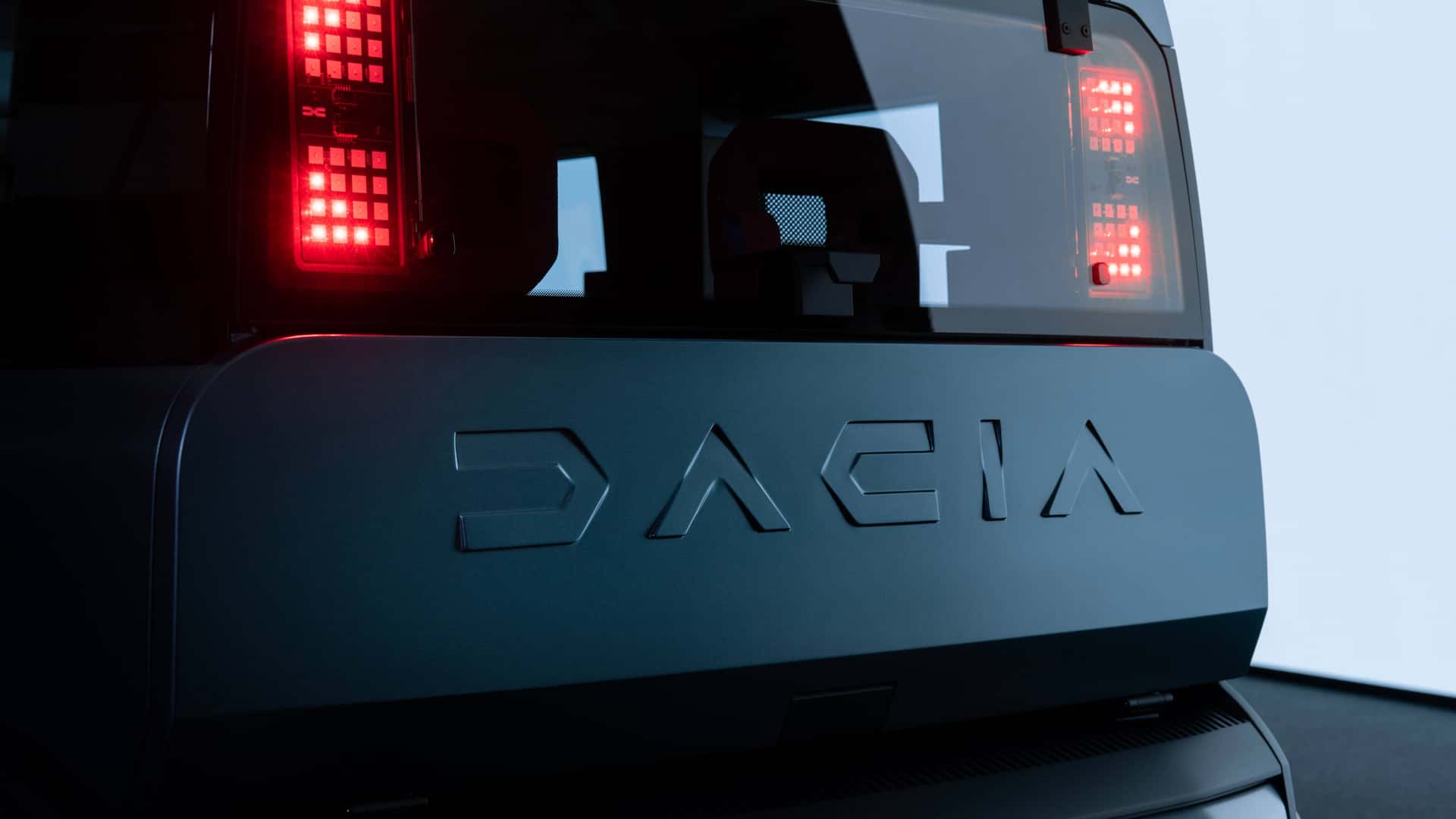
Marotte also mentioned that the new Dacia EV will look nothing like the Spring. From the official teasers Dacia released, it appears to be a chunky, somewhat upright vehicle with sharp lines defining its shape, but it doesn’t look like a crossover.

Stay informed with our newsletter every weekday
For more info, read our Privacy Policy & Terms of Use.

The Dacia executive also hinted that the brand will also launch a B-segment model, likely an electric version of the next-generation Sandero expected to debut toward the end of 2027. The gas-burning Sandero was Europe’s best-selling car in 2025, and it makes sense for its replacement to keep its combustion engine, especially now that the EU has relaxed its goal of banning the purchase of new combustion cars starting in 2035. However, it also makes sense for the next Sandero to be available with pure electric power, and that’s likely what Marotte was referring to, but without giving away too much.

The next logical step after that would be for Dacia to electrify its other European bestseller, the Duster. You can already buy the Duster with hybrid power, but not as a plug-in hybrid. If Dacia were to launch an electric Duster, it would have to be built on a different platform, since the CMF-B architecture it currently rides on doesn’t support a fully electric powertrain, although it could also be modified with components from other Renault Group EVs.

With EV sales in Europe growing steadily in 2025 and no signs of a slowdown in sight, Dacia needs to electrify its lineup to transition to exclusively electric models by the end of the 2030s. It’s starting with its smallest models and working its way up, and the arrival of its first bespoke EV later this year is a significant milestone for the Romanian brand.

Got a tip for us? Email: tips@insideevs.com
Sign up to read this article
Read news from 100’s of titles, curated specifically for you.
Already a member? Sign in here
Related Stories
Top stories on inkl right now
One subscription that gives you access to news from hundreds of sites
Already a member? Sign in here
Our Picks
Fourteen days free
Download the app
One app. One membership.
100+ trusted global sources.