Get all your news in one place.
100's of premium titles.
One app.
Start reading
International Business Times UK
World
Christelle May Napiza

'Groomed to Target Charlie?' Viral Snowden-Era Claims About Erika Kirk Face Scrutiny Over Lack of Evidence

A viral online claim linking a private individual to intelligence agencies through alleged Snowden-era documents has ignited speculation, drawing in high-profile political figures and sparking detailed amateur investigations, but verifiable evidence remains elusive.

The allegation, circulating widely on social media, centres on claims that Erika Kirk was 'groomed' to influence Charlie Kirk, founder of Turning Point USA, due to her mother's supposed ties to the US intelligence community.
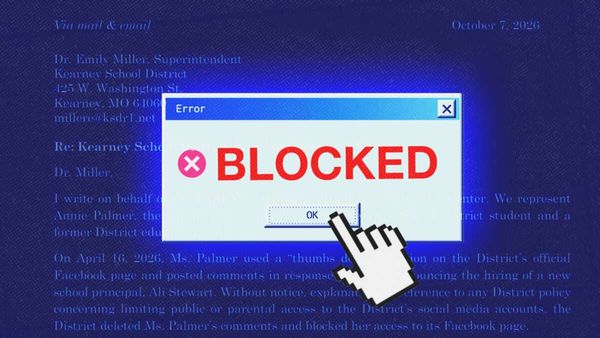
The claims rely heavily on purported material from the 2013 disclosures by Edward Snowden, but a close examination of primary-source archives raises significant questions about authenticity, interpretation and context.

Origins Of The Alleged Leak

The claims appear to stem from a text file hosted on Internet Archive, which is described as part of a collection of 'Snowden and NSA dox' materials. The document includes lists of names under various headings, including a section labelled 'DOX', which has been interpreted online as identifying intelligence personnel.

However, the original Snowden disclosures, published through established outlets and documented by organisations such as American Civil Liberties Union, do not include any officially verified 'dox list' of NSA agents. Instead, Snowden's materials primarily exposed surveillance programmes such as PRISM, XKeyscore and bulk metadata collection.

A review of the publicly accessible Snowden archive maintained by the ACLU shows extensive documentation of surveillance practices but no authenticated list of covert personnel. The ACLU's repository states that the disclosures consist of 'documents describing NSA surveillance programmes, legal frameworks, and internal communications', rather than personnel databases.

The absence of corroboration from primary repositories suggests that the 'DOX' document circulating online may not form part of the verified Snowden corpus.

Claims Linking Individuals To Intelligence Agencies

The viral narrative hinges on the inclusion of a name, allegedly Lori Frantzve, within the document. Social media users have interpreted this as proof of a connection to the National Security Agency.

Yet intelligence experts and researchers have long cautioned against equating the presence of a name in unverified datasets with confirmed affiliation. Lists labelled as 'dox' frequently circulate in online forums and can include a mixture of public records, speculation or entirely fabricated entries.

Crucially, no official statement, employment record or declassified document has been produced to confirm that the individual in question worked for the NSA or any affiliated intelligence body. Without corroborating documentation, such as government employment records, court filings or verified disclosures, the claim remains unsubstantiated.

The invocation of former NSA figures, including past directors, within the same document has also been used to bolster credibility. However, the presence of publicly known names alongside unknown individuals is a common feature of misleading or composite datasets, which can lend an appearance of legitimacy without evidentiary grounding.

The 'Grooming' Narrative And Its Evidentiary Gaps

The second pillar of the claim is the assertion that Erika Kirk was 'groomed' to target Charlie Kirk through a deliberate, intelligence-linked operation. This narrative relies on circumstantial interpretation rather than documented evidence.

No verifiable interviews, communications or official investigations support the allegation of coordinated targeting. Publicly available information about Charlie Kirk's personal and professional life does not indicate any confirmed security or intelligence concerns related to such claims.

The theory also references behavioural changes and personal relationships as indicators of covert direction. However, experts in disinformation note that such reasoning often reflects retrospective pattern-building rather than evidence-based analysis.

Without documentary proof, such as internal communications, whistleblower testimony or legal filings, the 'grooming' claim remains speculative.

What The Verified Snowden Documents Actually Show

The authenticated Snowden disclosures, which have been analysed extensively by civil liberties organisations and courts, focus on systemic surveillance practices rather than individual covert operations.

For example, documents released through the ACLU and legal proceedings reveal how PRISM enabled the NSA to collect data from major technology companies under Section 702 of the Foreign Intelligence Surveillance Act (FISA). These materials have been cited in US court cases, including challenges to mass surveillance practices.

Official NSA statements following the disclosures acknowledged the existence of certain programmes while asserting their legality under US law. The agency has consistently denied unlawful targeting of individuals without proper authorisation.

Importantly, none of the verified documents substantiate claims of individuals being embedded in political or social movements through familial intelligence ties, as alleged in the viral narrative.

Sign up to read this article
Read news from 100's of titles, curated specifically for you.
Already a member? Sign in here
Related Stories
Top stories on inkl right now
One subscription that gives you access to news from hundreds of sites
Already a member? Sign in here
Our Picks
Fourteen days free
Download the app
One app. One membership.
100+ trusted global sources.