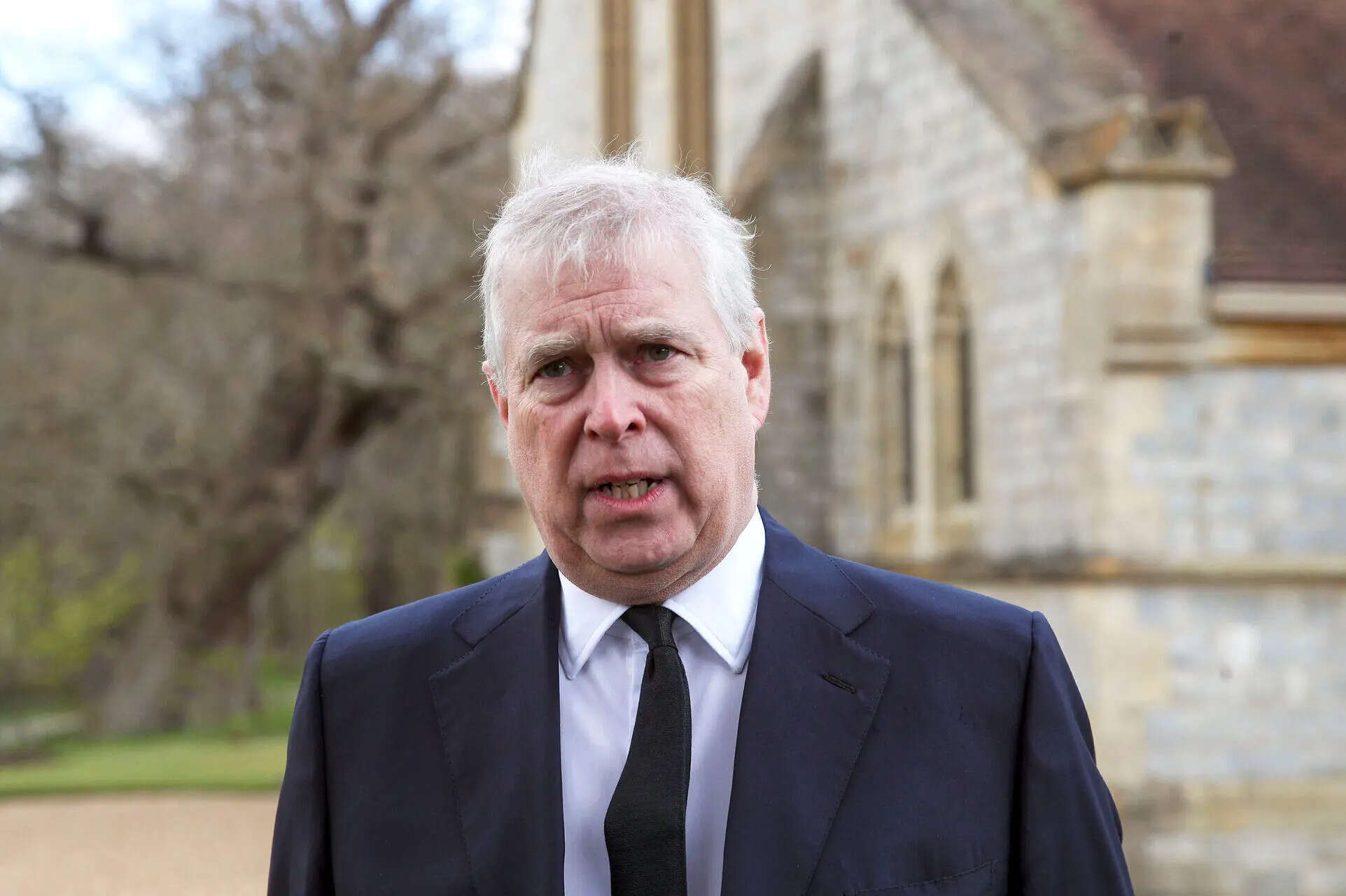
The UK monarchy is entering a new phase of the Andrew-Epstein saga: not just reputational damage, but an active criminal investigation that has already produced the near-unthinkable modern image - the king’s brother being taken into custody.
Driving the news

The story that has followed Prince Andrew for more than a decade is now a police matter. On February 19, Thames Valley Police detained Andrew Mountbatten-Windsor at Sandringham on suspicion of “misconduct in public office."
- Thames Valley Police detained Andrew Mountbatten-Windsor on suspicion of misconduct in public office, then released him “under investigation”.
- The Economist noted the police statement described him as “a man in his sixties from Norfolk,” a striking demotion in how the state refers to someone who once moved through the world as “Prince Andrew.”
- The arrest followed renewed scrutiny after a large US document release related to Jeffrey Epstein, and that police searched addresses linked to Mountbatten-Windsor, including at Sandringham and Windsor.
- King Charles publicly responded saying: “Let me state clearly: the law must take its course,” while promising “full and wholehearted support and cooperation.”
The allegation at the center of the misconduct inquiry: that Mountbatten-Windsor shared official trade-related reports or confidential material with Epstein during his time as a UK trade envoy - a role that typically involves access to sensitive documents and strict expectations of confidentiality, as the Economist laid out.
Why it matters
- This isn’t only a story about one disgraced royal. It’s a stress test of whether the monarchy can preserve legitimacy when the scandal shifts from personal behavior and civil litigation into accusations that blur the line between private vice and public duty.
- The alleged offense - misconduct in public office - carries serious legal jeopardy; it can mean a maximum sentence of life imprisonment, even though arrest does not imply guilt and charging decisions may take time.
- AP framed the arrest as a marker of how far the UK has moved from an era when institutions were expected to protect the crown from embarrassment; it called the development an extraordinary step in a country where authorities “once sought to shield the royal family.”
- The monarchy’s vulnerability is amplified by the wider trust environment: The Economist tied the moment to a political promise that “nobody is above the law,” arguing the case could either reinforce institutional confidence or trigger a deeper spiral.
- And there’s a blunt political reality: republican groups believe the crown is already operating with a thinner “benefit of the doubt” margin than it had even a generation ago.
- The Economist quoted Graham Smith, the CEO of Republic- a campaign group-saying the arrest “threatens the whole monarchy.”
- That line is aspirational - but it hints at what’s changed. A scandal that might once have been contained as a family disgrace can now be framed as proof of systemic rot, deference, and impunity.
The British royal family has a long history of scandal that arrives, burns bright, and then gets filed away into the national attic: the abdication in 1936, the divorces and betrayals of the 1990s, the public rupture with Harry and Meghan, the endless argument over what is private and what is owed. This story has different properties. It is not merely about a man behaving badly, or even about a family managing it badly. It is about systems-money, access, privilege, the trade of favors-moving through institutions that were designed to appear above systems.
Scandal alone rarely topples the House of Windsor. But scandal that suggests compromised governance - especially when paired with visible police action -can do something worse for a constitutional monarchy: make the institution feel ordinary, self-protective, and undeserving of special status.
Bloomberg columnist Martin Ivens put the moment in literary terms, quoting Hamlet’s line: “There’s such a divinity that protects a king.” Ivens’s argument is that Mountbatten-Windsor benefited from a modern version of that protective aura - establishment caution, institutional reluctance, and the reflex to avoid destabilizing the crown - and that the arrest punctures it.
Bloomberg also highlighted a legal-cultural premise that resonates in this case: “Be ye never so high, the law is above you.”
The crown’s central risk is not simply whether Andrew is charged. It’s whether the process convinces the public that:
* Palace structures enabled avoidance, delay, or exceptional treatment in the past, and
* The monarchy’s internal incentives (protect the brand, protect the family) outweighed accountability instincts.
AP reported how the new US document release renewed attention on correspondence and timelines, complicating earlier public narratives about when ties were severed and how close the relationship remained after Epstein’s 2008 conviction.
The monarchy’s defenders argue the institution can endure because it has outlived far worse: abdications, public marital implosions, and years of tabloid corrosion. That’s true in a narrow historical sense. But there’s a modern twist: the monarchy’s legitimacy depends heavily on being seen as a stabilizing, above-politics symbol - and police raids and criminal suspicions drag it into the messy arena of “just another powerful network.”
Public sentiment is already less forgiving than it once was. NatCen’s long-running British Social Attitudes analysis has shown support trending down sharply over decades, with 2023 findings reporting only about 51% saying it’s important for Britain to continue having a monarchy.
That doesn’t mean abolition is imminent. It does mean the institution is operating closer to a tipping point, where a single large shock can reshape what feels acceptable or inevitable.
Between the lines
King Charles’ response is a classic palace tightrope: acknowledge, cooperate, and avoid doing anything that could look like interference - while also trying to keep the monarchy from being effectively “put on trial” in the court of public opinion.
But the palace can’t fully separate itself from Andrew for three reasons:
The “family brand” problem: Andrew is not a distant cousin. He’s the monarch’s brother - and every new revelation invites questions about what the institution tolerated, ignored, or quietly financed. The Economist suggested scrutiny could spread to what aides or protection officers may have known and whether palace decision-making softened consequences.
The credibility problem: This story has a long tail of contested claims, notorious interviews, and shifting timelines. AP reported the latest document release revived scrutiny of communications and the extent of the relationship with Epstein after earlier public insistence that ties had ended
The “global politics” problem: The Epstein files are a transatlantic story, and so is the fallout. US President Donald Trump called the arrest “a shame” and “very sad,” adding: “I think it’s so bad for the royal family.”
That matters because the monarchy’s soft power depends on international perception - and because US political and media ecosystems can keep stories alive long after UK institutions would prefer to move on.
There’s also a subtler undercurrent: for years, Andrew was treated as a palace management problem - titles removed, public roles stripped, living arrangements altered. Now it’s a policing problem, with investigators controlling pace and disclosure. That shift alone changes incentives for everyone around him.
The reporting is also threaded with grief, anger, and the strange emotional bookkeeping of delayed accountability. Here is a statement from Virginia Giuffre’s family after the arrest: “Today, our broken hearts have been lifted at the news that no one is above the law, not even royalty,” while noting she “died by suicide last year.”
The Associated Press quoted Amanda Roberts, Giuffre’s sister-in-law, describing the whiplash between elation and loss: “We can’t tell her how much we love her, and that everything that she was doing is not in vain. We need to unmask the the co-conspirators and potential perpetrators. And then we need to see indictments”.
What’s next
The immediate question is procedural: does the case move from “released under investigation” to charge, or into a prolonged limbo that can be corrosive even without court proceedings?
* “Released under investigation” means neither charged nor cleared, leaving the subject in a state that can linger while inquiries continue.
* Police said they would provide updates “at the appropriate time,” signaling a potentially extended investigation window.
Even absent charges, the spectacle of an active police inquiry can revive debates about formal roles, privileges, and proximity to state power. That debate intensifies if the public perceives institutional shielding - or if the palace appears to be “managing optics” rather than embracing transparency.
Bottom line: The Epstein files probably won’t “bring down” the monarchy on their own. But the combination of an arrest, an allegation tied to official duties, and sagging public deference gives republicans their clearest opening in years - and gives King Charles his hardest legitimacy test since taking the throne.