Get all your news in one place.
100’s of premium titles.
One app.
Start reading
Radio France Internationale
RFI

Episode Six: finance, the heart of the matter

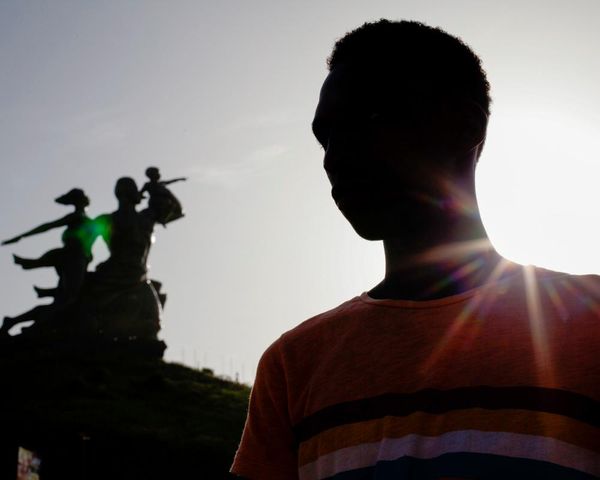
Ten years after the Paris Climate Accord © RFI

This eight-part podcast series examines the Paris Agreement ten years on, featuring global climate leaders discussing progress, challenges, and the dramatic shift in power towards emerging economies. The series explores how multilateral cooperation has evolved despite geopolitical fractures, from industrial transformation and innovative financing to the changing rules of climate leadership. This episode focuses on finance and explains why money remains the central issue in the fight against climate change. The podcast is based on 28 interviews carried out globally by journalist Sophie Larmoyer on behalf of IDDRI, the Institute for Sustainable Development and International Relations.

Rich countries pledged $100 billion annually in 2009 to help developing nations tackle climate change. By COP29 in 2024, that target rose to $300 billion. Yet experts now say we need $1.3 trillion per year.

Episode Five: How to face climate challenges in a fragmented world?

The gap is stark. As UN Secretary-General António Guterres warned in summer 2025: "Africa is home to 60% of the world's best solar resources, but it received just 2% of global clean energy investment last year."

For many developing countries, ambitious climate plans remain theoretical without funding. Sudanese activist Nisreen Elsaim puts it simply: "There's always money to develop this piece of paper, but there is never money to actually implement it."

Private capital: essential but uneven

Private investment must drive the transition, yet it flows unevenly. Renewable energy projects in Africa face risk premiums four times higher than identical projects in Europe. Without public guarantees to "de-risk" these investments, developing countries pay the price.

Episode Four: climate crises - the urgency to adapt

India shows how markets can shift. When the country launched its solar programme in the 2010s, private finance was scarce. Today, it attracts around $50 billion annually in clean energy investment, mostly from private sources.

Loss and damage: a breakthrough unfulfilled

After 30 years of advocacy, COP28 in Dubai established a Loss and Damage Fund in 2023, addressing the irreversible impacts of climate change. Over the past two decades, the 55 most vulnerable countries have suffered about $580 billion in climate damages.

Episode Three: energy, the key to success

Yet two years after its creation, the fund hasn't reached $1 billion. Contributions remain voluntary.

Reforming the old order

The World Bank and International Monetary Fund, created in 1944, now face calls for fundamental reform. Their governance structures remain locked in by northern countries and are seen as inadequate for today's climate emergency.

Barbados Prime Minister Mia Mottley has led the charge with her "Bridgetown Agenda", demanding wholesale reform. The scale of action required isn't hundreds of billions, she argues, but thousands of billions annually.

Episode Two: the decarbonisation quest

Meanwhile, new players have emerged. The Asian Infrastructure Investment Bank and the BRICS New Development Bank, both based in China, represent alternative governance models that are already functioning.

New tools for new challenges

Innovative mechanisms are emerging. "Just Energy Transition Partnerships" provide tailored funding for countries like South Africa and Vietnam to shift away from fossil fuels whilst supporting affected workers.

Episode One: behind the scenes of a historic agreement

There's growing momentum for new taxes targeting major polluters. A working group led by Laurence Tubiana is exploring levies on aviation, shipping, fossil fuel production and cryptocurrency mining. She calculates that a tax on first and business class airline tickets plus a modest $1 levy per barrel of oil "amounts to at least $500 billion per year."

As Brazilian climate official Ana Toni notes: "Who is polluting should be paying."

The tools exist. The question is whether political will can match the scale of the crisis. Listen to this episode to find out.

Sign up to read this article
Read news from 100’s of titles, curated specifically for you.
Already a member? Sign in here
Related Stories
Top stories on inkl right now
One subscription that gives you access to news from hundreds of sites
Already a member? Sign in here
Our Picks
Fourteen days free
Download the app
One app. One membership.
100+ trusted global sources.