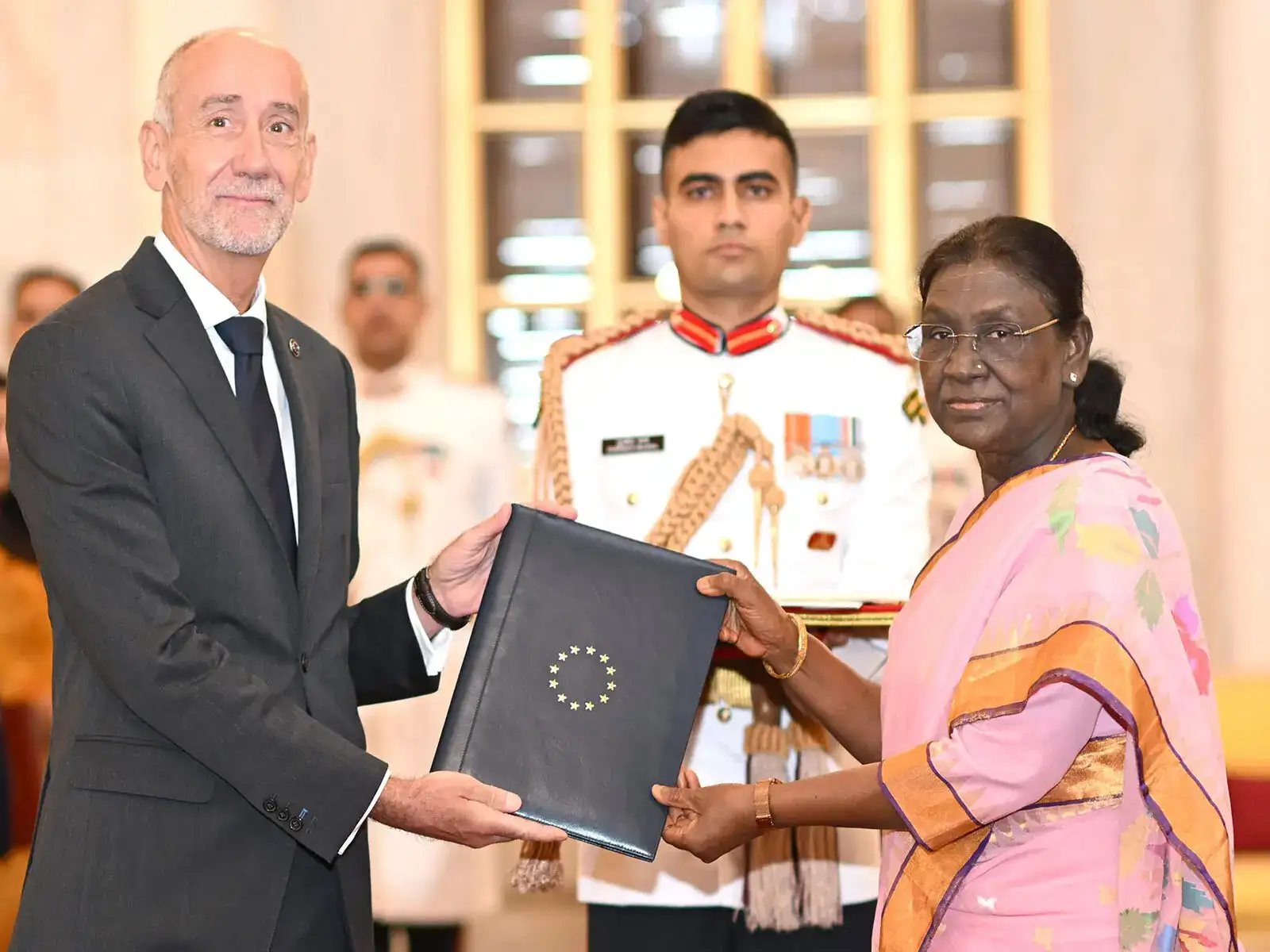
New Delhi: President Droupadi Murmu on Friday accepted credentials from envoys of six nations, including Finland and the European Union (EU), among others, at a ceremony held at Rashtrapati Bhavan here.
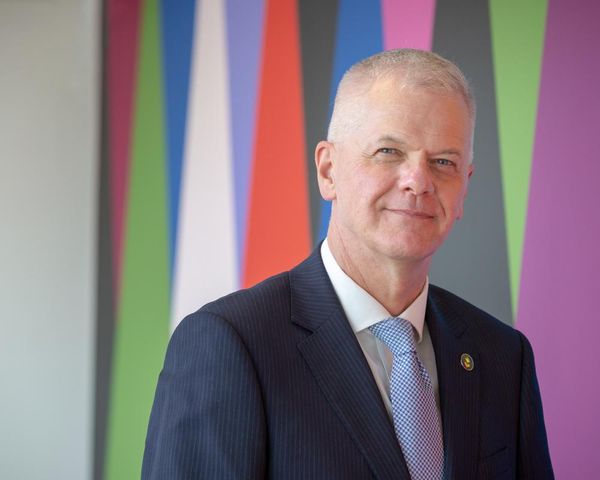
Those who presented their credentials were Mikko Kivikoski, Ambassador of Finland, Trinh Minh Manh, Ambassador of the Socialist Republic of Vietnam and Pedro Blanco Perez, Ambassador of Mexico, a statement issued by the President's office said.
Kristi Karelsohn, Ambassador of the Republic of Estonia, Jean-Eric Paquet, Ambassador of the European Union and Sophie Karlshausen, Ambassador of the Kingdom of Belgium, also presented their credentials, it said.
Also read: India outpaces China, Europe to emerge with strongest growth outlook globally: WEF survey
Following the ceremony, the European Union said Paquet described the EU-India Strategic Partnership as "one of the most defining relationships of the 21st century", highlighting its growing importance amid changing global economic, technological and geopolitical dynamics.
"With unprecedented momentum across trade, defence and security, research and innovation, it is an honour to represent the European Union in India at such a transformative juncture. Our shared agenda is not merely aspirational; it is a tangible commitment to future generations, one that will drive job creation, innovation, prosperity and resilience for citizens on both sides," Paquet said, as per an EU statement.
Trade is expected to remain a major pillar of the relationship, with the EU-India Free Trade Agreement gaining momentum after the European Commission put forward its proposal to the Council of the European Union on September 11, seeking authorisation for its signature and conclusion.
"This landmark agreement, often called the 'mother of all deals' will be the largest trade pact ever for both sides, covering nearly 2 billion people and a quarter of global GDP," Paquet said.
"Once finalised, it will unlock unprecedented opportunities for trade, investment, and economic growth," he added.
Parallel negotiations are also underway on the Investment Protection and Geographical Indication Agreements, the EU said.
Defence and security cooperation has also emerged as an important component of the relationship following the signing of the EU-India Security and Defence Partnership at the 16th EU-India Summit in January 2026.
The partnership covers areas including maritime security, space, cyber and hybrid threats, as well as counterterrorism.
"Our cooperation extends beyond bilateral ties- it has global significance, particularly in ensuring stability across the broader Indo-Pacific region. The EU-India Security and Defence Partnership agreement will further strengthen defence industrial cooperation and advance alignment on defence initiatives," Paquet said.
The EU said its cooperation with India is also being advanced through the EU-India Joint Comprehensive Strategic Agenda, the EU-India Trade and Technology Council, the EU-India Connectivity Partnership and the Global Gateway programme.
These initiatives are aimed at supporting sustainable development, diversifying supply chains and expanding access to goods, services and investment.
Looking ahead, Paquet said the two sides could translate the growing momentum in their relationship into concrete outcomes.
"The EU and India are not just partners; we are architects of a shared future. Together, we will translate ambition into action, delivering prosperity, security, and sustainability for our people and the world at large," he said.
Also read: India gets backing from 4 European nations for permanent UN seat; Jaishankar hails ‘historic’ meet
Paquet began his tenure in New Delhi after more than three decades of public service within EU institutions. Before taking up his current assignment, he served as EU Ambassador to Japan from 2022 to 2026.
He has also served in senior European Commission positions, including as Director for the Western Balkans and as EU Ambassador to Mauritania.
The presentation of credentials comes as India and the EU seek to broaden their engagement across trade, technology, investment and security, with both sides placing greater emphasis on the strategic importance of their partnership.