
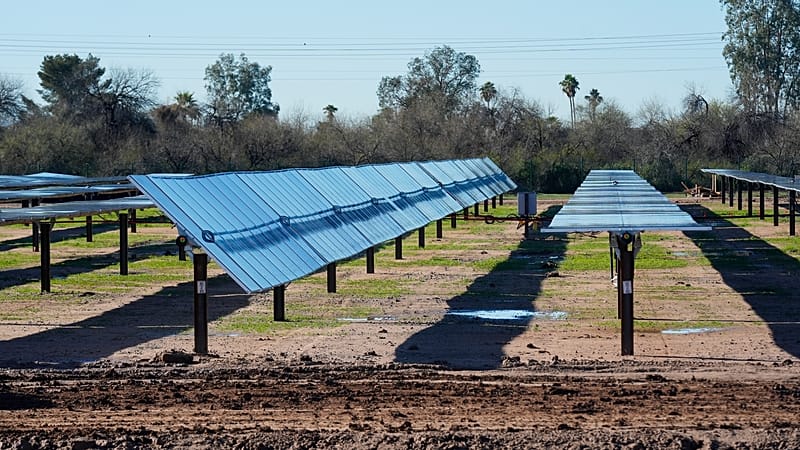
Storing energy underground may sound like science fiction, but it is not exactly a new practice in geological research. The first experiments were carried out in salt caverns in Germany in the 1970s. The process opens up a world of possibilities for renewable energy and the storage needs that come with it.
"One of the problems with the energy transition is that there is greater availability of energy from renewable sources which cannot be stored," Ricardo Pereira, a researcher at GeoBioTec at the NOVA School of Science and Technology in Lisbon, tells Euronews Earth. "It is possible to use that surplus electrical energy and store it temporarily in the rocks in the subsurface, at depths of 500, 1,000 or 2,000 metres," he explains.













