Earlier this month, the United Nations Office on Drugs and Crime (UNODC) released its latest regional report showing another year of record-breaking increases in drug seizures made by countries in Southeast and East Asia, particularly of methamphetamine and ketamine -- both synthetic drugs produced and trafficked regionally for the past two decades.
While increased seizures may indicate successes in efforts to reduce the size of drug markets, the fact that retail prices have dropped in Myanmar, Thailand and Indonesia suggests that the availability of synthetic drugs is greater than ever before. This has been reaffirmed in the UNODC World Drug Report 2026, released earlier this week to mark World Drug Day today.

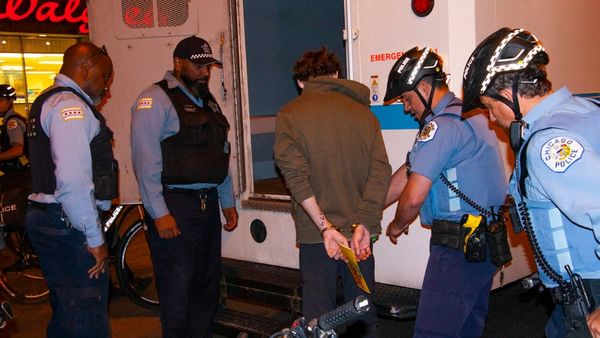
Increased drug seizures have overwhelmingly focused on ramping up law enforcement operations and scaling up levels of punishment, with the hope that this punitive approach would deter people from engaging with the illegal drug trade.
Singapore, Indonesia, Vietnam, Thailand and Malaysia impose death penalty sentences for trafficking. Although the Philippines abolished the death penalty, under the former president Rodrigo Duterte's anti-drugs campaign, 8,663 people were killed in extra-judicial executions according to official reports (the UN's human rights office believes the actual number could be well over 20,000), for which he is facing charges of crimes against humanity in the International Criminal Court.
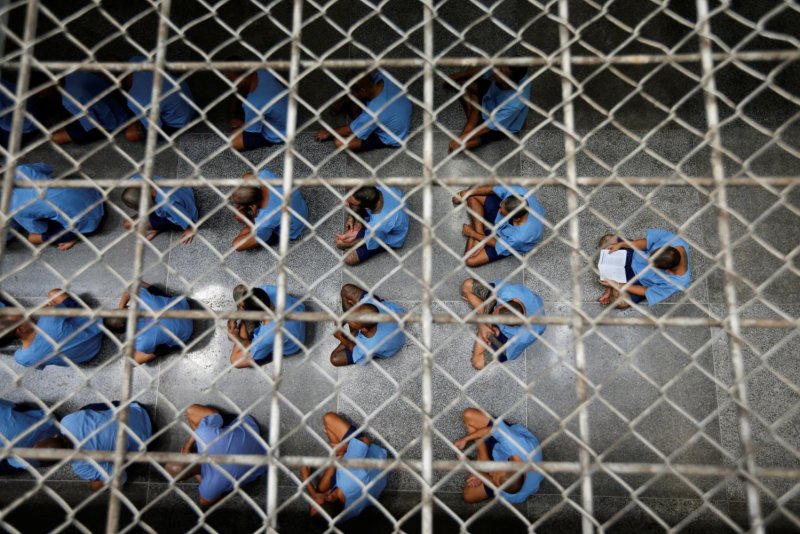
Throughout the region, over half of each country's prison population is made up of people charged with drug offences. Thailand has the world's second-highest rate of female incarceration -- over 60% for drug offences, and Indonesia, followed closely by the Philippines, has seen the world's fastest growth in female incarceration -- again, primarily for drug offences.
Even health responses such as drug treatment and rehabilitation are framed within punitive structures, where people are ordered into programmes that last for months or years, some of which are run by police or military forces. As reported by international and national human rights bodies, many drug rehabilitation facilities in the region are sites of torture, forced labour and other acts of violence. The immense stigma associated with the criminalisation of drug use and possession of drugs, in even small quantities, strips away the dignity of individuals and makes it untenable for them to seek help for drug-related concerns if they ever need it.
The devastating numbers of lives lost or irreparably damaged by drug policies in the region illustrate the heavy costs that are borne by people, in addition to the vast amounts of resources wasted, as governments pursue the illusion of becoming "drug-free". At the recent Asean summit in the Philippines in May, governments reaffirmed their commitment to a "drug-free" region without any acknowledgement of the huge costs incurred or their clear failure to achieve any progress towards their stated goals for over two decades.
To make any progress in responding to the rapidly growing drug market, the region's policymakers must acknowledge realities and face the facts: heavily investing in drug prohibition and harsh punishment has failed, expanding the illicit drug market by every indicator (eg: new types of drugs available, retail prices, levels of use and harms caused), and escalating the negative impacts on the health, well-being and human rights of people.
The role of government leaders and policymakers is to develop policy responses based on scientific evidence and lessons learned, taking account of the lived experiences of people directly impacted by existing policies, in a transparent and accountable manner that ultimately aims to improve the health and welfare of their people.
Indeed, this is the overarching objective of the three international drug control treaties; however, all efforts to advance the "health and welfare" of humankind must not violate international human rights obligations and standards. An increasing number of UN agencies and human rights experts are moving in this direction, promoting a range of reforms, from harm reduction to decriminalisation and the responsible regulation of drugs, as a more effective and rights-centred approach to drug policy.
The fact is that drug policies have to change. And some countries have already taken steps to do so, acknowledging the need to address some of the negative impacts, such as overcrowded prisons, particularly in Thailand, Malaysia and Indonesia. But tinkering with minor reforms is not enough. Bigger steps are needed, namely ending the criminalisation of drug use, and related actions, including possession for personal use and of drug use equipment. In line with recommendations from UN drugs, health and human rights authorities, over 30 countries around the world have decriminalised the use of drugs, and Thailand has already done so for cannabis and kratom.
Today, communities around the world are calling on their governments to support, not punish, people who use drugs. It is well past time for governments in Southeast Asia to show that they care much more about the lives and well-being of their people than chasing the increasingly unrealistic and damaging illusion of a "drug-free" Asean.
Gloria Lai is Regional Director: Asia, International Drug Policy Consortium.