The Howdah and What It Weighs
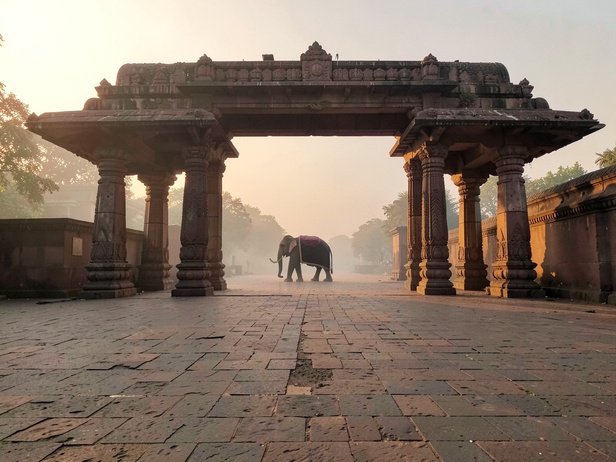
The golden howdah placed on the lead elephant at Mysore Dasara, the Ambari, weighs approximately 750 kilograms on its own. An Asian elephant in procession can carry a rider or two alongside it, bringing the total load to somewhere between 800 and 900 kilograms for the duration of the march. Asian elephants (Elephas maximus) are the largest land animals regularly used in ceremonial work, and their skeletal structure is built around weight-bearing: their leg bones are nearly solid, stacked vertically like columns rather than angled like a mammal that runs. Biomechanical studies of captive elephant locomotion have found that the spine, not the legs, absorbs most of the compression from a dorsal load. Unlike horses or camels, elephants lack a true wither or sacral ridge to distribute weight laterally, which means a poorly fitted or off-centre howdah concentrates pressure on the thoracic vertebrae. The Karnataka Forest Department, which manages the Dasara elephants, specifies a padded underframe between the howdah and the animal's back. Whether that padding is sufficient across a procession lasting several hours is a question veterinary observers have raised without a definitive published answer.