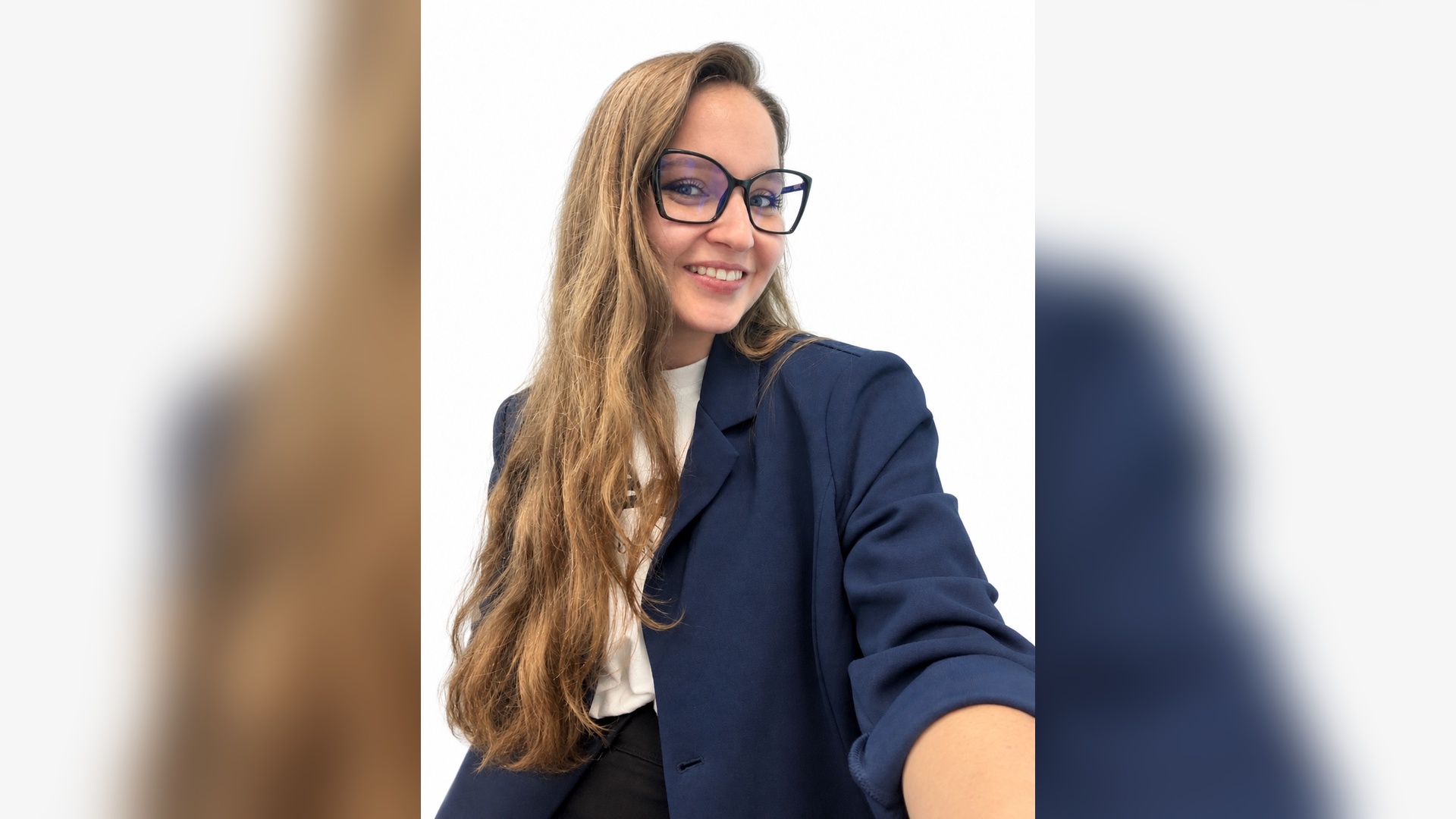
An expert in international education on how to build a language and professional support program for specialists relocating to the United States
One in five economically active immigrants with a higher education degree in the United States is unable to make full use of their professional knowledge and qualifications. According to the latest data from the Migration Policy Institute, about 20%, or 2.1 million, of these specialists remain unemployed after relocating or hold positions well below their level of training. Among the factors that keep them from fulfilling their professional potential are difficulties adapting to a new linguistic and social environment, says researcher and educator Elena Petrova. She teaches Russian and English to people of all ages, focusing not on memorizing rules but on the ability to use language in real situations. Beyond teaching, Elena Petrova is also a researcher in language education and the experiences of internationally educated professionals in the United States. She has published research papers, presented at academic conferences, and is currently conducting a research project on the challenges skilled international professionals face in the U.S. labor market and how they can better adapt to their new environment. We spoke with Elena Petrova about the communicative approach to teaching and her personal experience of moving to the United States. We discussed what a support system for foreign specialists striving to integrate into American society while preserving their professional and cultural capital should look like — one that enables them to put their skills and experience to effective use and contribute to the communities and workplaces they become part of.
- 45% of adult immigrants who arrived in the U.S. between 2020 and 2024 had at least a bachelor's degree. Yet not all qualified specialists manage to continue their careers at a level matching their training in their new home. One reason for this is language difficulties. Why does this become an obstacle even for people who speak English well?
- There can be several reasons. Let's start with the fact that knowing a language doesn't always mean being able to use it in real communication. Language teaching methodology often distinguishes between declarative knowledge — knowing the rules — and procedural knowledge — the ability to use that knowledge automatically in communication. You can know grammar rules perfectly well, be able to explain why a sentence uses a particular tense, and pass tests successfully, yet still struggle to respond quickly in an actual conversation. That is, a person knows how the language works but hasn't yet turned that knowledge into an automatic skill, and in that case they simply need more practice. This obstacle is also often tied to a language barrier, which is more of a psychological factor. Many immigrants know English very well but struggle with communication simply because they aren't used to speaking a foreign language in everyday life. That language barrier often fades over time, as a person grows accustomed and adapts to the new environment. Another problem many immigrants face is unfamiliarity with cultural context and slang or colloquial expressions. You can have excellent command of academic English and use it fluently in spontaneous speech — which, incidentally, was my own experience when I first arrived in the U.S. — and still find it hard to handle simple, everyday conversations simply because you aren't used to living in that linguistic environment.
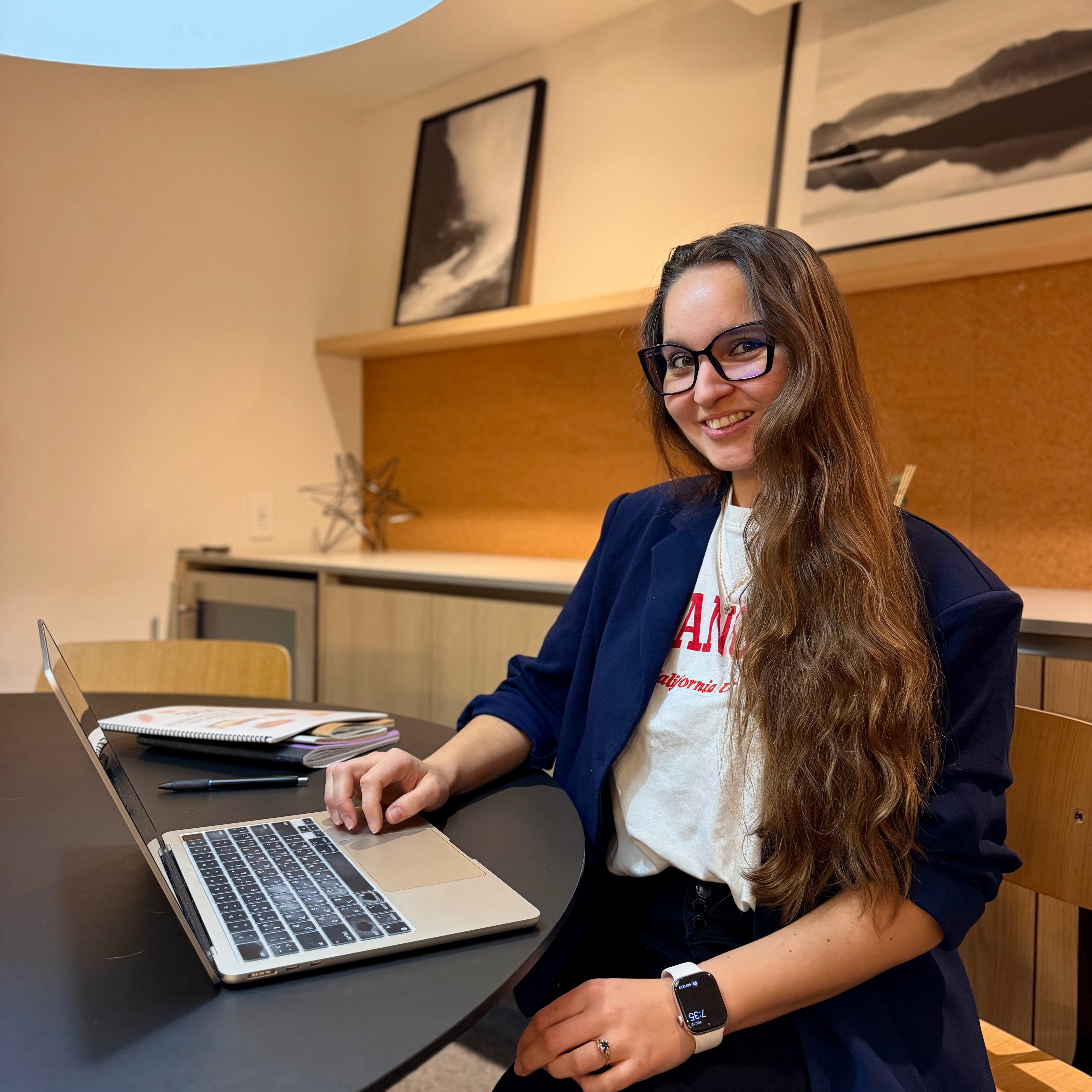
- As far as I know, you experienced this yourself after moving to the U.S., despite having a high level of academic English. How did you manage to solve the problem?
- That's right. I had an excellent command of academic English, grammar, and formal vocabulary, and I knew how to write academic texts and communicate successfully in academic settings. But when I arrived in the U.S., I realized that adapting to everyday American English required a different set of skills. I became more attentive to slang, abbreviations, idiomatic expressions, and the ways Americans naturally phrase their thoughts in everyday speech. I essentially had to build an additional layer of language through real-life exposure — TV shows, YouTube, podcasts. That's why I believe it's crucial to create a language environment for yourself in order to develop conversational skills. Social media, conversation clubs, and regular interaction provide the kind of language input and practice that a traditional textbook simply can't offer. I apply the same principle in teaching both Russian and English as foreign languages: my goal is to turn theoretical knowledge of the rules into the ability to use the language in real situations, and to turn passive vocabulary into active vocabulary.
- In the Russian Language Journal, you analyzed existing resources for learning Russian. What common shortcomings do you see in today's widely used teaching methods, and what do you propose instead?
- One problem is the gap between the language of classroom exercises and real communication: materials may explain grammar well but offer few situations in which the learner has to use the language independently to achieve a specific communicative goal. Another problem is the lack of authentic language and cultural context. Successful communication requires understanding what is appropriate to say in a given situation — how to phrase a request, express disagreement, or decline something. In my master's thesis on Russian verbs of motion, I tried to apply this principle when developing materials. It was important to me that learners not simply memorize the rules for choosing a verb, but gradually learn to select the right one automatically depending on the situation — that is, make the shift from declarative to procedural knowledge. So instead of isolated exercises, I used context and communicative tasks. To prepare a learner for real communicative situations, it's far more useful to ask them to describe how they usually get to the university than to simply give them twenty sentences requiring the correct verb of motion. This principle can be applied to language learning as a whole: a rule should be a starting point, not an end goal. Learners should first understand the system, then see it used in a broader context, try using it with the teacher's support, and gradually move toward independent speech.
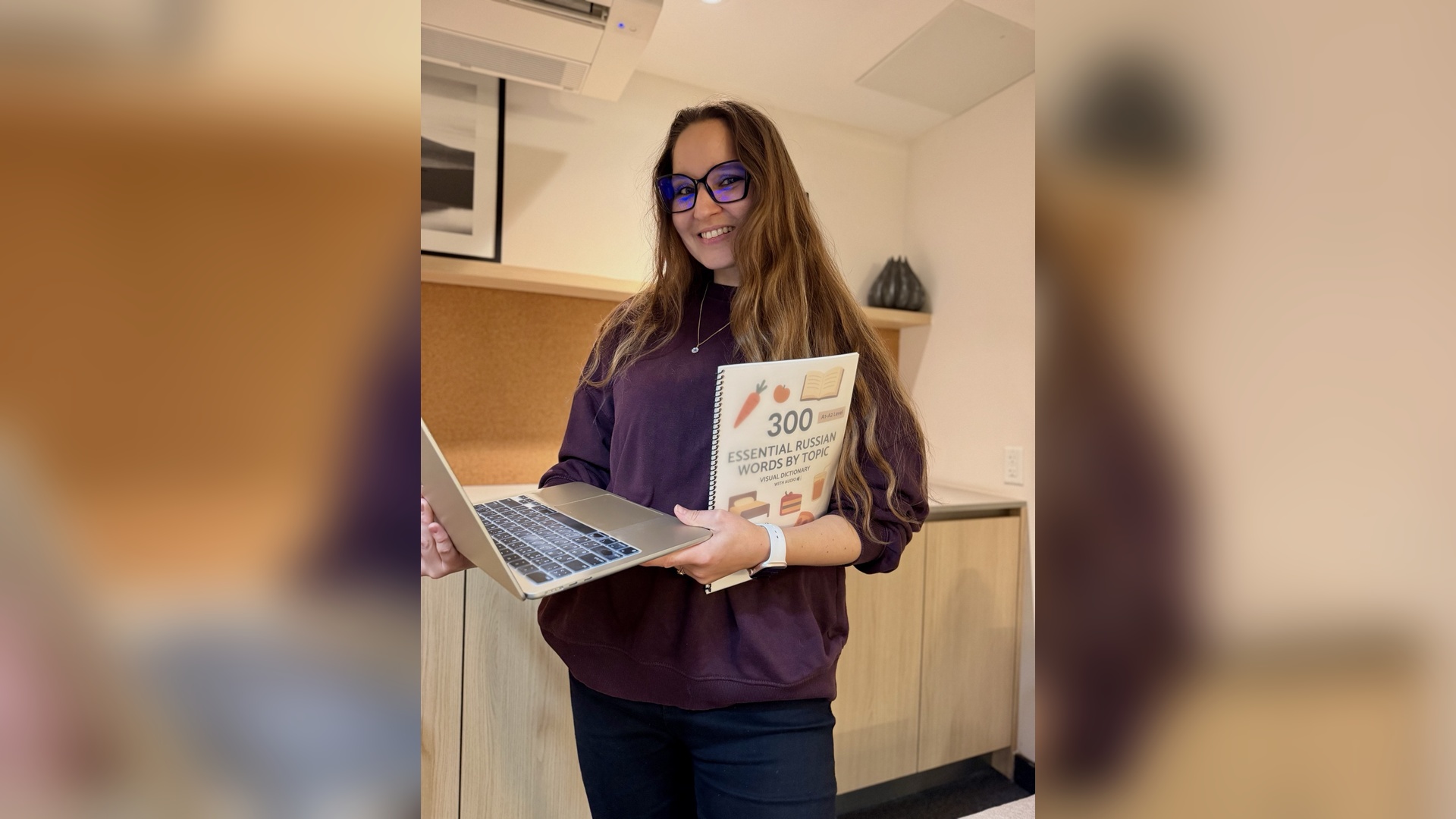
- This same principle — not simply providing knowledge but helping the learner turn it into a tool for communication — is also the foundation of your dictionary, 300 Essential Words in Russian by Topic. Why 300 words specifically, and how did you build the material to teach people to actually use a new language in daily life?
- I chose the number 300 deliberately: it's enough to cover the main everyday situations while keeping the material compact enough to complete in full. In selecting the words, I focused primarily on communicative value — how likely a beginner is to need it in real life and whether they'd be able to use it in a variety of expressions. It also mattered to me that the dictionary not be simply a list pairing a Russian word with its English translation. For each word, I created an illustration and an audio recording of its pronunciation, and I added ready-to-use conversational phrases that native speakers commonly use within each thematic section. With this approach, learners simultaneously see, hear, and use new vocabulary in context. Even at a beginner level, a person should be able to communicate using the language material they already know. So for me, the learner's vocabulary isn't measured by how many words they know passively. What matters far more is how broad their active vocabulary is and how effectively they can use it independently in speech, across different contexts and real-life situations.
- You teach both English and Russian, working with schoolchildren, students, and adults, using both traditional methods and digital platforms, where you have more than 40,000 followers from countries ranging from the U.S. and the U.K. to the Philippines and Saudi Arabia. How do your methods change depending on the audience, and are there any universal approaches?
- Of course, you can't teach a six-year-old and an adult the same way. With children, I use games, movement, and visual materials, since children learn better through interactive approaches; with adults, I can draw on their prior experience and the specific goal driving their language study. It's also important to understand the difference between language acquisition and language learning. Research shows that up to age 5–7, children acquire language naturally and unconsciously — that's acquisition. If a language is introduced after age 7, it has to be learned through conscious effort — that's learning. And the older a person is, the more conscious effort is required to learn a language. But there's one principle I apply with everyone, regardless of age: language has to be used for a real task. So I try to move learners from explanation to action — conversation, real use, solving a communicative task — as quickly as possible.
- Your work in education isn't limited to language teaching. At Illinois State University, you developed instructional modules for a program that helped incoming freshmen transition to the university. What do academic adaptation and foreign language learning have in common?
- In both cases, it isn't enough for a person simply to receive new information. They need to learn to apply it in an unfamiliar environment and gradually start acting independently. In language learning, that means moving from knowing the rules to actual communication; in the freshmen support program for education majors, whose modules I developed at the College of Education at Illinois State University, it means moving from knowing how the university works to putting that knowledge into practice by organizing one's own studies effectively.
- As far as I know, you're now researching the professional and social adaptation of highly skilled multilingual immigrants in the U.S. This looks like a natural continuation of your previous projects in language education and student adaptation to new environments. Tell me about the new project.
- My new project focuses on the professional and social adaptation of highly skilled immigrants in the U.S. — specialists who already have significant education, professional experience, and language resources, but who face difficulties transitioning into a new professional and cultural environment. I'm especially interested in the gap between a person's qualifications and their ability to put them to effective use in American society: finding work in their field, understanding professional and cultural norms, developing professional communication skills, building social, academic, and professional connections, and using multilingualism as a resource rather than an obstacle. Right now, I'm studying existing research and practices, conducting interviews with multilingual professionals, and analyzing the typical barriers they encounter during adaptation.
In the long run, this project builds on my work in language education, but it goes beyond traditional language teaching. I want to develop a practical, research-based platform and a set of resources to help highly skilled immigrants navigate the American professional environment more effectively and use their language and cultural competencies for professional growth. These resources are meant to cover not only language preparation but also professional communication, cultural adaptation, navigating the work and academic environment, and building a professional community. My goal, in short, is to bring together research, language education, and practical tools that can help qualified multilingual professionals integrate more successfully into the economic and social life of the United States while making the most of their existing skills and experience in ways that benefit the communities and economy they become part of.
- What are the first interviews showing so far?
- Participants frequently bring up problems with networking. Many also mention the unfamiliar culture of job interviews, the need to present their experience differently, and the importance of being more visible and proactive. There are also comments about differences in professional communication styles. To me, all of this is evidence that professional adaptation really does require far more than just a good command of the language.
- Relocation often forces a qualified specialist to start their career over from scratch. How can your project help preserve and make use of the professional experience they've already built?
- My goal is to build, based on my research, a comprehensive multilingual adaptation program that includes modules such as professional communication, intercultural competence, and workplace expectations. A separate track would focus on practical adaptation: navigating the core social and professional systems of the U.S., understanding where to find information, how to interact with institutions, and how to handle everyday and administrative tasks independently. I also consider career integration essential: building a professional network, understanding the American labor market, positioning one's international education and experience, preparing for interviews, and developing a professional identity in a new environment. Finally, I'd like to include a community and social integration component. After all, adaptation isn't just about being able to work successfully — it's also about being able to feel like part of society. The goal of my program isn't to "Americanize" people or replace their prior experience. On the contrary, the point is to preserve and make use of their existing professional and cultural capital, giving them the knowledge and tools they need to integrate successfully into American society and contribute their skills and experience to the U.S. economy and communities.