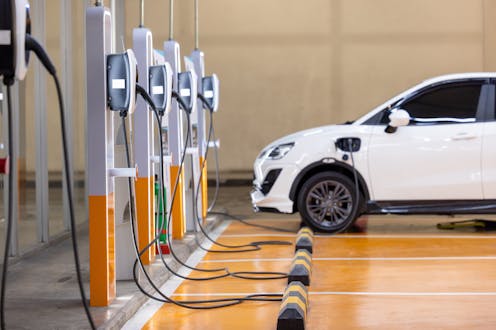
Electric vehicles (EVs) bring not just environmental promise, but also raise critical safety questions – chief among them, the fire risks posed by their lithium-ion batteries. While indispensable for powering EVs, these batteries present unique challenges, especially in confined spaces like parking garages, where the potential for fires carries significant consequences.
At the core of this risk lies the lithium-ion battery (LiB), a powerful energy storage device with considerable vulnerabilities. Several of these batteries’ components pose a fire risk, but the part known as the cathode is critical in this regard. These are typically made of either nickel manganese cobalt oxide (NMC) or lithium iron phosphate (LFP). NMC is more cost-effective, but also more prone to thermal runaway, a hazardous reaction that triggers sudden fires in LiB batteries.