Get all your news in one place.
100's of premium titles.
One app.
Start reading
The Times of India
The Times of India
World
TOI World Desk

Ebola returns: How this outbreak is different from before

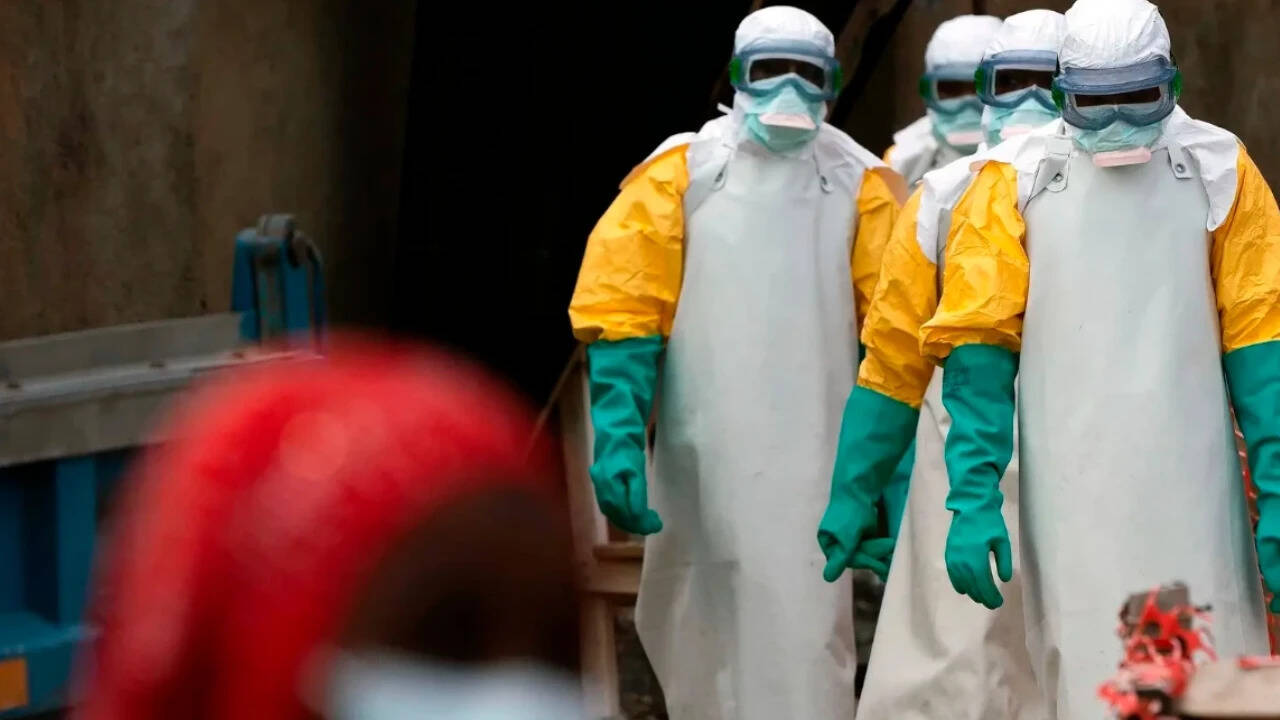
A deadly outbreak of Ebola has once again risen. The disease has been recorded in the Democratic Republic of the Congo (DRC), a country that has battled the disease more than any other nation on earth. This time, however, health officials are especially alarmed. The virus currently spreading in the country is the Bundibugyo virus, a rare and not well-known variant for which there is no approved vaccine and no proven treatment. More than 20 Ebola outbreaks have taken place in Congo and Uganda, but this is only the third time that the Bundibugyo virus has been detected, The Associated Press reported.

Within days of the outbreak being confirmed, the virus had crossed an international border. Within 48 hours of the outbreak, the World Health Organization (WHO) declared it as a global health emergency.
How it began?

The alarm was first raised on Friday (May 15), when health officials confirmed an Ebola outbreak in the Ituri region, located in the northeast part of the DRC. The area is also close to the borders with Uganda and South Sudan.

According to Africa Centres for Disease Control and Prevention (Africa CDC), the continent's top public health body, preliminary laboratory results from the Institut National de Recherche Biomédicale detected the Ebola virus in 13 out of 20 samples tested. At that point, around 246 suspected cases and 65 deaths had already been recorded, mainly in the Mongwalu and Rwampara health zones, DRC informed.

Al Jazeera reported that the outbreak came over five months after the previous Ebola outbreak, where 43 people died. The new variant appeared to have been spreading silently for some time before detection.

Ituri is more than 1,000 kilometres (620 miles) from the Congolese capital Kinshasa. Just days before the outbreak was confirmed, an attack by armed rebels in the same province had killed at least 69 people, as Al Jazeera reported. The violence makes the work of health teams on the ground not just difficult. The said issue is also raising concern with now the deadly virus growing at alarming speed.

Why this outbreak is different

The term ‘Ebola’ was first known to the public in relation to the catastrophic 2014–2016 West Africa epidemic or the 2018–2020 DRC outbreak. Both the outbreaks were caused by the Zaire variant of the virus. However, the health officials say that the current outbreak is something different.

Dr Jean Kaseya, Director General of Africa CDC, stated that the outbreak started in April. “So far, we don’t know the index case. It means we don’t know how far is the magnitude of this outbreak,” he added further. It was noted that on April 24, the symptoms of the first suspected case were registered, followed by the first death from the Ebola outbreak this year in Ituri on April 27. The Africa CDC noted in its report that by the time health authorities were first alerted to the outbreak on social media on May 5, 50 deaths had already been recorded.

According to The Associated Press , this is only the third time the Bundibugyo strain has ever been detected in an outbreak. The first was in Uganda's Bundibugyo district between 2007 and 2008, where it infected 149 people and killed 37. The second one was reported in 2012 in Isiro, where 57 cases were recorded with a death toll reaching 29.

The numbers continue to grow

The pace at which cases were being counted was itself a warning sign. On Friday, the Africa CDC reported 246 suspected cases and 65 deaths. By Saturday (May 16), the figures had jumped to over 300 suspected cases and around 87 deaths, The Associated Press reported.

Africa CDC said in its report that it was concerned about the risk of further spread due to several compounding factors, such as the urban context of Bunia and Rwampara, intense movement of people through the region, mining-related mobility around Mongwalu, insecurity in affected areas, and gaps in contact tracing and infection prevention.

"Given the high population movement between affected areas and neighbouring countries, rapid regional coordination is essential," said Dr Kaseya, in a statement on May 15. "We are working with DRC, Uganda, South Sudan, and partners to strengthen surveillance, preparedness and response, and to help contain the outbreak as quickly as possible."

On Saturday, Ugandan health authorities confirmed what many had feared: the virus had crossed into Uganda. A 59-year-old Congolese man had travelled from the DRC to Kampala, and reportedly died there, which was later confirmed as a laboratory-verified case of Ebola, the BBC noted.

A second case was subsequently identified in Kampala as well. According to the WHO, the second patient travelled from the DRC as well before dying. Uganda's government moved quickly to trace all individuals the deceased man had been in contact with.

Global Health Emergency: WHO

On Sunday (May 17), Tedros Adhanom Ghebreyesus, WHO Director-General formally declared the Ebola outbreak in the DRC and Uganda a Public Health Emergency of International Concern (PHEIC).

The WHO clarified that the outbreak does not meet the definition of a pandemic emergency. The organisation also advised against the closure of international borders, stating that the action would delay the very response efforts needed to contain the outbreak.

Even before the WHO's declaration, Africa CDC had called an urgent high-level coordination meeting on May 15, bringing together health authorities from the DRC, Uganda and South Sudan, alongside representatives from the WHO, the United Nations Children's Fund (UNICEF), the United States CDC, the European CDC, Médecins Sans Frontières (MSF), the Gates Foundation, and dozens of pharmaceutical and global health partners including Gilead Sciences, Merck & Co., Johnson & Johnson, BioNTech, and Moderna.

The agenda was wide-ranging, including immediate response priorities, cross-border coordination, surveillance, laboratory support, infection prevention and control, risk communication, safe and dignified burials, and resource mobilisation to cater to the very deadly outbreak.

Concerning history that demands attention

This is the country's 17th confirmed Ebola outbreak since the virus was first identified in 1976 near the Ebola River, the BBC reported. Around 15,000 people have died from the virus in African countries over the past 50 years. The deadliest came between 2018 and 2020, killing nearly 2,300 people. According to the BBC , last year, around 45 people in a remote region died in an outbreak.

The Times of India reported that Ebola is a nightmare disease. Ebola virus disease (EVD), a severe illness that attacks multiple body systems. The virus damages blood vessels, organs, and the immune system.

The Africa CDC describes Ebola as a disease transmitted through direct contact with the bodily fluids of an infected person, or through contaminated materials, or the remains of someone who has died from the disease. It spreads between people through infected bodily fluids, such as blood, semen, and vomit, the BBC noted. It cannot be spread through the air, which limits its transmissibility compared to respiratory illnesses like COVID-19.

The WHO stated that the symptoms from the disease appear between two and 21 days after being infected. The initial symptoms that appear are flu-like, like a fever, headache, and tiredness. As the disease progresses, vomiting and diarrhoea develop, and eventually organs of the body tend to stop working. It has also been stated that some patients may face internal and external bleeding during the infection.

What is the future?

The biggest reason to worry is how the fast infection can deteriorate a person’s condition. Hence, health officials have stressed over early diagnosis. Although response teams are faster and more responsive to say, conflict zones, limited medical care in regional areas, etc can create a hurdle in the process.

With a confirmed case in Goma and cases in Uganda, the health officials are acutely aware that population movement, urban density, and the lack of effective countermeasures against the Bundibugyo virus creates challenges for the authorities.

The Africa CDC said it will work with partners to assess the availability and suitability once the results confirm the exact strain. In the meantime, the agency urged communities in affected and at-risk areas to follow guidance from national health authorities, report symptoms early, avoid direct contact with suspected cases, and cooperate with response teams.

The WHO's declaration is a loud signal to the international community. The Bundibugyo virus is yet to get recognised globally, but it is Ebola. And Ebola, as history has shown, waits for no one.

Sign up to read this article
Read news from 100's of titles, curated specifically for you.
Already a member? Sign in here
Related Stories
Top stories on inkl right now
One subscription that gives you access to news from hundreds of sites
Already a member? Sign in here
Our Picks
Fourteen days free
Download the app
One app. One membership.
100+ trusted global sources.