Get all your news in one place.
100’s of premium titles.
One app.
Start reading
Roll Call
Roll Call
Aidan Quigley

Earmarks flood spending bills after a year's hiatus

Congressional earmarks returned with a vengeance in fiscal 2026, with familiar faces topping the rankings in each chamber.

Last year’s full-year continuing resolution wiped out billions of dollars in home-state projects, but lawmakers rebounded and have enacted nearly $15.5 billion in earmarked funding for fiscal 2026 so far. And a total of $272 million in disaster preparation earmarks for the Federal Emergency Management Agency remain in limbo in the Homeland Security bill, which Congress has not reached agreement on.

Longtime appropriators with key positions on the Energy-Water Appropriations subcommittees topped the lists in their respective chambers: Rep. Chuck Fleischmann, R-Tenn., and Senate Appropriations ranking member Patty Murray, D-Wash.
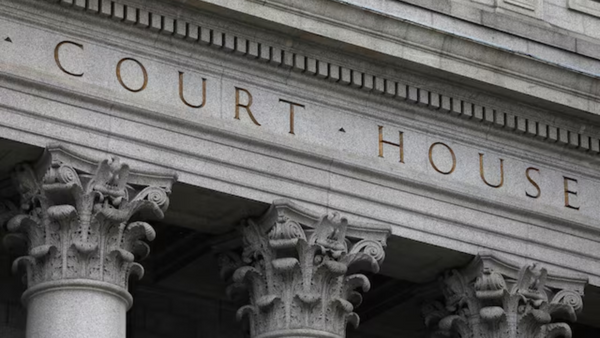
Fleischmann’s $251 million total is driven by one massive project: $213 million in the Energy-Water bill for the Army Corps of Engineers’ Chickamauga Lock project on the Tennessee River. Fleischmann, the House Energy-Water Appropriations Subcommittee chairman, has been laser-focused on the project, which started construction in 2004. The funding will go toward completing work on the lock chamber and approach walls, as well as the work to decommission and restore the existing lock, Fleischmann wrote in the letter certifying the project.

The project “increases job flow into Chattanooga and East Tennessee, makes it easier for recreational and commercial vessels to pass through the dam, and supports the efficient transportation of cargo,” he said.

Army Corps projects largest

The Energy-Water measure features the Army Corps of Engineers, a popular recipient of congressional funding.

Among the nine spending bills that contain earmarks this year, the Energy-Water measure was second in the dollar value of project funding, with $2 billion across just 274 big-ticket projects. But it ranked far behind the leading bill, Transportation-HUD. That measure far outshone the rest, with just under $6 billion in project funding across 3,212 individual projects.

Murray received $244.7 million in funds for her state, including $190 million for the Howard A. Hanson Dam project in Washington that she shared with Sen. Maria Cantwell, D-Wash.

For this analysis, CQ Roll Call gave members full credit for projects they co-sponsored with other lawmakers in adding up members’ totals. Often, senators share earmark requests with their counterparts in their states or with the House members whose district the project is in.

CQ Roll Call’s analysis also includes the Homeland Security projects, which are likely to be enacted if lawmakers can reach a deal to provide full-year funding for the department.

Murray serves as the Senate Energy-Water ranking member and has long championed the Hanson Dam fish passage facility on the Green River in western Washington. But last year’s full-year continuing resolution gave the administration increased authority to pick which projects to fund, which led to an imbalance in favor of red states.

The Hanson Dam project, which is needed to connect the upper and lower watersheds of the river for salmon migration, was one of the projects that got the short end of the stick.

“It does not pass muster that nearly half a billion dollars is no longer needed for Washington state’s Howard Hanson Dam, nor should anyone believe that the most populous state in America, California, should receive exactly zero dollars for Army Corps construction work,” Murray said at the time.

But now, thanks to the bipartisan efforts to regain control over spending decisions from the administration, the project will again receive funding.

Senate Energy-Water Appropriations Subcommittee Chairman John Kennedy, R-La., ranks third in the Senate, with $450.6 million in funding secured. His largest project — shared with Sen. Bill Cassidy, R-La., who landed in fifth in the overall rankings — is $131.5 million for the Army Corps of Engineers for the Morganza to the Gulf project.

That project is in coastal Louisiana and aims to lessen the risk of hurricanes and storms by strengthening levees and other infrastructure. The project would reduce the risk of flooding to a population of 200,000 in an area “of intense concentration of energy infrastructure,” according to the corps.

It’s shared with two Louisiana Republicans in the House, Majority Leader Steve Scalise and Rep. Clay Higgins, which is good enough to place them fourth and fifth in their chamber.

Another massive Army Corps of Engineers project is responsible for boosting the second- and third-place finishers in the House: Republican Guy Reschenthaler and Democrat Chris Deluzio, both of Pennsylvania. Reschenthaler totaled $214 million, while Deluzio finished at $202 million, both largely thanks to $183.8 million for the Montgomery Lock and Dam project on the Ohio River.

Appropriators win big

Other senior appropriators make up the rest of the top of the Senate’s rankings, with Sen. Mitch McConnell, R-Ky., just behind Murray with $483.7 million. The Defense Appropriations Subcommittee chairman, who is retiring at the end of this term, is renowned for his ability to direct funding to his state.

That includes $70 million for a bioscience center at the University of Louisville in the Commerce-Justice-Science bill and $45 million for an air traffic control tower at the Army’s Fort Campbell in the Military Construction-VA bill.

Senate Appropriations Chair Susan Collins, R-Maine, has the fourth-highest total in her chamber, at $420 million, including $45 million in the Commerce-Justice-Science bill for a health science complex at the University of Maine.

Collins also secured $10 million for Stephens Memorial Hospital, which is in the western part of the state, in the Labor-HHS-Education bill. That money will be used to expand the hospital’s emergency department and oncology infusion center.

Collins is highlighting her work directing federal spending to Maine in her reelection campaign, which she announced earlier this month. She is one of the Democrats’ main targets in 2026, running in a state that former Vice President Kamala Harris won by 7 points in the 2024 presidential election.

The House doesn’t accept earmarks for the Labor-HHS-Education bill, which features $1.37 billion in Senate projects only. Some House appropriators, including Labor-HHS-Education Subcommittee Chairman Robert B. Aderholt, R-Ala., are pushing to reinstate projects into the bill for the upcoming fiscal year.

House appropriators also landed at the top of the list of their chamber, ranking just below the members with huge Army Corps of Engineers projects.

Commerce-Justice-Science Appropriations Subcommittee Chairman Harold Rogers, R-Ky., House Appropriations Chairman Tom Cole, R-Okla., House Transportation-HUD Appropriations Subcommittee Chairman Steve Womack, R-Ark., and Rep. Jake Ellzey, R-Texas, all landed in the top 10.

Cole, for example, secured $120 million in funding, including $17 million in the Transportation-HUD bill for airport improvements at the University of Oklahoma’s Westheimer Airport.

The airport is an “integral component of the transportation infrastructure serving the city of Norman and the surrounding region,” Cole said in his letter endorsing the project, which will include improvements to the current terminal and the creation of a new space for the university’s School of Aviation.

“This will create a more passenger focused experience with efficient circulation and increased passenger seating, while addressing [Americans with Disabilities Act] concerns, enhanced security, and expanded site improvements for the increased flights and operations,” Cole wrote.

The post Earmarks flood spending bills after a year’s hiatus appeared first on Roll Call.

Sign up to read this article
Read news from 100’s of titles, curated specifically for you.
Already a member? Sign in here
Related Stories
Top stories on inkl right now
Our Picks
Fourteen days free
Download the app
One app. One membership.
100+ trusted global sources.