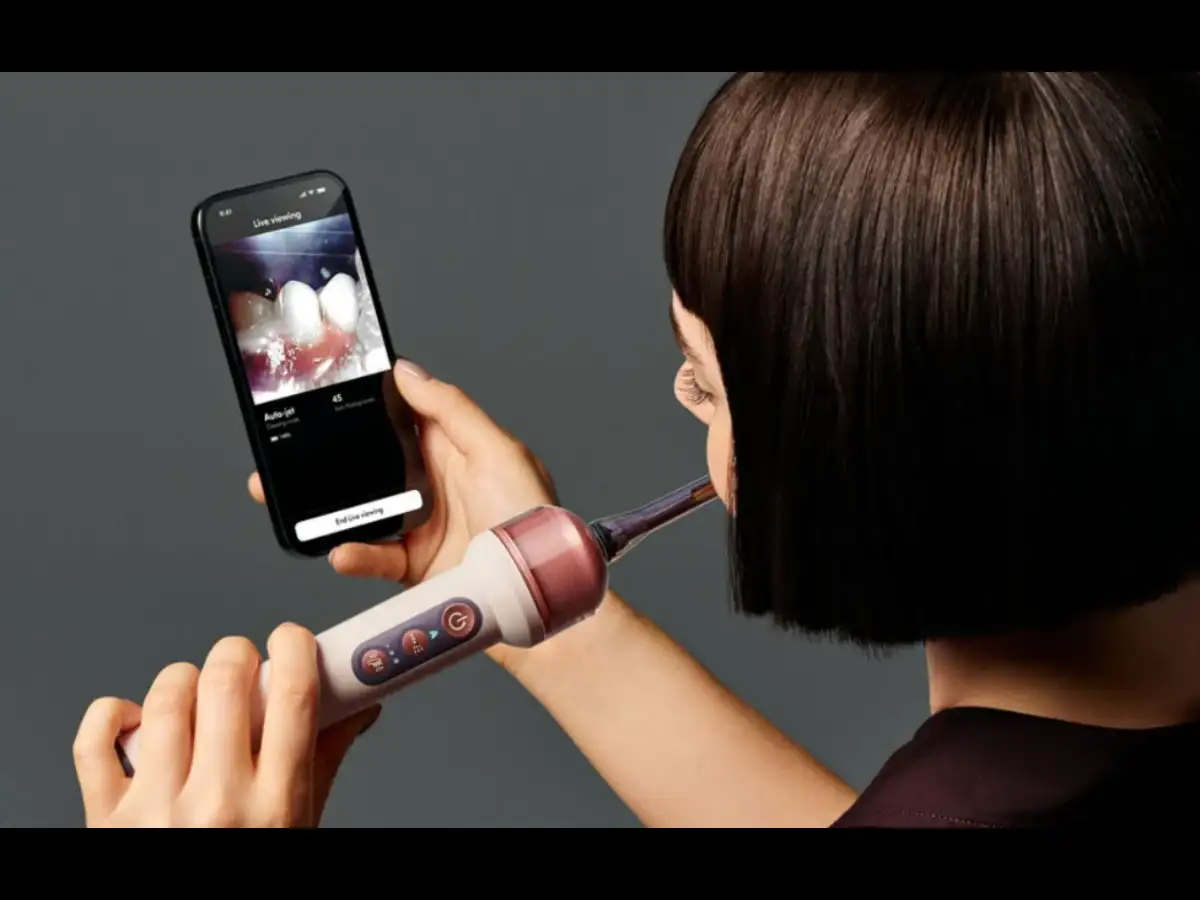
Singapore-based British multinational Dyson spent six years to develop a tool that uses a camera, machine learning, and a precision water jet to do a daily activity that most of the world do in the morning lucidly: cleaning your teeth. But after a few weeks of its launch on September 1, the $499.99 Dyson brush was pulled from sale in several markets after early customers reported problems with the device.
People may debate if this is an apocryphal story or overengrained or future-proof tool, but the reality is besides brushing, it was programed to do more. Its 100,000-pixel macro camera uses Dyson’s machine-learning-powered Gap Optical Targeting technology to scan 28 live images per second, to identify gaps between teeth, and to trigger a targeted burst of mouthrinse within 100 milliseconds.
“We wanted to solve three fundamental problems: how to see those gaps, remove plaque, how to improve cleaning performance while brushing,” said James Dyson, Dyson’s founder and chief engineer.
Six years, 661 engineers and 470,000 dental images
Dyson says in its product description that the CameraJet involved 661 engineers, 38 patents, and 30 dental professionals during development. Then it was trained using over 470,000 dental images, while the device itself runs on 16 million lines of code.