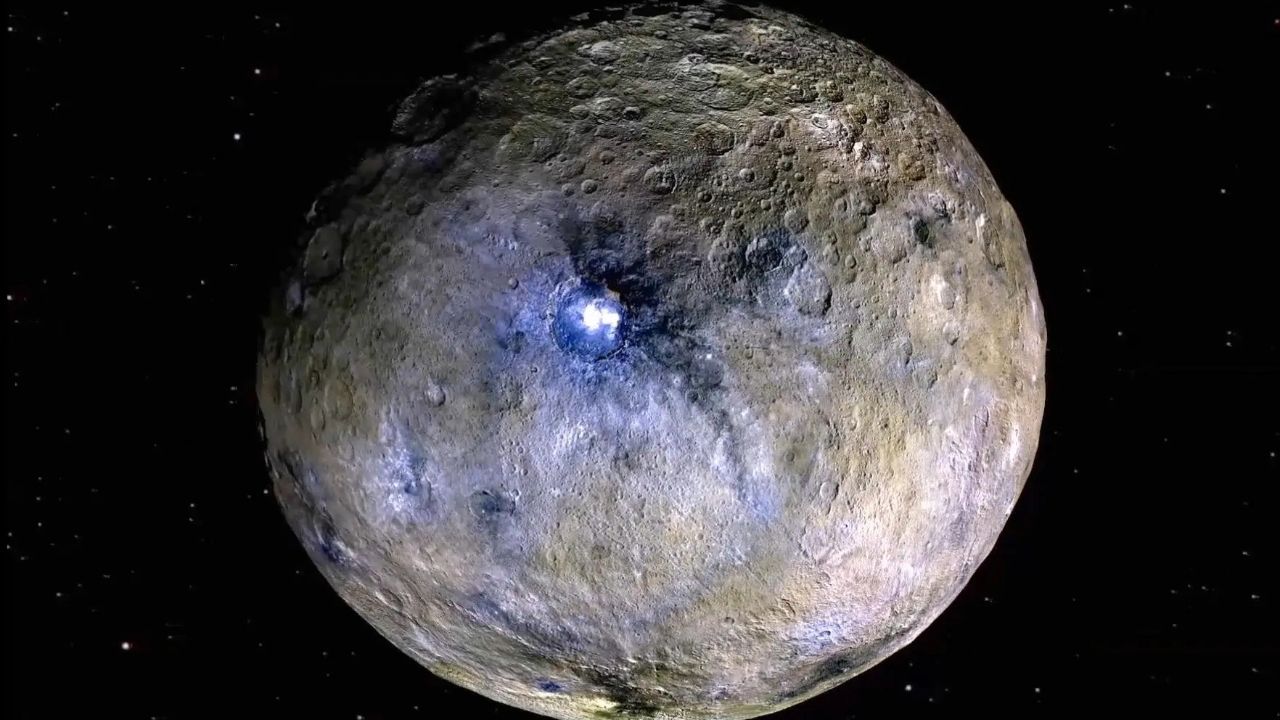
Ceres, the largest object in the asteroid belt between Mars and Jupiter, has long been cast as a frozen relic of the early solar system — quiet, airless, and lifeless. But new research suggests that billions of years ago, this dwarf planet may have harbored the right ingredients to support simple microbial life.
That's according to a new study using data from NASA's Dawn spacecraft that opens the door to reevaluating the habitability of similarly small, icy bodies in the solar system, scientists say. If Ceres ever was habitable, its window to potentially sustain life likely closed billions of years ago. Today, its surface is bitterly cold, with most of its underground water frozen into a thick shell of ice, with some remaining as a salty brine trapped below.