
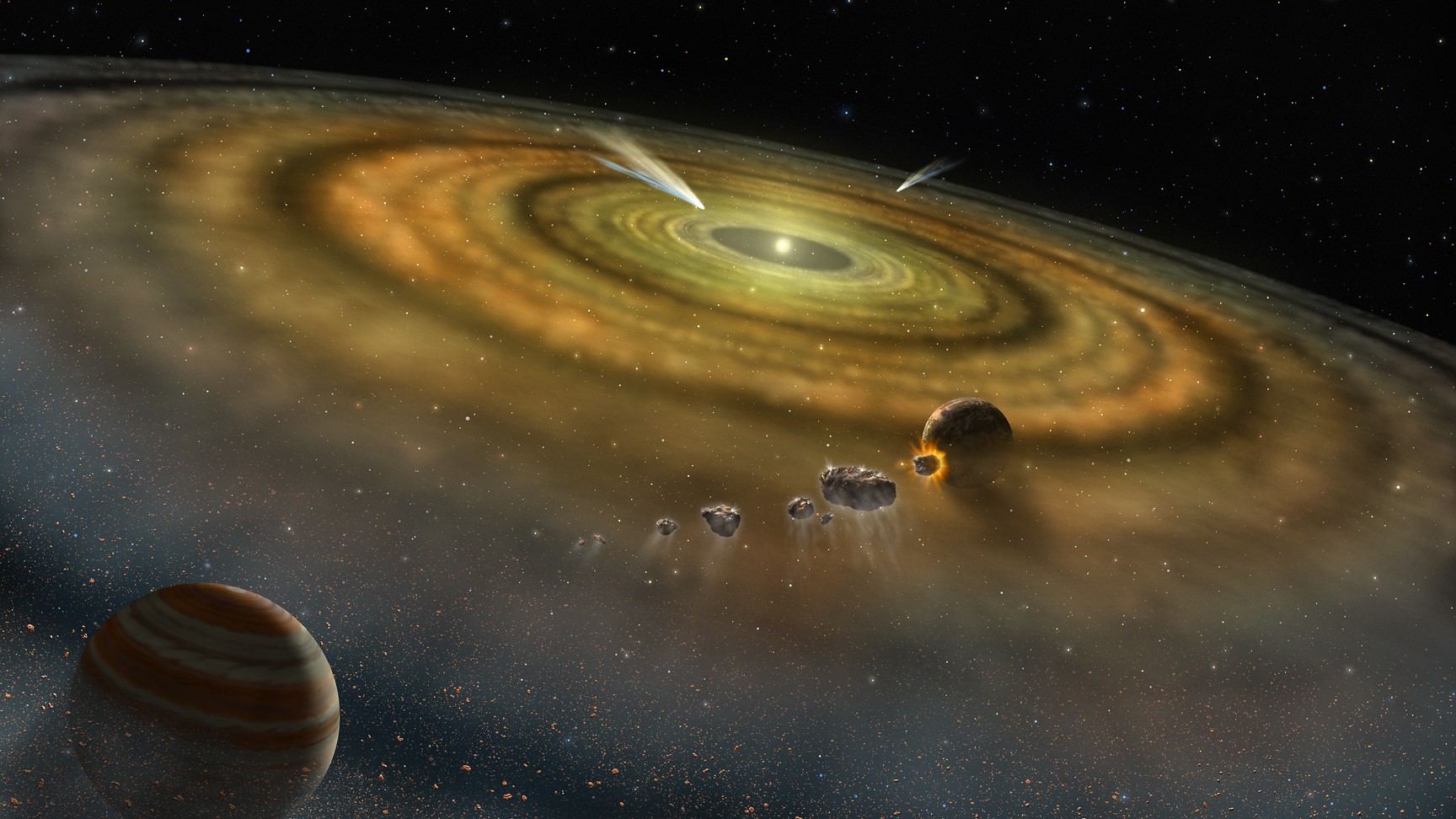
It would appear that the so-called "great instability" event that wreaked chaos among the planets, sending the gas giants careening through space until they settled into the orbits we know today, occurred between 60 and 100 million years after the birth of the solar system. This is the conclusion of some careful scientific detective work that has connected a type of meteorite to an asteroid that was once pushed around by those marauding planets.
What's more, scientists believe the migrating planets — primarily Jupiter — could have led to the formation of Earth's moon by destabilizing the orbit of a Mars-size protoplanet called Theia. This destabilization may have instigated a collision with Earth that sent debris into space. It is this debris, scientists believe, that may have formed the moon.