
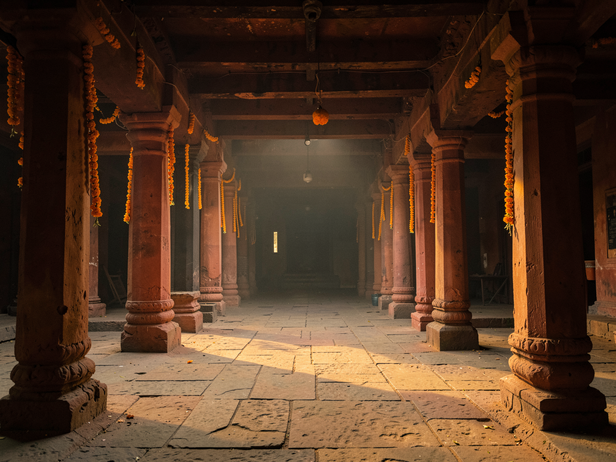
What a Bonedi Bari Puja Actually Is
Durga Puja in a bonedi bari is not a public event that a family happens to host. It is a private ritual that a family has agreed, for generations, to let the neighbourhood watch. The zamindar families of Bengal began commissioning their own Durga idols in the sixteenth and seventeenth centuries, partly as an act of devotion and partly as a display of aristocratic standing. The courtyard, the thakur dalan, a pillared hall open on one side, was built specifically for the idol and the rituals around her. When the zamindari system ended in 1953, the land went but the puja stayed. Families that had lost their estates kept the ritual because by then it was inseparable from who they were. The idol that arrives on Shashthi and leaves on Dashami is the same idol, in the same posture, made by the same lineage of artisans, that their ancestors installed two or three centuries ago. The clay, the straw armature, the pigments, all follow a house-specific canon that no outside committee has ever revised.














