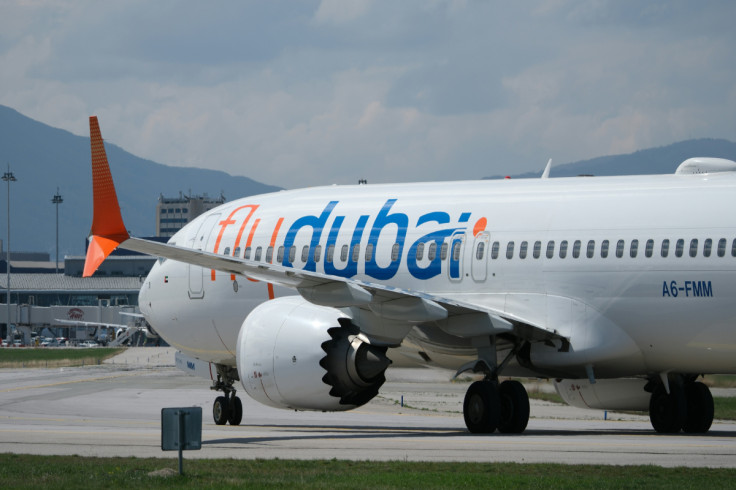
A Flydubai flight from Dubai to Tel Aviv was forced to divert to Saudi Arabia on 30 September after a cockpit incident sent the aircraft into a rapid descent.
Flight FZ1073 landed safely in Tabuk, and all passengers were accounted for, Flydubai confirmed. Beyond that, several details remain under investigation, including why the incident happened and whether it should ultimately be classified as terrorism, attempted hijacking or another form of unlawful interference.

What Is Confirmed About Flydubai FZ1073?
FZ1073 departed Dubai International Airport at 07:05 local time for Ben Gurion Airport, according to Flightradar24.
Around two-and-a-half hours later, tracking data showed the aircraft descending sharply from about 34,000 feet. The aircraft first transmitted squawk code 7700, indicating a general emergency, before switching to 7500, the international transponder code used for unlawful interference.

It briefly entered Jordanian airspace before turning back towards Saudi Arabia. Saudi Arabia's National Transport Safety Center said Tabuk air traffic control received a distress call at 08:44 local time requesting an emergency landing. The aircraft landed at Prince Sultan bin Abdulaziz International Airport.
Flydubai confirmed an 'altercation occurred in the flight deck' and said the crew travelling aboard the aircraft helped secure it and divert safely. The airline said all passengers and crew were safe and accounted for.
What Do Israeli Officials Say Happened in the Cockpit?
Israeli Prime Minister Benjamin Netanyahu gave an account, saying one pilot stabbed another and 'apparently tried to crash' the aircraft. He said passengers and a crew member entered the cockpit and overpowered the alleged attacker.
The injured captain was identified as Indian national Smit Machchhar, and the Indian embassy in Saudi Arabia told Reuters he underwent surgery and was in stable condition.
As far as passengers' accounts are concerned, they described a violent struggle. Yaniv Hayun said the injured pilot managed to open the cockpit door before collapsing, allowing others to enter. He claimed the other pilot was attempting to damage instruments before being restrained.
Those accounts add detail, but they do not replace the official investigation into the sequence of events.
Was FZ1073 Hijacked or Was It a Terror Attack?
An absolute conclusion of the incident remains under investigation for now. The 7500 signal confirms the crew reported unlawful interference, but it does not by itself establish motive or prove a conventional hijacking attempt.
Israeli Defence Minister Israel Katz characterised the episode as an attempted 'jihadist terror attack'. However, no publicly released finding from Saudi investigators has established a terrorist motive.
The Saudi National Transport Safety Center said investigators are collecting evidence and coordinating with relevant authorities to determine the circumstances and aviation-safety aspects of the emergency.
Reports have differed over the alleged attacker's identity and nationality. Until investigators establish those details, claims circulating online should be treated cautiously.
Aftermath of Dubai-Tel Aviv Flight Diversion
According to reports, passengers later continued to Tel Aviv aboard a replacement Flydubai aircraft. The airline said its immediate priority was supporting those involved and cooperating with authorities.
For now what is known is that on 1 October, FZ1073 had a cockpit altercation, sent emergency signals, descended quickly, and diverted safely to Tabuk. Investigations are ongoing into the attacker's motive, cockpit sequence, and legal classification.