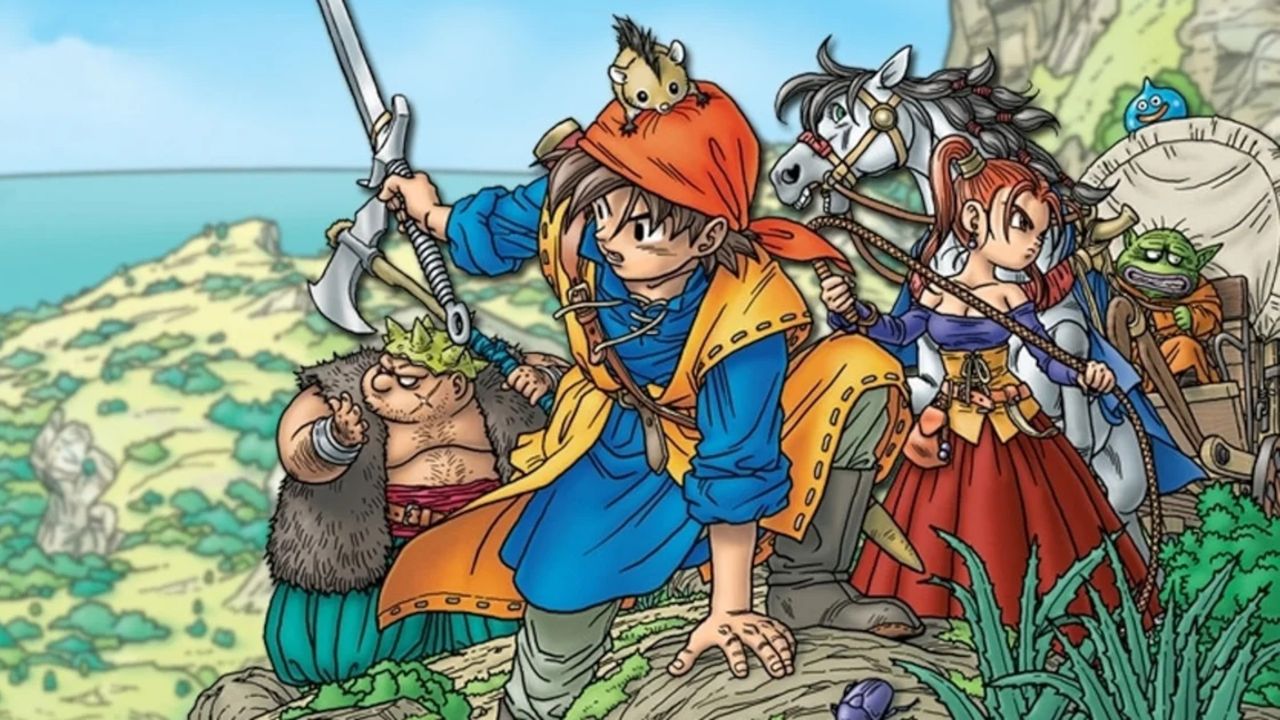
Ask any writer who's used both British English and American English, and we can list a multitude of differences between them. They're the same language, but with lots of contrast in execution. Long-time video game translator Richard Honeywood opened a can of slimes by opting for the British end of the spectrum when translating Dragon Quest 8, to stand-out from the distinctly more American Final Fantasy localizations, and the developers weren't happy about the change.
"I knew we needed to be careful because sometimes we're going to have references across games, and we need to keep the names consistent," he explains to Time Extension. "I needed to solve those types of issues. Because it was a comical, lighthearted fantasy, I really wanted to use British humor, which didn't fly with the American office; they couldn't understand it, and they really hated it."

To him, Final Fantasy was "basically cyberpunk" in English-speaking territories, and that leaned quite naturally into the US approach. Dragon Quest had "more traditional fantasy" elements, and there was a "faux-Shakespeare feel," despite the American localization, that he could lean into. The cynicism was real.
Yutaka Sano, then-localization manager at Square Enix, believed it'd alienate players in the US, and compromised by saying they could only use two out of punctuation, spelling, and phrasing, with the third being kept American. "Which is like the dumbest rule ever; it's either British or it's not," Honeywood remembers.
He mentions Dragon Quest Heroes: Rocket Slime as an example, where the punctuation and phrasing were British, but the spelling was more ambiguous, avoiding words with regional alterations. This all led to a greater presence of experts in British English among Honeywood's staff, but a mandate required one voice on the American English side.
Matt Alt, who'd worked on Dragon Quest 7, became the squad's US representative. "He was our barometer, such as in the case of Cash and Carrie, who are in a town called Baccarat," Honeywood recalls.
"These were two characters who we characterized as very in-your-face Americans, basically British people taking the mickey out of Americans. Matt thought it was hilarious, and he actually helped us turn those Americanisms up to 11."