Artificial intelligence has become the defining topic in nearly every field, from finance and healthcare to education and manufacturing. Investors are enthusiastic, headlines are constant, and companies across the country are exploring how to fast-track digital tools into their operations. This rapid push is raising important questions about how technology should be introduced into fields where human judgment and experience carry extraordinary weight.
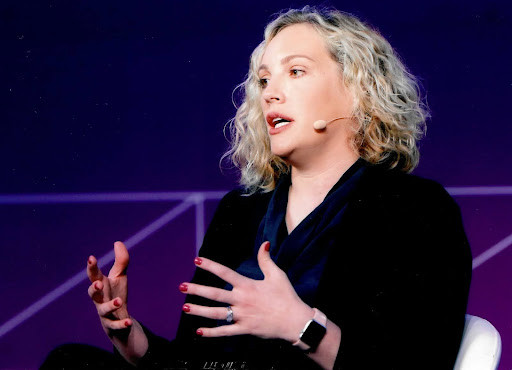
For Dr. Diana K. Grauer, an engineer, educator, and founder of Grauer Consulting, LLC, this moment is an opportunity to broaden the conversation. She believes that while technology can serve as a powerful enabler, it should never replace the foundational expertise that keeps complex systems functioning. Her career spans R&D, advanced engineering, industrial operations, power generation, and hydrogen development. She has spent years working in environments where careful planning and informed decision-making are essential to public safety. That experience has shaped her belief that the value of AI in industries depends entirely on the strength of the human knowledge behind it.
"AI is not new," Grauer says. "Long before the current headlines, engineers relied on forms of machine learning, pattern analysis, and data modeling to understand and optimize systems." Grauer remembers solving matrix analysis problems in college and explains that many of the concepts now packaged under the AI label have been used for decades. "What has changed is the speed at which companies may feel pressure to adopt these tools and the perception that technology can bypass the education and training once considered essential," she says.
Grauer stresses that progress is not only measured by speed, but also by accuracy, outcome, and a deep respect for the physics and fundamentals behind a process. If those foundations are overlooked, Grauer notes, even the most advanced tools can lead users in the wrong direction. She says, "Public conversations often focus on the risk of so-called AI hallucinations. But these are not abstract glitches. They are miscalculations, fundamentally wrong answers. A misplaced decimal or an inaccurate assumption may not matter much in a casual setting, but in industrial fields, a wrong answer can have serious consequences."
This is one reason she believes the broader public tends to underestimate the importance of human expertise in traditional industries. According to Grauer, oil and gas, heavy industrial work, and large-scale power generation are rarely framed as exciting or modern in mainstream discussions. Yet these fields require extraordinary amounts of training, rigorous standards, and years of experience. Grauer explains that many younger professionals entering the workforce are technology native, which is a strength, but they still need to learn the fundamentals behind the tools. "Without that knowledge, it becomes difficult to question the output of an AI model or determine when something simply does not make sense," she notes.
In industrial environments, a wrong decision not only affects profitability but also infrastructure, equipment, and the safety of workers. Grauer points to long lead times for major equipment, increased pressure on power systems, and ongoing workforce shortages as examples of where gaps in education and training are already being felt. She notes that despite widespread digital adoption, safety metrics such as total recordable incident rates have not shown clear improvement. To her, this signals the need for balance rather than acceleration.
"Technology should support people, not replace them," she says. "For example, my phone allows me to meet with anyone in the world, but the ideas and decisions in that conversation come from my experience, not from the device." She believes the same is true across every industrial setting. The tools may change, but the human ability to observe, teach, protect, and solve problems remains central.
This belief is deeply rooted in her background. Grauer comes from a long line of industrial workers and sees each generation as building something safer and more productive for the next. She describes a strong protective instinct across the industry, a shared commitment to leaving job sites in better condition than they were found. "Certifications, inspections, and standards exist because people in the field wanted to safeguard those who would follow," she says. "If the human role is removed from that process, the instinct to protect may start to fade."
Grauer is not opposed to AI. In fact, she sees enormous potential in the thoughtful use of digital tools. According to Grauer, there is real value in slowing down, teaching fundamentals, and reinforcing the idea that rushing toward profitability may introduce unnecessary risk.
Her message is ultimately one of balance. AI can strengthen industries, support workers, and create new possibilities, but only when paired with the human insight that understands the system behind the data. She states, "In fields where accuracy protects lives and keeps essential infrastructure running, I believe the conversation should not be about replacing people, but empowering them."