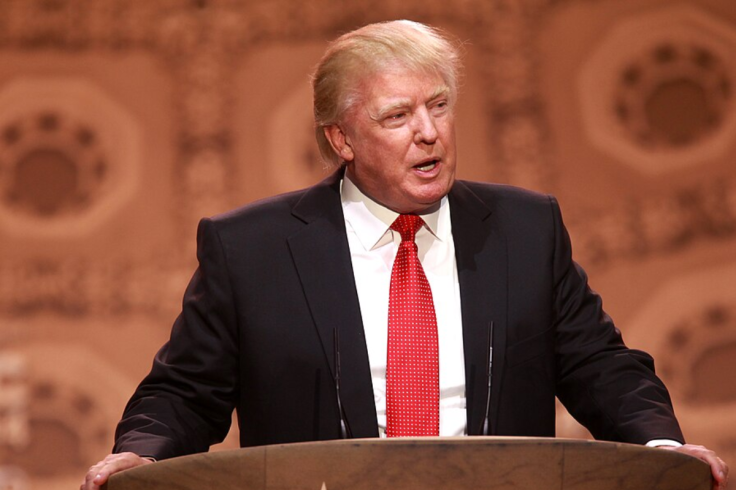
President Donald Trump is facing renewed health speculation after clinical and forensic psychologist John Paul Garrison interpreted footage from Trump's 1 October visit to a Peterbilt Motors plant in Denton, Texas, as potentially showing neurological problems. Garrison has not examined Trump and is not the president's treating physician or a neurologist.
The claims contrast with Trump's most recent publicly released medical examination. Physician to the President Capt. Sean P. Barbabella said Trump underwent his annual physical on 26 May 2026.
The physician's report described Trump's neurological and overall physical function as strong and said he remained fit to carry out his presidential duties. His neurological assessment reportedly recorded normal mental status, strength, sensation, reflexes, gait and balance. Trump also scored 30 out of 30 on the Montreal Cognitive Assessment.
The publicly released medical information does not establish that Trump has suffered a stroke. At the same time, it cannot explain every movement visible in footage recorded months later.
Psychologist Interprets Donald Trump Movements as Possible Motor Problems
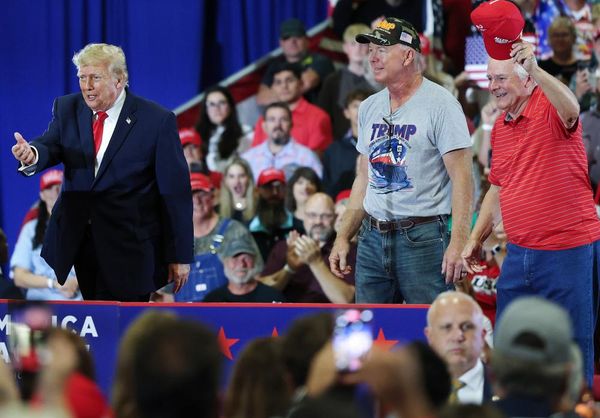
During Trump's 1 October appearance at Peterbilt Motors' manufacturing plant in Denton, Garrison focused on several movements captured on video.
In one clip, Trump stood beside another speaker as he was introduced. Garrison highlighted a moment when the president licked his lips and moved his hands down the speaker's shoulders.
Garrison described the behaviour as showing 'impulsivity' and a possible 'loss of motor control'. He discussed strokes and other neurological conditions as theoretical explanations for certain types of movement.
That interpretation goes beyond what the footage itself can establish. A short recording cannot determine whether a gesture was voluntary, identify its physiological cause or demonstrate the presence of a neurological condition.
Garrison later discussed what he described as clusters of spasms. He said movements he had previously observed on Trump's right side appeared in newer footage to involve both sides of his body.
He described the pattern as meaning 'the dysfunctional pathways are crossing the brain.' That remains Garrison's interpretation rather than an established medical finding. No publicly released medical evidence reviewed by IBTimes UK establishes that Trump's neurological pathways are dysfunctional or that he has suffered a stroke.
Garrison also highlighted a moment in which Trump appeared to shift his balance before clenching one hand and raising it towards his face.
'I don't think that was voluntary,' Garrison said. He suggested Trump appeared surprised by the movement.
Video alone cannot establish whether a hand movement was voluntary or involuntary. Garrison has not conducted a neurological examination of Trump.
Donald Trump Facial Movements Also Draw Garrison's Attention
Garrison also reviewed footage from an Oval Office executive order signing and focused on Trump's facial expressions and apparent level of alertness.
He described the president as appearing 'disoriented' and later claimed that Trump 'actually can't control the right side of his mouth.'
Those statements are Garrison's interpretation of the recording, not findings from a clinical assessment. The footage cannot establish whether Trump had lost muscular control or determine the cause of a facial movement.
A separate clip led Garrison to focus on Trump's gait. He said the president's right leg appeared stiffer than his left and speculated about whether a supportive device could be involved.

Garrison discussed a knee-ankle-foot device of the kind sometimes used during neurological rehabilitation. There is no public confirmation that Trump wears such a device, however, and the footage does not establish weakness on one side of his body.
White House Medical Report Counters Donald Trump Neurological Claims
The May medical report provides important context for Garrison's video-based assessment. Barbabella said Trump demonstrated strong neurological function and remained fit to perform the duties of the presidency.
That does not determine what caused any individual movement captured in October. It does, however, mean claims that Trump has suffered a stroke, brain injury or neurological decline should not be reported as established medical findings.
Garrison's observations remain interpretations of publicly available footage rather than a diagnosis. Without a clinical examination, medical records or diagnostic testing supporting his theory, claims that Trump is experiencing neurological decline remain unverified.