Closing summary
Let’s recap the main developments from today on the crises engulfing the BBC.
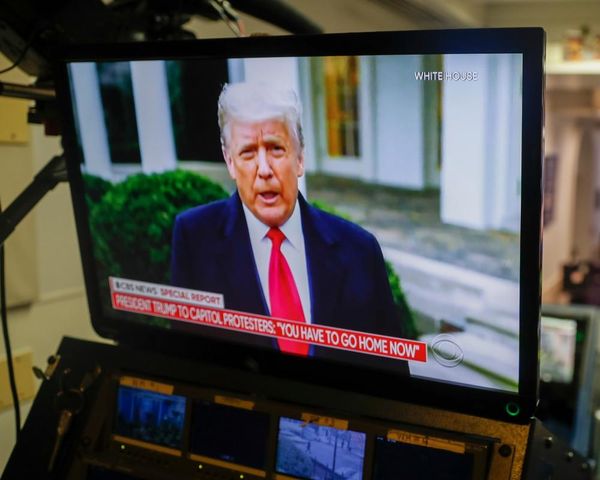
Trump doubled down on his threat to sue the BBC, saying he has an “obligation” to do so for the “misleading” video edit of his January 6 speech which made him look “more radical”
The US President has demanded amends by Friday or he will launch the litigation
UK PM Keir Starmer in parliament backed a “strong, independent BBC” but declined to ask Trump to drop the threat, despite arguments that it constitutes foreign interference
Starmer agreed with Lib Dems leader Ed Davey saying the last Conservative government had undermined the BBC, but when asked for comment on calls for ex-Tory spin doctor Robbie Gibb to be removed from the board, Starmer declined to comment on “internal workings”.
Reform has pulled out of a BBC documentary about the party, citing a loss of trust
The BBC is still yet to issue a response to Trump’s threat. Earlier in the week, its Chair noted the US president as a “litigious fellow”, who has launched several lawsuits against media outlets so far in his second term. Samir Shah said the corporation was prepared for all outcomes.
Here’s a quick guide to how the BBC dealt with the Trump video complaint, and what Trump actually said on January 6 and could he win a lawsuit against the BBC.
That’s it for today, thanks for following along.
There’s a missing link in British public life – and it underpins crises from the BBC to our prisons, writes Guardian columnist Rafael Behr:
Britain’s national broadcaster is unusually well respected as a venerable institution and a provider of reliable news. That reputation has made it an effective force countering fragmentation and radicalisation in the information space. Without it, UK politics would go (further) down the US path of extreme polarisation, tending towards civil unrest.
That is why the story of shoddy editorial practices described in a leaked internal memo, leading to the resignation of senior executives, is doubly grim. It is inherently bad that editorial standards went awry – far awry in the case of Panorama’s slyly edited video of a Donald Trump speech to an insurrectionary mob. And it is disastrous that such failures empower Trump and his legion of fellow-travellers in British politics and media to portray the BBC as irredeemably corrupt.
The frenzy is out of proportion to the offence, but consistent with a longstanding vendetta. The BBC is a target for rival news organisations that resent its unique status and privileged funding. It is also ideologically threatening to the radical right because the licence-fee model is an exemplar of a mutually funded public good. The corporation doesn’t have to exhibit liberal-left bias to provoke its enemies. They already see it as a factory shipping cultural collectivism and resent the purchase it has on the nation’s affections.
Donald Trump has sued several US outlets so far in his second term – some cases of which have been thrown out in the courts.
For example there’s the $15bn case he brought against the New York Times and two of its reporters, for a series of news articles and a book about his time on the show The Apprentice, and his earlier life.
That case had argued that reporting describing Trump’s multimillion-dollar inheritance from his father as a product of “fraudulent tax evasion schemes” was false and defamatory.
However as my colleague, Guardian US’ politics and democracy reporter George Chidi wrote in September, a federal judge tossed out the lawsuit in September describing the claim as filled with “vituperation and invective” and violating civil procedure in federal cases for failing to get to the point.
Trump refiled the case in October- tending a much shorter submission this time around. The lawsuit is ongoing.
While out of office Trump also lost a 2023 defamation lawsuit he had brought against CNN, where he alleged the network had likened him to Adolf Hitler. A federal judge threw that case out because he ruled that the statement was allowed as opinion, not fact, and was thus not defamatory.
Updated
As well as voicing his thoughts on the BBC and Donald Trump’s lawsuit threat at today’s at prime minister’s questions (PMQs), Ed Davey also reiterated his call to Keir Starmer to tell the US president to drop his demand for a $1bn settlement from the BBC, in a post on X.
The Liberal Democrat leader wrote after PMQs:
Donald Trump is coming for the BBC and for your wallets. I urged the prime minister to stand up for the 23.8 million licence fee paying households, and tell Trump he won’t get a penny.
During parliament, Davey had told MPs that Trump had undermined press freedom in America and he was now trying to do the same thing in the UK, where he was being “disgracefully egged on” by Reform leader Nigel Farage.
Updated
Trump is threatening to sue the BBC in Florida over what he says was a deceptively edited documentary. He told Fox News the “butchered” video made him seem far more “radical” in his speech on 6 January to supporters, many of whom later stormed the Capitol.
But the case would hinge on whether anyone in Florida watched it and felt misled. If there was an audience so affected, then a US court would need to determine whether the BBC had intentionally tried to deceive viewers.
Trump’s role in invoking political violence from his supporters on January 6, 2021, has already been thoroughly investigated.
A US congressional committee during Biden’s term in the White House concluded that Trump was involved in a “multi-part conspiracy” to overturn the legal results of the 2020 election.
That committee was led by Democrats but also had Republican members. Eight Republicans at the time voted with Democrats to indict Trump over his efforts to overturn the 2020 election’s results.
Prosecutors then charged Trump in 2023 with offences such as conspiracy to defraud the US, and obstructing official proceedings. But those criminal cases and the indictments did not prevent Trump from running for office again – and winning.
Since retaking the White House, the President has continued to downplay his actions on January 6, calling the Capitol riots as “a day of love”. On his first day in office this year he granted clemency to all those charged for storming the Capitol, including those already convicted for their violent acts.
Last weekend he also issued preemptive pardons to several of his allies involved in seeking to overturn the 2020 election vote.
Updated
What action did the BBC take to address the Trump edit issue?
How exactly did the BBC deal with the Trump video edit complaint when it came to their attention?
A reminder to readers, the complaint did not come from the White House or Trump himself, nor did it come from viewers who watched the programme when it was broadcast last year.
Instead it was raised internally by Michael Prescott and David Grossman, external advisers on the BBC’s ethics and standards committee. Grossman had undertaken a review of BBC News’s entire US election coverage last year, which also raised other concerns about balanced reporting. (For example, he said the BBC had put too much emphasis on a poll which appeared to show Kamala Harris on track to winning the 2024 vote.)
Samir Shah, Chair of the BBC’s board, published a letter to a parliamentary committee on Monday detailing what action was taken in response to the Trump edit.
He said the standards panel had discussed the issue at a meeting in January, and again in May.
BBC News had told the standards panel that the purpose of editing the clip “was to convey the message of the speech made by President Trump so that Panorama’s audience could better understand how it had been received by President Trump’s supporters and what was happening on the ground at that time”, Shah said.
The Panorama programme was informed of the complaint but no further action was taken. “With hindsight, it would have been better to take more formal action,” Shah wrote.
He said after Prescott’s letter was leaked and published by a UK tabloid last week, the edit had drawn over 500 complaints and prompted “further refection” by the board.
Shah conceded that there had been an “error of judgement” made, and the BBC wished to apologise for it.
“We accept that the way the speech was edited did give the impression of a direct call for violent action.”
Updated
Starmer also said the BBC must “get its house in order” in regards to editorial mistakes.
However he added he supported a strong and independent BBC, and the case for impartiality is “stronger than ever” in an age of disinformation.
“I believe in a strong and independent BBC. Some would rather the BBC didn’t exist. Some of them are sitting up there. I’m not one of them."
“In an age of disinformation, the argument for impartial British news service is stronger than ever, and where mistakes are made, they do need to get their house in order, and the BBC must uphold the highest standards to be accountable and correct errors quickly.”
Updated
Starmer declines to agree to Ed Davey’s call for him to tell Trump to drop his $1bn against BBC
Ed Davey, the Lib Dem leader, says President Trump “is trying to destroy our BBC, not because he cares about the truth, but because he doesn’t want to get away with his lies”. Will the PM tell Trump to drop his demand for a $1bn settlement from the BBC.
Starmer says he will always stand up for a “strong, independent BBC”.
Davey says the Tories also undermined the BBC. They put two cronies on the BBC board. One, Robbie Gibb, is still there. Will the PM sack him now?
Starmer says he agrees the last government undermined the BBC; they undermined almost everything, he says.
But he says he won’t go into the internal workings of the BBC.
More from PMQs here.
Updated
Let’s take a look again at the 12-second clip that’s triggered this lawsuit threat from President Trump.
A comparison of the original and edited footage shows how the BBC selectively edited a Donald Trump speech from January 6 2021, resulting in the organisation being accused of making it appear clearer that he encouraged the US Capitol attack.
This was one scene in the hour-long Panorama episode Trump: A Second Chance? about Trump’s supporters and his political prospects in the lead-up to the 2024 presidential election. It followed some of Trump’s most ardent supporters who wanted to get him back in the White House
The BBC broadcast the documentary in October 2024, one week before Trump won the election on 5 November.
They did not receive any reader complaints on it at the time. It was brought to the attention of the board’s ethics and standards committee, and discussed, at meetings in January and May this year.
Updated
Margaret Sullivan, Guardian US’s media politics and culture columnist, argues the BBC’s editing error was bad, but the response is over the top.
The BBC’s error in a documentary film about Donald Trump was a serious one. During the editing, two clips of the president speaking to his riled-up crowd of followers in Washington were juxtaposed, even though there was nearly an hour between the two. The edited version could have made viewers believe Trump had made an unmistakable call for violence at the US Capitol that day. He did make inflammatory statements, of course, and he does bear significant responsibility for the riot at the Capitol that day, but he skirted the direct instruction that the film suggested.
So, yes, this was a bad mistake that was not adequately acknowledged or corrected when there was a chance to do so. That is something that calls for internal examination and external acknowledgment, some of which has occurred.
But the current aftermath of the long-ago error – the film was published last year before the US presidential election – is significantly out of proportion.
Updated
Acting BBC news head to address journalists this afternoon
Jonathan Munro, the deputy head of news, and the News Board will address staff working in the news division in a meeting this afternoon.
It follows yesterday’s all-staff call, where outgoing director general Tim Davie said there had been a “weaponisation” of criticism, and urged staff to carry on with their work.
BBC board Chair Samir Shah in the call also deflected questions from staff as to why the board had not acted sooner to defend their journalism.
Munro has taken charge of all editorial newsmaking decisions in the wake of Deborah Turness stepping down as head of the news division.
Updated
You can see the relevant parts of Donald Trump’s interview with Fox News’ Laura Ingraham here, outlining his stance on the BBC.
The threat to sue the BBC follows various other warnings by the US president against media companies who he has disagreed with.
In July, Paramount, parent company of CBS News, chose to settle a case in which Trump had argued that the company had violated consumer protection laws by misleadingly editing a 60 Minutes interview of then vice-president Kamala Harris. Legal experts had not viewed it as a strong case for the president but company leadership saw it as an unnecessary distraction, particularly as it sought US government approval of a merger with Skydance Media. Paramount ultimately paid $16m.
Trump also won a settlement last year from ABC, owned by Disney, which he had sued over comments made by anchor George Stephanopoulos. ABC agreed to pay $15m.
Updated
The letter from Donald Trump’s lawyer to the BBC sets a deadline of 14 November – this Friday – for it to respond and calls for a “full and fair retraction” of the documentary, an apology, and that the BBC “appropriately compensate President Trump for the harm caused”. If it does not comply then it says he will launch his $1bn legal action.
Responding to UK culture secretary Lisa Nandy’s refusal to review the BBC board membership of Robbie Gibb, Liberal Democrat culture, media and sports spokesperson Anna Sabine said on Tuesday evening:
This is the wrong choice by Lisa Nandy. Robbie Gibb isn’t fit to serve on the BBC board, and the BBC charter gives the government the power to sack him.
I hope the prime minister will step in and do the right thing.
Gibb – former communications chief for Theresa May – was appointed to the board during Boris Johnson’s time as prime minister.
Updated
It was only a week ago that the Telegraph ran its first story about anti-Trump bias at the BBC, and for many readers, it may not have struck them as anything more than the usual rightwing criticisms of the national broadcaster. But the complaints about the editing of a Donald Trump clip in a Panorama program about the January 6 riots and other criticisms made in a leaked 19-page dossier began gathering steam. BBC bosses stayed silent until suddenly, on Sunday, the director general and the head of news both resigned.
How did it all come about? Michael Savage reports on who put the dossier together and outlines the criticisms – of BBC Arabic, and coverage of gender – in it. He explains why BBC watchers are saying that Conservative figures inside the corporation are to blame for the row and are calling it a coup. Helen Pidd asks why the BBC has not done more to defend itself and who will take on these difficult roles now. And finally, how damaging is it to public trust?
You can listen to the podcast episode here:
Updated
Reform UK pulls out of BBC film amid Trump speech edit row
Reform UK has pulled out of a BBC documentary about the party amid a row over the broadcaster’s editing of a Donald Trump speech.
The film, which was due to be called the Rise of Reform and would have been presented by Laura Kuenssberg, was being made by an independent production company, October Films.
The company was involved in a Panorama documentary that led to the resignation of two of the most senior executives at the BBC, the director general, Tim Davie, and Deborah Turness, the chief executive of news.
The US president has since said the BBC “defrauded the public” and that he had an “obligation” to take legal action over the misleading editing of the speech, which appeared to show Trump inciting violence before the attack on the US Capitol on 6 January 2021.
October Films was not responsible for this edit, which was done by BBC staff.
In an internal email, Reform party members were urged to “politely decline to participate” in the film about the party, which was due to air in January, citing “disinformation” in the Trump film.
The memo said:
We want to be clear that October Films have always conducted themselves professionally, and there is no suggestion from our side that they would maliciously misrepresent Reform UK.
However, following the Panorama documentary the trust has been lost, and both BBC and the production company will have to do a lot of hard work to regain that trust.
Updated
How is the BBC likely to respond to Trump?
The BBC has said it will respond in due course. It has already made something of an apology and retraction, although probably not to the extent Donald Trump wants, and the bigger decision will be whether to offer a settlement.
Paramount, the parent company of CBS News settled with Trump for $16m, despite many legal experts believing the claim was baseless. However, that was widely seen as intended to ensure approval of Paramount’s merger with Skydance media.
The ABC News and anchor George Stephanopoulos agreed to pay $15m in settlement of a lawsuit Trump filed over comments Stephanopoulos made saying Trump had been found “liable for rape”, whereas the jury had actually found that he “sexually abused” the columnist E Jean Carroll.
Explainer: Can Donald Trump sue the BBC for $1bn and which party would win?
Donald Trump has grabbed the headlines after threatening to sue the BBC for $1bn (£760m) for what the corporation has accepted was a misleading edit of his speech on 6 January 2021 during the Capitol Hill insurrection.
Can Trump really sue for $1bn?
In the UK the biggest defamation award made by a court is believed to be £1.5m, but in the US the highest award was the $1.4bn, the Infowars founder and conspiracy theorist, Alex Jones, was ordered to pay to the families of victims from the 2012 Sandy Hook elementary school shooting, which he claimed was a hoax.
However, that case is an outlier, with the next highest US payout believed to be the $787.5m Fox agreed to pay the voting equipment company Dominion in settlement over a claim that Dominion was involved in a plot to steal the 2020 election.
Trump has not elaborated on how the $1bn was reached and has form for making legal claims with eye-catching amounts, including the $10bn (later increased to $20bn) he sought from the BBC’s US partner CBS News, which he accused of doctoring an interview with Kamala Harris to cast her in a positive light; the $15bn defamation lawsuit filed against the New York Times for “spreading false and defamatory content” about him; and a $10bn libel claim against the Wall Street Journal over its reporting of his links to Jeffrey Epstein.
Here the Guardian examines the US president’s potential path to bringing and winning a libel claim:
MPs also called for Robbie Gibb to be removed. Labour MP Sarah Owen said it was time to review his place on the board.
Anna Sabine, the Liberal Democrat culture spokesperson, said it was “obvious to everyone that this issue is being weaponised by those who want to undermine the BBC and who would profit from its demise”. “Serious concerns remain over the conduct of Sir Robbie Gibb during his tenure on the BBC board,” she said, backing his removal.
Pete Wishart, from the SNP, also called for his departure.
However, Conservative MP Sir Julian Lewis said the “crisis had nothing to do with Robbie Gibb” and was entirely down to the mistakes the BBC had made. A corporation spokesperson said Gibb was one voice on a board of 13 people, which had a “cross-section of views”.
The culture secretary, Lisa Nandy, said there was a “strict legal threshold that must be met before dismissal of a board member”, adding that she could not remove Gibb. She condemned attempts to launch a “sustained attack” on the BBC.
Suggestions of a political effort to pressure the BBC from the right have been denied. In his letter, Michael Prescott, a former independent external adviser to the BBC’s editorial guidelines and standards committee, said his criticisms “do not come with any political agenda”.
In the all-staff meeting, Samir Shah, the BBC’s chair, said any idea of a rightwing coup to destabilise the BBC from within was “fanciful”.
“[Board members] have different points of view,” he said.
I wouldn’t want a board that’s guilty of groupthink, but the opposite of groupthink is different points of view. That makes the job of the chair challenging to try and organise and get consensus, but it’s important that people have a diversity of opinion on the board.
BBC staff watching outgoing director general Tim Davie’s address tried to raise the issue of Robbie Gibb’s place on the board. “Why is Robbie Gibb still on the board?” asked one.
“The board needs independent oversight free from political interference,” said another. “Until Robbie Gibb and any other political appointee are removed, we cannot possibly be truly trusted to be an unbiased organisation.”
Another said:
I find Robbie Gibb’s continued presence at the BBC to be incredibly demoralising. It feels as if he is fighting against and undermining the work we’re trying to do.
MPs and BBC staff call for Robbie Gibb to leave broadcaster’s board
MPs and BBC staff members have called for Robbie Gibb to be removed from the corporation’s board as outgoing director general Tim Davie hit out at the “weaponisation” of criticisms of the broadcaster.
In an online meeting with Davie, staff questioned the position of Gibb, Theresa May’s former communications chief, who was appointed during Boris Johnson’s time as prime minister.
Several said Gibb and all political appointees should be removed from the body. It has been claimed that Gibb pushed accusations of institutional bias that preceded the shock resignation of Davie and Deborah Turness, the head of BBC News.
Their departures over the weekend followed accusations of bias made in a memo by Michael Prescott, a former independent external adviser to the BBC’s editorial guidelines and standards committee. He left that role in the summer.
His memo was leaked to the Daily Telegraph last week and reported over the course of several days.
It included criticism of the way Panorama broadcast edited footage of a Donald Trump speech, which has since led the US president to threaten a $1bn legal action. Prescott made a series of other claims of a more general liberal bias on issues such as trans rights and Gaza.
While the BBC has acknowledged failings, concern has grown over Gibb’s position on the board amid suggestions that he played a role in both pushing Prescott’s claims and in Prescott being awarded the advisory role. Both Gibb and Prescott have now been summoned to give evidence to the Commons culture, media and sport committee.
Thanking staff for their support at the meeting, Davie reassured them that the narrative around the corporation “will not just be given by our enemies” after a week in which senior politicians have accused the BBC of systemic bias in its reporting.
“I do hear everyone when we have to be very clear and stand up for our journalism,” he said. “We are in a unique and precious organisation. I see the free press under pressure. I see the weaponisation. I think we’ve got a fight for our journalism. I’m really proud of our work.”
Liberal Democrat deputy leader Daisy Cooper said the crisis at the BBC has provided an “opportunity” to “take away all the people who were political appointees”.
According to the PA news agency, Cooper told BBC Radio 4’s Today Programme:
We Liberal Democrats don’t think that there should be any political appointees and we would like to see legislation to bring back the independent appointments process for the BBC board.
The St Albans MP added:
I do think that this crisis in the BBC provides an opportunity for us to clear up the BBC and to make sure we can safeguard its independence for future.
When you look at independent editorial decisions that have been made on particular stories, there’s no doubt in my mind that the BBC has, on a number of occasions, been pretty sloppy, and it’s been very slow at correcting them.
But I think ultimately this is an opportunity, this crisis, and the way we make the most of that, to protect the BBC, to safeguard its future and to protect its independence, is to make sure that we can take away all the people who were political appointees.
Trump says he has 'obligation' to sue BBC
Good morning and welcome to our coverage of the continuing fallout at the BBC as Donald Trump claimed the broadcaster had “defrauded the public” and he had an “obligation” to take legal action over the editing of a speech.
Director-general Tim Davie quit on Sunday amid criticisms over the editing of a speech by Trump before the attack on the US Capitol on January 6 2021 in an edition of Panorama which aired last year just before the 2024 presidential election.
The US president reiterated his threat of launching a $1bn legal action during an interview on Fox News. He said:
I think I have an obligation to do it, you can’t allow people to do that.
I guess I have to. They defrauded the public and they’ve admitted it. This is within one of our great allies, supposedly our great ally [the UK].
That’s a pretty sad event. They actually changed my January 6 speech, which was a beautiful speech, which was a very calming speech, and they made it sound radical.
The edit suggested Trump told the crowd:
We’re going to walk down to the Capitol and I’ll be there with you, and we fight. We fight like hell.
The words were taken from sections of his speech almost an hour apart.
A legal letter, from Trump counsel Alejandro Brito, has demanded that “false, defamatory, disparaging, and inflammatory statements” made about Trump be retracted immediately.
The letter says if the BBC “does not comply”, the president will be “left with no alternative but to enforce his legal and equitable rights, all of which are expressly reserved and are not waived, including by filing legal action for no less than 1,000,000,000 dollars in damages”.
Updated