The state opening of parliament – in all its crimson, Ruritanian splendour – is a useful reminder to the British of their parliamentary traditions and the country’s powerful, if controversial, imperial past. Meanwhile, on the other side of the globe, the ceremonials in Beijing, embellishing the state visit by Donald Trump to the People’s Republic of China, are a reminder to the entire world of who is now running the planet.
Almost half of global GDP is now accounted for by these two superpowers, and there is no conflict on Earth that does not affect their interests in some way. The future course of everything from climate change to AI to the war in Iran depends on their relationship. It is unlikely that Wes Streeting’s career prospects will crop up much during the summit.
Surprisingly, given their weight in the world, this is the first such high-level meeting between the “G2”, as they are informally known, since President Trump hosted Xi Jinping at Mar-a-Lago in 2017. It should also be one of the most consequential since Richard Nixon made his historic trip to see Chairman Mao in 1972, ending decades of open hostility.
The golden age of Sino-American relations may have passed, as China has come to challenge and potentially eclipse America’s hegemony (just as the US did to the British empire). But there are reasons to hope that some rapprochement might be achieved in the coming days.
The most pressing issue is Mr Trump’s war of choice with Iran. It is a flashpoint because almost half of China’s oil supply comes from the Gulf region – most of it needing to pass through the Strait of Hormuz – while some 12 per cent comes from Iran, and is thus directly affected by the US Navy blockade of maritime traffic travelling to and from Iranian ports.
China has already condemned the unilateral US policy as “irresponsible and dangerous”, and as something that could “undermine the already fragile ceasefire agreement”. The unspoken Chinese complaint is that the blockade also prevents Tehran from obtaining military supplies or dual-use components from China, which, with Russia, has kept the theocratic regime functioning since the Israeli-US assaults were launched more than two months ago.
China, for the record, buys about 90 per cent of Iran’s sanctioned hydrocarbon exports, and has supported Tehran both diplomatically and industrially. This also means President Xi is in an excellent position to pressure the Islamic Republic to reach a settlement with the US before the war does the Chinese economy serious harm.
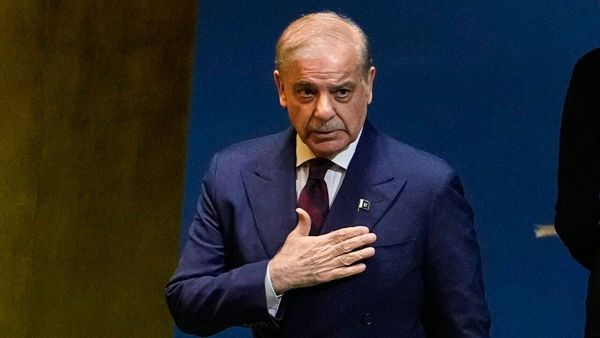
Plentiful reserves of oil and domestic coal supplies have helped to shelter China from the worst of the energy crisis, but cannot do so indefinitely. President Trump therefore has a choice. He can maintain his blockade and his absolutist attitude to Iran’s peace proposals (which he has described as “garbage”), threatening a global economic slump; or he can enlist President Xi in brokering some sort of deal, probably via Pakistan, to end the immediate crisis and open the door to longer-term talks on nuclear weapons.
Tehran would be highly likely to accept that – and Mr Trump could pose as quite the statesman, even if he’d have to share credit with Mr Xi for reopening the Strait of Hormuz. It is a pity that Mr Trump won’t encourage his Chinese counterpart to stop propping up the Russian war machine and Vladimir Putin’s faltering assault on Ukraine.
Economics will also drive the rest of the talks. The US delegation includes Tesla’s Elon Musk and Apple’s Tim Cook, and there is the promise that closer industrial and technological integration could once again help to build trust and defuse tensions between the superpowers. That is an even more urgent task since President Trump launched his tariff war in China last year, though its worst effects were avoided as President Xi retaliated and forced a climbdown, and the US Supreme Court found the courage to declare parts of the policy legally void.
The problem, as ever, is trust. America has been especially unwilling to export technologically advanced, and thus sensitive, equipment to China, and still suspects China of stealing intellectual property as well as committing various other forms of trade malpractice and currency manipulation. On the other side, Mr Trump – a man with a nostalgic yearning for America’s past manufacturing glories – cannot accept that his competitors across the Pacific have a cost and, increasingly, a quality advantage over their Western competitors in everything from electric cars to solar panels.
The most emotionally charged of issues, the status of Taiwan, may ironically prove to be the easiest for the two sides to agree on. In contrast to his predecessors, Mr Trump has been notably equivocal about defending Taiwan’s de facto independence from mainland China, even as he has tilted US security policy away from Europe and towards the Indo-Pacific.
Provided he at least maintains the traditional, delicate “one China” approach that has guided US policy for decades, then self-governing Taiwan can continue unmolested with its pioneering production of superconductors – to the benefit of both Chinese and US tech companies, even as Mr Trump tries to relocate production to the US.
As a useful by-product, the threat of a Chinese invasion of the island will also recede. Taiwan – an issue that once prevented the US from having any diplomatic relations with Beijing at all – has become the two powers’ most precious common interest. Something to build on, then – as long as Mr Trump doesn’t say anything rash on Truth Social.
Donald Trump keeps making America’s enemies look stronger
Another key US ally is at risk of losing Trump – and China couldn’t be more delighted
Donald Trump has brought the US justice system to a frightening new low
Labour will regret making itself look unfit to govern
Labour is giving us a psychodrama that absolutely nobody wants
It is time for Keir Starmer to deliver – but Labour must resist a lurch to the left