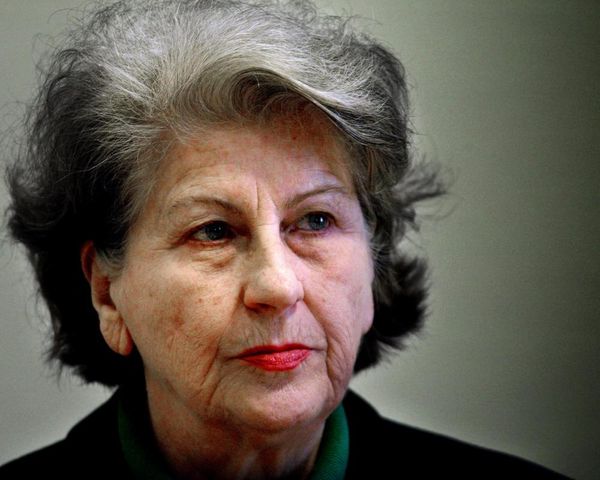
Donald Trump health debate has been renewed after forensic and social psychiatrist Bandy Lee criticised the US president's public behaviour on MeidasTouch's The Weekend Show on 20 September. Lee called aspects of his conduct 'abnormal and pathological', while basing her comments on public appearances rather than a personal clinical examination.
Lee is president of the World Mental Health Coalition and has worked in forensic and social psychiatry. The interview focused partly on Trump's account of his activities around New York after the 11 September 2001 attacks.
At a Steel Across America event in Washington on 8 September, Trump said two firefighters lifted him and ran with him near Ground Zero. He said a nearby building appeared unstable and those present feared it could collapse.
Trump also repeated his longstanding claim that construction workers connected to him went to the disaster site after the attacks. ABC News reported that the White House supplied images showing Trump in New York in the following days, but provided no evidence confirming the firefighter episode.
Bandy Lee Links Donald Trump Health Debate to 9/11 Account
Lee argued that Trump's references to major national events reflected what she viewed as a need to place himself at their centre. She connected that pattern to what she described as a fragile sense of self.
'It is abnormal and pathological when it involves a fully grown adult,' Lee said. She compared the behaviour with young children imagining themselves as 'king or queen or ruler of the universe.'
Lee also made broader claims about Trump's mental stability. Those remarks remain her professional opinion based on publicly observed behaviour and do not constitute a diagnosis established through a personal examination.
The White House has rejected that kind of remote assessment. Spokesperson Davis Ingle told The Independent that medical commentary based on outside observation amounted to 'false speculation for political purposes.' He also defended Trump's energy and accessibility.
The distinction is important because psychiatric organisations place limits on professional opinions about public figures. The American Psychiatric Association's Goldwater Rule tells its members not to offer such opinions without examination and proper authorisation.
The available sources do not establish whether Lee is an APA member or personally subject to that rule. Her comments should therefore be presented as her stated interpretation, rather than a confirmed clinical finding.
Donald Trump Health Report Offers a Different Clinical Picture
Trump underwent his annual medical examination at Walter Reed National Military Medical Center on 26 May. The White House released the physician's memorandum on 29 May.
Navy Capt. Sean P. Barbabella, physician to the president, wrote that Trump remained in 'excellent health.' He reported strong cardiac, pulmonary, neurological and overall physical function and said Trump was fully fit to perform his duties.
The report noted slight lower-leg swelling that had improved from the previous year. The White House previously disclosed that Trump had chronic venous insufficiency, a condition associated with swelling in the legs.
Barbabella also described bruising on Trump's hands as benign. The White House has attributed the bruising to frequent handshaking combined with aspirin use for cardiovascular prevention.
The medical report said Trump scored 30 out of 30 on the Montreal Cognitive Assessment, or MoCA. The test is a screening tool designed to detect possible cognitive impairment.
MoCA's own guidance says the assessment is not intended to diagnose a cognitive disease by itself. Its results must be interpreted alongside other clinical and medical information.
The clinical report and Lee's comments address different forms of evidence. Barbabella's memorandum records findings from an examination, while Lee interpreted behaviour visible in public appearances.
Trump remains the 45th and 47th president of the United States. His health continues to attract public scrutiny, but the material reviewed here does not establish a diagnosis of cognitive decline or psychiatric illness.