
Get all your news in one place.
100’s of premium titles.
One app.
Start reading
Homes & Gardens
Homes & Gardens
Dan Fauzi

Don't Waste Your Time and Money on Wellness Traps for Nighttime Comfort – Sleep Scientists Reveal 3 Innovations That Actually Work

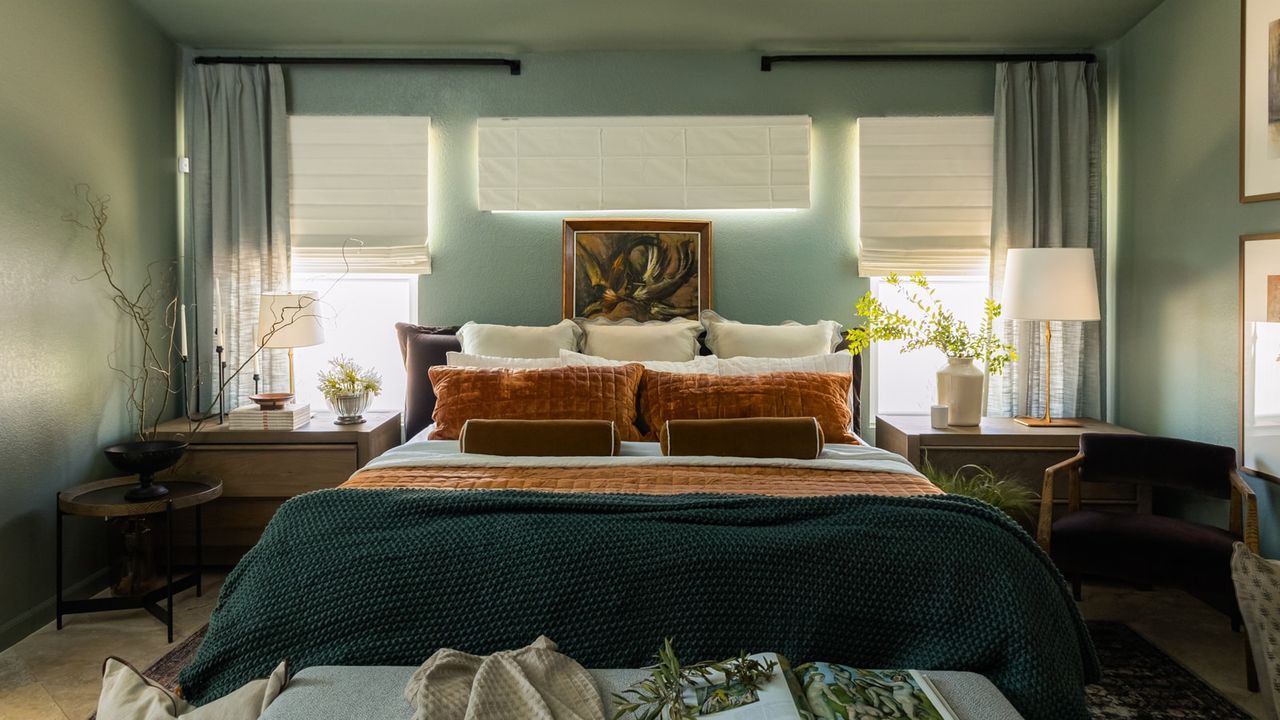
Bedroom with teal walls and curtains, white fabric blinds, and a large bed pictured in the center, adorned with multiple blankets, pillows, and cushion. Light is coming through the windows, and there are lamps and potted flowers on the two bedside tables.

The global sleep industry is now valued at more than $500 billion. Yet, much of that spending is directed towards accessories and wearables that can inadvertently encourage overthinking rather than genuine rest.

While rings that analyse your REM cycles may provide interesting data, and electronic eye masks can offer momentary relaxation, these devices rarely deliver the physiological benefits required for consistently deep, restorative sleep.

Instead of investing in bedroom technology that tracks – rather than improves – your sleep, leading sleep scientists and psychologists suggest focusing on innovations that meaningfully support the body’s natural rhythms. For those wondering how to sleep better, their advice is surprisingly simple: prioritise cleaner air, a thoughtfully designed sleep environment, and a mattress surface that properly supports the body. Get these foundations right, they say, and deeper, more restorative sleep will follow naturally.

The Air: Reduce Pollutants As You Wind Down and Sleep

More than simply breathing fresher air, removing particulate matter from our bedroom overnight improves our physical performance the following day. (Image credit: Roberts Studio Design + Ashley Guice Creative)

Scientific research, including studies published in Nature, confirms that improving bedroom air quality can significantly enhance both sleep quality and next-day cognitive function. Much of this research focuses on PM2.5, a measurement of microscopic particulate matter smaller than 2.5 micrometers.

These particles are not a single substance but a complex mix of pollutants small enough to enter the bloodstream. They include combustion byproducts from candles and cooking, chemical droplets from aerosol sprays, and microscopic fragments of dust and dander.

The findings are striking: exposure to elevated levels of PM2.5 makes it noticeably harder to achieve a truly restorative night’s sleep. Participants exposed to these pollutants spent less time in deep sleep – the stage essential for physical restoration – and reported feeling more sluggish and cognitively impaired the following day.

For this reason, investing in one of the best air purifiers can be a surprisingly effective way to improve sleep. By reducing the concentration of indoor pollutants that can irritate airways, trigger congestion, and disrupt breathing, air purification helps create the conditions the body needs for uninterrupted rest and better day-to-day functioning.

Sunrise alarm clocks have long been among the most popular forms of bedroom technology, but the Blueair Mini Restful offers a thoughtful upgrade on earlier designs. Rather than focusing solely on circadian rhythm through gradual light – particularly helpful as seasonal changes threaten to disrupt sleep cycles – this device also purifies the air, supporting deeper and more restorative rest.

Dr. Chris Winter, Neurologist, Board-Certified Sleep Specialist and Author of The Sleep Solution, recommends it. He says, ‘This checks a lot of boxes at once. In addition to purifying the air in the room and functioning as a sunrise alarm clock and light, it’s incredibly quiet.’

I tested the Blueair Mini Restful in my bedroom for several weeks and was immediately struck by how quietly it runs on its lowest setting. At times, I found myself opening the companion app simply to check that it was still on.

As someone who suffers from allergies and asthma, I sleep with an air purifier running most nights and have noticed over the past year that it significantly improves my sleep quality. Many purifiers, however, can be loud enough to disrupt rest, to the point where I have previously slept with earplugs to block the noise. The near-silent operation of the Blueair Mini Restful, by contrast, offers a sense of calm that feels genuinely conducive to long-term sleep quality.

The device also wakes you gently with a warm, gradually brightening sunrise light, accompanied by soundscapes ranging from birdsong to soft ambient tones – a far calmer alternative to the abrupt blare of a traditional alarm. Instead of being jolted awake, mornings feel noticeably smoother and more relaxed.

There is another subtle benefit, too: using a physical alarm clock removes the need to check your phone before bed. This matters more than many people realize, as blue light from devices such as smartphones and tablets can delay melatonin production and disrupt the body’s natural sleep cycle.

The Environment: Install Lighting That Supports Circadian Rhythms Housewide

Designing a home with lighting that follows our natural circadian rhythms improves your sleep quality every night and boosts energy levels during the day. (Image credit: Future)

In addition to the benefits a gentle and easy-to-install sunrise clock brings, thoughtful lighting in the bedroom and beyond to aid your natural circadian rhythms can be one of the most significant upgrades for your quality of sleep and wellness throughout the day.

Smart lighting from brands such as Philips Hue can transition your entire home from blue light to amber tones at sunset, then do the inverse as you wake up and move through the house.

If you set up a routine on the app, this can happen automatically every day, creating a hand-off but consistent lighting rhythm that will significantly improve your sleep, aid your circadian cycles, and boost your daily energy levels.

'Light is the most potent regulator of circadian rhythm we have,' shares Dr. Elisabetta Burchi, physician, psychiatrist, and head of research at Parasym. 'Gradually brightening light mimics natural dawn, supporting a natural awakening response and improving subjective alertness and mood throughout the day,' she continues.

As for winding down for the evening, Dr. Jordan Burns, sleep health expert for Amerisleep, highlights the importance of dim lighting, adding, 'Smart lighting systems are very effective, as reducing the lighting levels at night helps the brain produce melatonin, a hormone that induces sleep.'

Replacing every bulb in your home with a smart one is an investment, but you can make the switch gradually, swapping each one room by room, and still feel the benefits of a home that works with your body's natural rhythms and energy levels.

The Surface: Active Thermal Regulation Aids Sleep

Thermoregulation is an often-overlooked but essential part of falling asleep, as your internal core temperature needs to drop for your brain to trigger the sleep cycle. (Image credit: NuStory)

As your circadian rhythm prepares for rest, your body initiates vasodilation, where blood vessels in your hands and feet expand to allow an escape of internal heat. This causes your core temperature to drop, signaling the brain to release melatonin so that you can slip into overnight rest.

'Temperature is an issue because your body needs to be cooler to enter deep sleep,' confirms Dr. Jordan Burns. 'If you're sleeping on a mattress that retains all of the heat from your body, then you're actually going to work against your own physiological response.'

Having one of the best cooling mattress toppers and the right duvet insert or comforters helps, but seasonal changes and variations in your home's temperature will impact you. To truly upgrade your quality of sleep year-round, a smart, thermoregulated setup will actively work to regulate your immediate sleep surface environment to your body's needs.

'New thermoregulation tools, such as cooling mattress systems that align with your natural drop in core body temperature, support one of the most fundamental biological triggers of sleep onset and maintenance,' says Dr. Michael Breus, founder of The Sleep Doctor.

Eight Sleep is at the forefront of this technology. Whether it's a blanket, the pillow cover, the mattress, or the entire bed, Eight's bed sets adjust your temperature all night. They can personalize the full-body temperature and elevation for each side of the bed, so that sharers aren't left with the same sleep and wake-up experience.

Homes & Gardens' Sleep Editor, Ottilie Blackhall, explains, 'After full testing, our verdict was that the Eight Sleep Pod 4 is well and truly deserving of its cult status as one of the pioneering, thermoregulating sleep products. It counts Mark Zuckerberg and Lewis Hamilton among its fans, but you don't have to be a tech mogul or elite athlete to enjoy the cooling claims.

'During vetting, hot sleeper and former Sleep Editor Emilia Hitching found it worked effectively to keep night sweats at bay, and it is a good investment if you prioritize your sleep health. You also don't need to wear any tech or sleep beside your phone to use it. Instead, you can set your target temperature and realistic sleep routine, and let the Eight Sleep Autopilot take it from there.

'The only thing to highlight is the price – the Eight Sleep Pod 4 is over $2,500 in a Queen-size, alongside monthly subscription fees. If that's out of your budget completely, I'd recommend shopping our approved selection of the best cooling mattress toppers and high-quality linens such as Quince's Classic Organic Percale Sheet Set. It is naturally cool, breathable, and suitable for even the hottest of sleepers. Plus, the cotton is STANDARD 100 by OEKO-TEX-certified, perfect if you prioritize shopping for the best organic bedding.'


Smart bedroom technology continues to evolve alongside our growing understanding of what the body truly needs for restorative rest, and creating an optimal sleep environment rarely comes down to a single solution. Instead, it’s the thoughtful combination of tools and design choices that makes the greatest difference.

Eye masks, wearables, sleep methods, and sleep frequency machines can all support the process, as can carefully designing your bedroom for better sleep.

Love the latest sleep and smart home tech advice? Sign up for our newsletter and get the latest features delivered straight to your inbox.

Sign up to read this article
Read news from 100’s of titles, curated specifically for you.
Already a member? Sign in here
Related Stories
Top stories on inkl right now
One subscription that gives you access to news from hundreds of sites
Already a member? Sign in here
Our Picks
Fourteen days free
Download the app
One app. One membership.
100+ trusted global sources.