
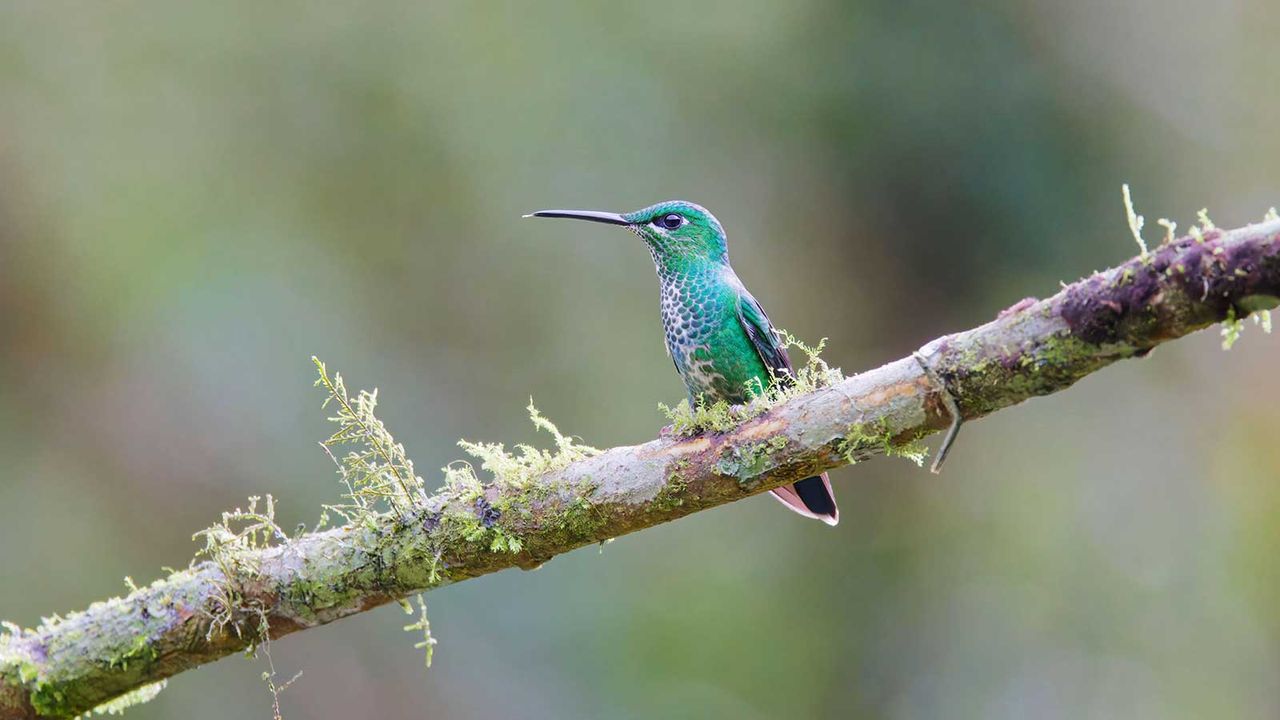
While you may think you can put your bird feeder away for winter, this time of year is actually when they're most vital. Take hummingbirds, for example. Many of them migrate south for the winter months and on their journey will be eager to spot feeders for some nourishment, where other food sources are scarce.
However, this does mean it is not necessary to keep a hummingbird feeder out all winter in every state. 'Caring for hummingbirds in winter really depends on where you live, with consideration of the hummingbird migration,' says Maria Kincaid, an ornithologist from FeatherSnap.

In the states hummingbirds flee from, it's redundant to keep a feeder out. But for those who do have hummingbird visitors in the winter months, Maria says it's vital to keep on top of essential maintenance to protect both your feeder and hummingbird health. Here, she reveals where it's necessary to leave a hummingbird feeder out all winter and what to do to keep your feeder in top shape this season.
Should I leave my hummingbird feeder out all winter?

Putting out a hummingbird feeder (like this red one from Amazon) is one of the best ways to attract hummingbirds. They're designed to provide nectar for hummingbird's unique diets, with feeding ports for their slender beaks.
But, whether you should keep your hummingbird out all winter really depends on your location.
'Most hummingbirds found in the US are migratory, and throughout much of the country are only present during the breeding season (spring and summer), though wintering ranges do seem to be expanding,' Maria explains.
Typically, hummingbirds overwinter in California, Texas, and Florida, and Louisiana. In these states it makes sense to keep your hummingbird feeder out and clean all winter. Increasingly, many species have also been seen overwintering in Mississippi, Alabama, South Carolina and Georgia.
As Maria notes, it changes each year depending on environmental factors.
One of the best ways to figure out if and when to take your hummingbird feeder down is just observing. If it's been a few weeks since you've seen a hummingbird in your yard, it likely means you don't need to leave your hummingbird feeder out all winter.
'You can also judge the timing of when to take down your feeders by looking at the amount of nectar being used,' Maria says.
Using a smart hummingbird feeder camera (like this from Amazon) can also help keep track of how many feathered visitors you're getting at this time of year.
'I always recommend leaving out your feeders for 2-4 weeks after you've seen the last of the breeding birds in order to make sure that there is a food source available for any birds migrating through. You should then put them back up in the spring, ready for another breeding season,' Maria advises.
This hummingbird feeder with a camera has a motion sensor to capture photo and video footage of hummingbirds feeding. The feeding ports are designed to support hummingbirds unique feeding. There's even an ant moat to prevent insects getting to the nectar.
This pretty green glass hummingbird feeder has a hook, so it can be hung from a bird feeding pole, tree branch, or fence post. It has 6 feeding ports, offering a larger capacity for hummingbirds to feed.
This red glass hummingbird feeder makes a beautiful addition to the yard. Red is a color that attracts hummingbirds and with 4 feeding ports, this feeder can accommodate multiple hummingbirds at once. It has a perching ring for hummingbirds to sit on, too.
How to maintain your hummingbird feeder in winter

Just like feeding other garden birds in winter, maintaining your hummingbird feeder is key to providing effective support.
'If you live in an area where there are overwintering hummingbirds, it's important to make sure you keep up on your feeder maintenance,' says Maria.
Most importantly, hummingbird nectar (like this from Amazon) needs to be fresh. It's essentially sugar water and can spoil quickly, so Maria urges to keep hummingbird feeders clean, otherwise harmful bacteria can be passed on to hummingbirds.
'Hummingbird feeders should be cleaned and refilled every 1-2 days when it's warm, and every 3-4 when it's cooler. You should also clean it if you start to see insects like ants or bees, or if the nectar becomes discolored in any way,' she advises.
You can clean your feeder ports with this hummingbird feeder cleaning brush from Amazon.
Something else to be aware of is frost:
'When temperatures are below freezing, you should either bring in your feeder, or consider a hummingbird feeder heater (from Amazon),' Maria says. This will protect your feeder from damage, like cracking, and stop nectar from freezing.
FAQs
Do other birds use hummingbird feeders in winter?
Yes, some birds will use a hummingbird feeder in winter. For example, woodpeckers, finches, and orioles may seek the nectar in a hummingbird feeder. However, these larger birds can be problematic for hummingbirds, dominating feeders and scaring them off. Luckily, there are a few things you can do to stop other birds from using a hummingbird feeder, including offering alternative food sources away from your hummingbird feeder.
If you're starting to suspect you have hummingbirds in your yard but aren't entirely sure, our guide to spot hummingbird nests may be useful.
Stocking up on the below hummingbird feeder accessories can also help you avoid hummingbird feeder mistakes, and they make for charming gifts this holiday season:
A hummingbird feeder heater is an essential to stop nectar freezing and to keep your feeder from becoming damaged by frost. Simply attach it to the bottom of your feeder and watch as the 15-watt bulb keeps it warm.
Rain chains are wonderful additions to the yard both as a water feature and to harvest rainwater. This beautiful patina rain chain has hummingbird motifs, perfect for gifting to hummingbird-lovers.
This hummingbird with camera captures hummingbird activity up close and delivers photos and videos to your phone. It also has AI recognition to identify more than 150 species of hummingbirds.
This gorgeous hand-blown glass hummingbird feeder also acts as a wind chime, creating soothing sounds in the breeze. Each feeder has a port designed for hummingbirds to feed from.