Get all your news in one place.
100's of premium titles.
One app.
Start reading
Latin Times
Latin Times
Politics
Mateo Moreno

DOJ's Record 1,000 Poll-Monitor Plan Meant for the Midterms Just Had Its Miami-Dade Trial Run

DORAL, FLORIDA - JULY 31: A Miami-Dade election worker checks voting machines for accuracy at the Miami-Dade Election Department headquarters on July 31, 2024 in Doral, Florida. The test was done as the county prepares for the August 20 election to decide which candidates go on to the general election in a few high-profile federal races. (Credit: Photo by Joe Raedle/Getty Images)

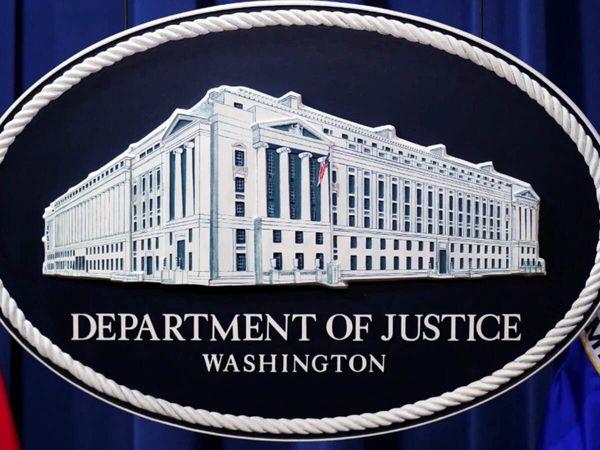
The Justice Department intends to post close to 1,000 federal monitors at polling places across the country this November, a number Harmeet Dhillon, the department's Assistant Attorney General for Civil Rights, says would be unmatched by any previous Republican administration. Dhillon laid out the plan during a Monday sit-down on Bloomberg's Balance of Power, telling the network, "We will do it to the tune of approximately 1,000 election monitors." The Civil Rights Division chief added that the scale would be historic for a GOP-led Justice Department, a striking claim given how quietly this program has typically run under administrations of both parties for decades.

What Federal Monitors Can and Can't Do
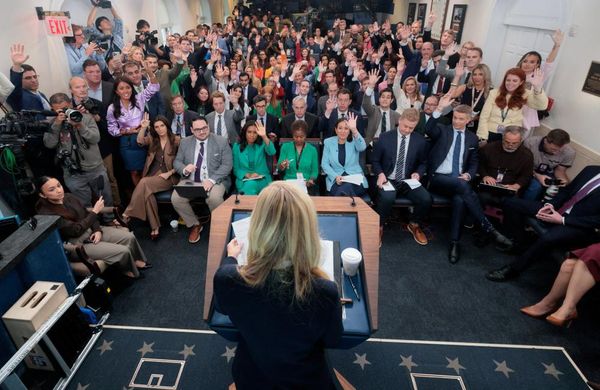
Federal poll monitors are not polling-place staff, and they have no authority to direct how ballots get cast or counted. According to the Justice Department's own description of the program, their job is to watch for possible violations of a specific set of federal statutes covering discrimination, language access, disability accommodations, and protections for military and overseas voters, then refer anything troubling for further review. Stepping in during the moment is off the table.

Where monitors are allowed to stand is also limited. Since the Supreme Court's 2013 ruling in Shelby County v. Holder curtailed the Voting Rights Act's preclearance system, monitors can only enter a polling place itself if local officials sign off or a court orders it; otherwise they observe from outside. Florida Politics reported that arrangement held at both of the last two Florida elections DOJ tried to monitor.

Miami-Dade Gets an Early Look

That dynamic played out locally this week. Four attorneys from the Civil Rights Division fanned out to polling locations across Miami-Dade County on Tuesday during Florida's primary, while two others covered Laramie County, Wyoming. Miami-Dade voters were simultaneously choosing nominees for governor, filling out the remainder of Sen. Marco Rubio's term, and deciding several down-ballot contests. Supervisor of Elections Alina Garcia reported turnout climbing to 18.8 percent by Tuesday evening, up from 12.5 percent that morning, with 243,225 unofficial ballots logged — over 106,000 cast by mail, roughly 78,500 in person on Election Day, and about 58,000 during early voting. Garcia struck a reassuring note about the federal presence, telling Local 10 she was confident the process would go smoothly.

The Miami-Dade and Laramie County stops were part of a wider primary-season rollout. DOJ says it has now placed more than 75 monitors across roughly 200 polling sites in five states this summer, building on a July 7 announcement that sent monitors into 15 jurisdictions spanning six states ahead of their own primaries.

Miami To Elect New Mayor In Runoff Election Tuesday
MIAMI, FLORIDA - DECEMBER 09: A sign points to a polling station setup on election day on December 09, 2025 in Miami, Florida. The runoff election features Eileen Higgins, a Democrat, facing off against Republican Emilio González, a former city manager endorsed by President Donald Trump. The position of Mayor for the City of Miami is officially nonpartisan. Photo by Joe Raedle/Getty Images

A Number That Dwarfs Recent Elections — With One Wrinkle

Measured against recent cycles, 1,000 monitors would mark a sharp jump. A department official told CBS News that 289 people monitored polls during the 2022 midterms, while the 2024 presidential race drew a much larger 714-person deployment spanning 27 states and 86 counties or similar jurisdictions.

DOJ has not detailed exactly how it plans to staff a monitor corps roughly triple the size of 2024's. Democracy Docket reported that the Civil Rights Division's permanent roster falls well short of that total, meaning the department will likely lean on volunteers pulled from U.S. Attorney's offices nationwide. Dhillon used the same Bloomberg interview to suggest she may take a related fight over state voter data to the Supreme Court if lower courts keep ruling against the department.

Senate Democrats Push Back

The rollout has drawn direct pushback from Capitol Hill. Sens. Alex Padilla of California and Mark Warner of Virginia, joined by eight Senate colleagues, sent department leadership a letter on Aug. 3 raising concern that the July deployment leaned toward jurisdictions run by Democratic officials. The senators argued that "elections are safe, secure, and fair" under administrations of both parties, and reminded the department that monitors remain bound by laws against voter intimidation and interference regardless of how the program is framed.

The Bigger Fight Over Voter Rolls

The monitor expansion is unfolding against a separate, more combative campaign: since last year, the Civil Rights Division has filed roughly 31 lawsuits demanding unredacted voter-roll data from states and the District of Columbia, arguing it needs the records to confirm noncitizens aren't registered. Courts have ruled against the department in every one of the 23 cases decided so far. At least a dozen states, Texas among them, have turned data over voluntarily, according to a lawsuit two voting-rights groups filed to stop DOJ from folding the records into a single national database, which they argue is unconstitutional.

That fight has fed skepticism among voting-rights advocates about the broader monitoring push, even as isolated incidents keep the noncitizen-registration narrative alive. New Jersey officials disclosed last month that a Motor Vehicle Commission software error had let roughly 6,600 noncitizens onto the state's voter rolls, though fewer than 400 of them actually cast a ballot. The administration has also pointed to unproven claims of fraud tied to Minnesota's Somali immigrant community to justify monitoring there.

DOJ says a full list of November monitor locations will come once primary season wraps up. That leaves an open question for South Florida, Houston, and other Latino-plurality jurisdictions: whether they will see federal monitors again by Election Day, or whether Tuesday's Miami-Dade deployment was a one-off tied to the primary alone.

Sign up to read this article
Read news from 100's of titles, curated specifically for you.
Already a member? Sign in here
Related Stories
Top stories on inkl right now
One subscription that gives you access to news from hundreds of sites
Already a member? Sign in here
Our Picks
Fourteen days free
Download the app
One app. One membership.
100+ trusted global sources.