
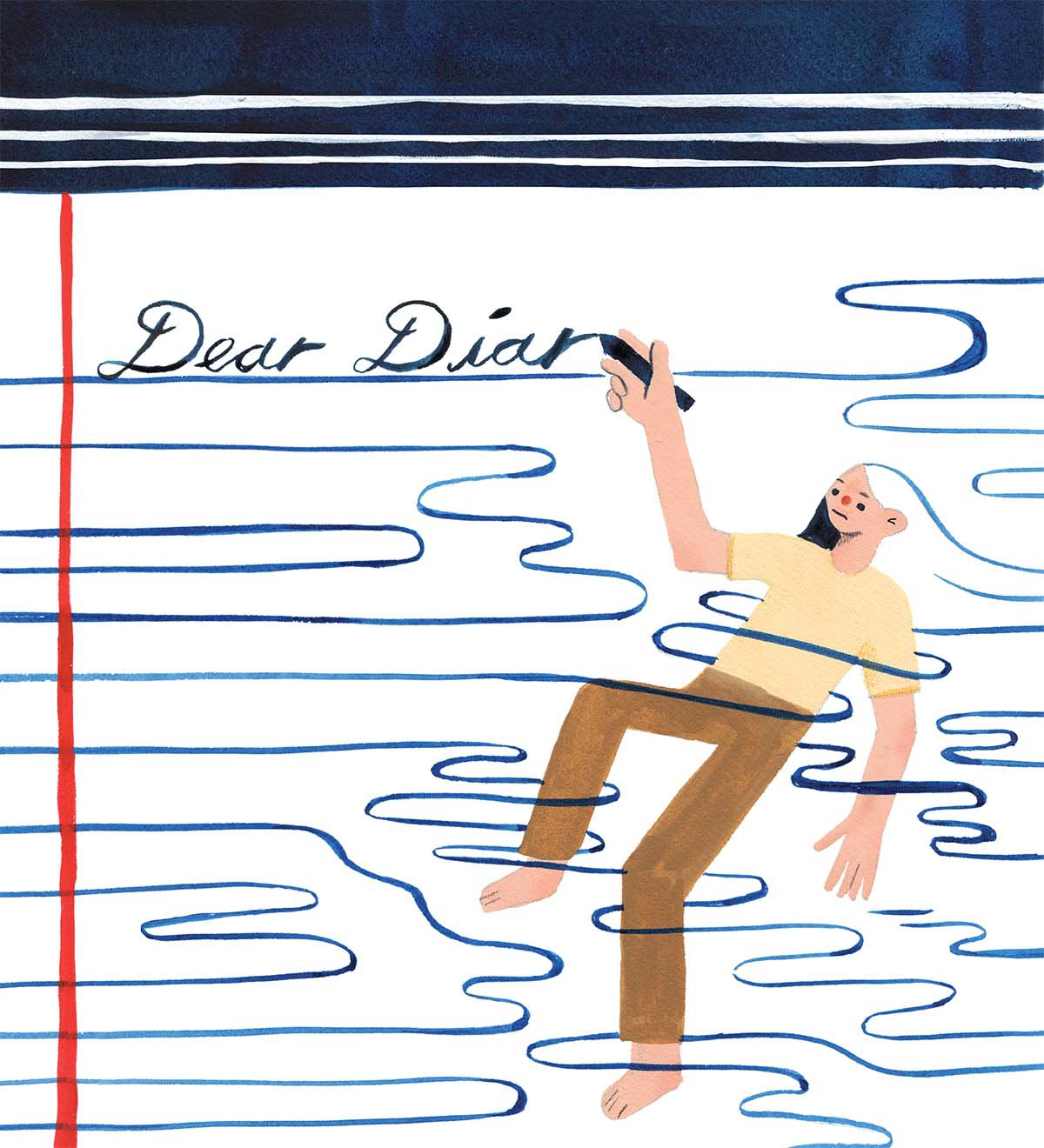
In the fall of 1962, Sylvia Plath wrote to her mother, “I am a genius of a writer, I have it in me. I am up at 5 writing the best poems of my life. They will make my name.” Before then, she’d struggled to find her voice, writing verse that was stiff and sometimes derivative, but in the months after her separation from husband Ted Hughes, she was able to let go and charge headlong in a new direction. These poems, which would be published posthumously under the title Ariel, were vivid, furious, and personal—like formal versions of some of the most memorable passages from the journals she’d kept for more than half her life.
Plath began keeping a diary when she was eleven years old and continued to do so right up until her death in 1963 at the age of thirty. She wrote about everything: sex, school, her challenging relationship with her mother. A frequent topic was the tension between her drive to have a career and her desire to be an ideal wife and homemaker—passages about her publishing successes are written with just as much relish as those about the elaborate meals she cooked for her husband.