
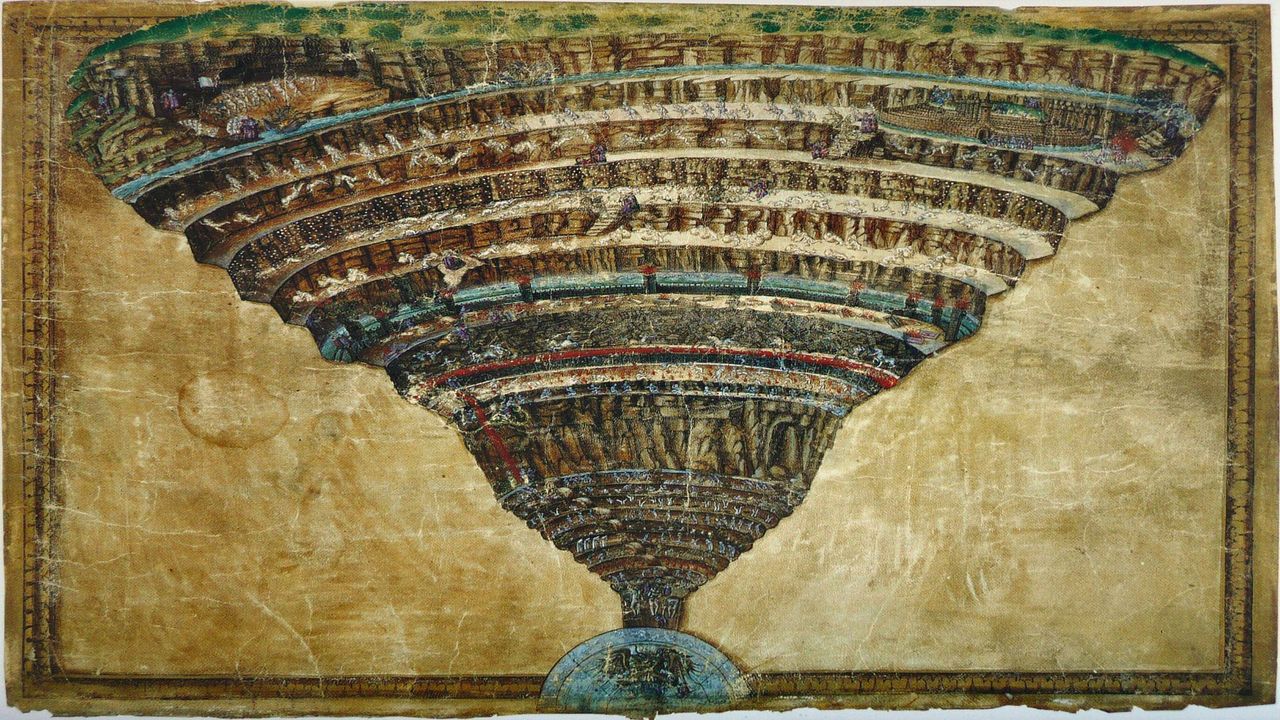
Dante's famous 14th century epic poem, "Inferno," which is the first part of the Italian writer's "Divine Comedy," represents the first time a giant impact of a massive object falling from the heavens was envisaged, according to an expert in the specialized field of geomythology.
In the poem, the massive object in question is the Devil himself, Lucifer, who fell onto the Earth after being expelled from heaven. Yet, according to Timothy Burberry of Marshall University in West Virginia , this fall and subsequent impact is described by Dante in very similar terms to an asteroid impact. Burberry is a professor of English and an expert in geomythology, a field which involves searching old folk tales, myths and stories for evidence of real geological events. Written between 1308 and 1321, Dante's "Inferno" depicts the main character — Dante himself — being guided through Hell by the spirit of the ancient Roman poet Virgil. In what is considered one of the greatest works in the history of European literature, Dante and Virgil travel to the Underworld, where they are taken across the River Styx to Hell by the ferryman Charon — in fact, two of Pluto's moons, Charon and Styx, are named after these details.