Get all your news in one place.
100's of premium titles.
One app.
Start reading
The Times of India
The Times of India
World
TOI World Desk

Doctor Tests Shipwreck Survival: Alain Bombard sails raft without supplies; experiment reshapes lifeboat lore

Typically, doctors are trained to protect others from danger, not to put themselves in it. However, in the early 1950s, a French doctor came to believe the only way to prove his theory about maritime survival was to survive it himself, living off only what the sea could provide.

Get breaking news anytime, anywhere. Download the TOI app now!
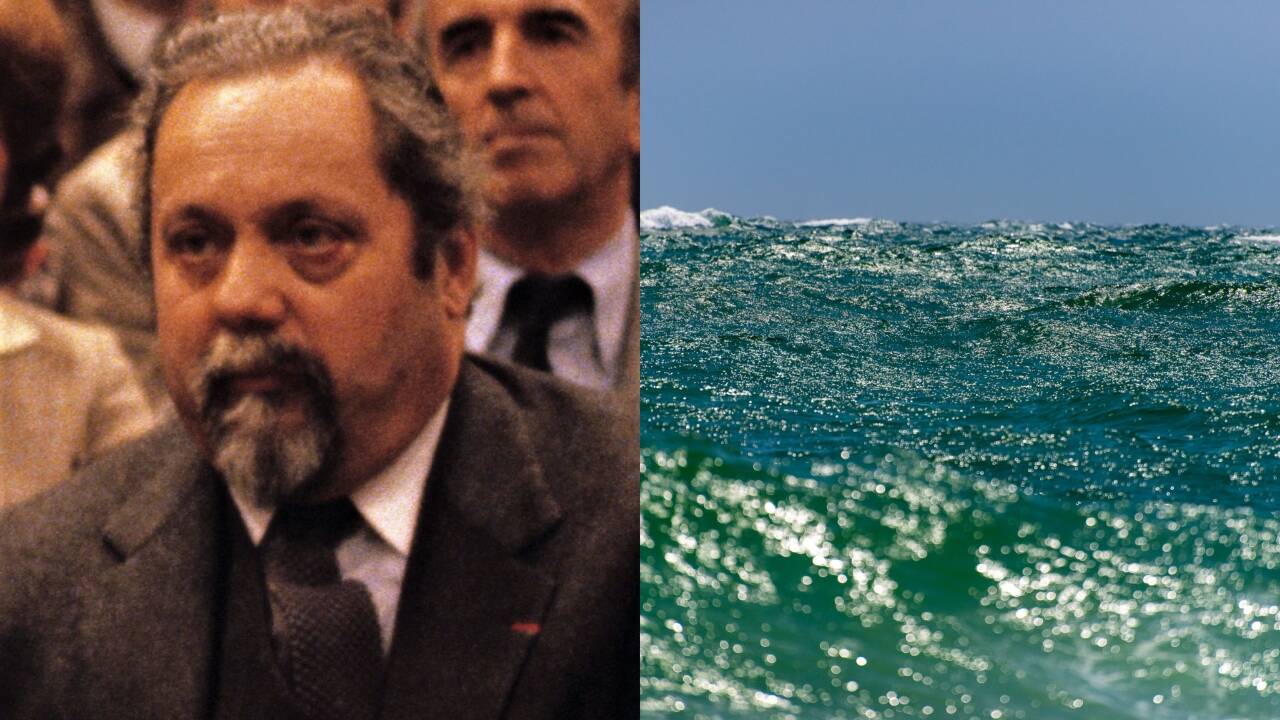
Alain Bombard's conviction grew out of a single terrible morning in 1951, when he was a young hospital intern in Boulogne-sur-Mer and was called in urgently after a fishing trawler sank, leaving dozens of the crew dead or injured. Bombard had been unable to save a single one of them, an experience that stayed with him and pushed him to study why so many shipwreck victims died even after reaching a lifeboat or a life raft, an episode later recorded in the French Navy's own account of his life. His research led him to conclude that castaways often died less from the sea itself and more from thirst, despair and a lack of basic knowledge about what the ocean could provide.

Bombard determined he would deliberately become a castaway to test his theory. In 1952 he started off in a small inflatable boat called L'Hérétique (French for the heretic) with no food, no fresh water, only a sextant and some modest fishing tackle. He did save a tiny sealed store of emergency supplies, which had been constructed under the notary's seal with the express understanding that he was not to break it open unless his life really depended upon it. That seal was not broken.

Small amounts of saltwater, plankton, and fish

Bombard’s proposal was based on concepts he had formed from studying the nutritional qualities of marine life, suggesting that fish flesh and small amounts of seawater, ingested deliberately rather than in desperation, could support a person for weeks at sea. He caught fish with a harpoon and hooks produced at home, drank the juice of freshly caught fish and added to it plankton captured with a little hand net. He also drank small amounts of seawater during the voyage, a practice widely regarded as harmful at the time and one he hoped to show might be tolerated in small doses.

The voyage was far from smooth. On the transatlantic leg, which started on 20 October 1952 from the Canary Islands, Bombard had to patch a ripped sail four days into the leg after his spare was blown away in a storm that momentarily left his boat half submerged. Later a navigation mistake made him believe he was travelling quicker than he was, and on his fifty-third day at sea, he was intercepted by a passing British cargo ship, whose crew told him he still had well over a thousand km to go. They fed him well, a meal he later said gave him the worst indigestion of the whole passage, and a moment where he could have abandoned the effort and gone home but chose not to.

Bombard finally reached Barbados on 24 December 1952, 65 days and roughly 6,000 kilometres after leaving the Canaries, and around four months after his research began at the Oceanographic Institute in Monaco earlier that year. He had lost roughly 25 kilograms in weight and needed brief hospital treatment, yet he was able to walk the final stretch to a rescue station under his own strength, a detail that became central to the case he had set out to prove.

A legacy over the sea

Bombard’s expedition made him a public figure. He spent much of the rest of his life pursuing marine research and environmental causes rather than returning to the practice of medicine. In 1966 he helped build a new marine research station on an island off the southern coast of France, which today operates as the Paul Ricard Oceanographic Institute , devoted to the study and preservation of marine environments. Bombard later also entered politics, sitting as a member of the European Parliament for France between 1981 and 1994.

Professionals still contest Bombard's methods, and doctors generally do not advise people to consume seawater. Even so, his expedition prompted renewed discussion of what a person adrift at sea might achieve with knowledge and discipline. More than 70 years later, an inflatable survival raft is still sometimes called a “bombard” in French, a small linguistic nod to the doctor who volunteered to be shipwrecked to test his theory.

Sign up to read this article
Read news from 100's of titles, curated specifically for you.
Already a member? Sign in here
Related Stories
Top stories on inkl right now
One subscription that gives you access to news from hundreds of sites
Already a member? Sign in here
Our Picks
Fourteen days free
Download the app
One app. One membership.
100+ trusted global sources.