
Get all your news in one place.
100's of premium titles.
One app.
Start reading
Homes & Gardens
Homes & Gardens
Drew Swainston

Do This 2-Minute Job Right Before Your Sunflowers Bloom – for Bigger, Longer-Lasting Flowers

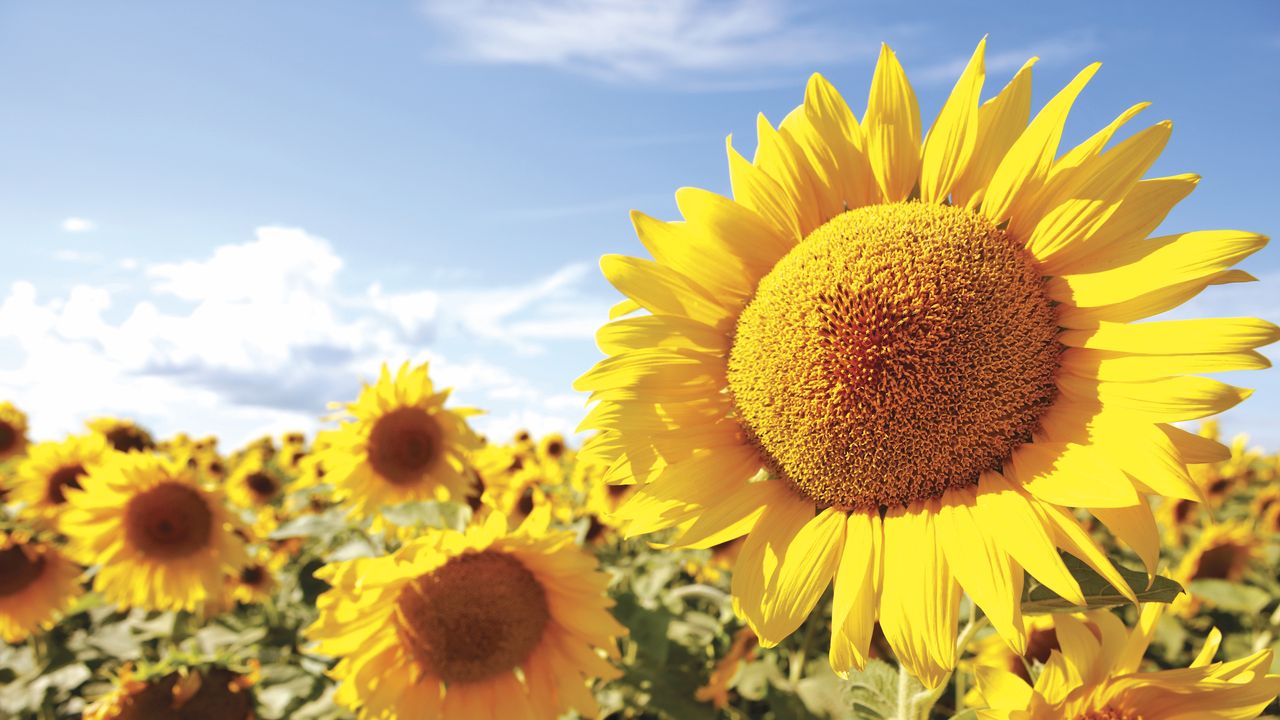
A bright yellow sunflower is surrounded by other blooms in a sunny field.

Sunflowers always impress. But growing those tall stems, large leaves, and spectacular flower heads requires lots of energy. Fertilizing sunflowers during the season helps support this, and the plant’s needs shift in early summer.

At the start of the season, sunflowers need a balanced mix of nutrients. Once they have buds, you should fertilize sunflowers with a high-potassium feed to guarantee large, strong flowers.

When you grow sunflowers, feeding the plants is important. It is even more so if you have poor soil or grow them in pots. And for the best results, you need to apply the right fertilizer at the right time. To explain why and how to fertilize sunflowers in summer, I chatted to plant experts about what makes the perfect feed and how often to use it. (And this Miracle-Gro water-soluble plant food, available at Amazon, provides any flowers with crucial nutrients for stronger blooms.)

When to Fertilize Sunflowers

(Image credit: Future\Sophia Pouget)

Sunflowers are heavy feeders that need lots of nutrients throughout the season to develop their (sometimes towering) stems and distinctive flower heads. Both annual and perennial sunflower varieties benefit from additional feeding, though how much you need to may depend on where they are growing.

Before planting sunflowers, it is beneficial to add compost or well-rotted manure to boost soil nutrient levels. Then, once the plants reach 6-8 inches tall, a balanced fertilizer (like this all-purpose plant food from Burpee) helps ensure plants receive a dose of nutrients to encourage speedy, healthy growth.

The next important time to fertilize sunflowers is just before the plants bloom. At this stage, feeding them with a high-potash fertilizer helps to encourage large flowers. And regular additional feeds will help keep sunflowers blooming all summer long.

‘The best time to start using a high-potash feed is when the sunflower has established a strong stem and healthy leaves and the first flower buds begin to form,’ claims Dr Russell Sharp, a plant scientist who develops plant care products at Eutrema.

‘This is the point where the plant's priorities change from producing leafy growth to developing its flowers.’

How pivotal fertilizing sunflowers is can depend on your soil type. ‘If they're growing in fertile garden soil, they may need very little additional feeding early in the season,’ claims Russell.

‘However, those grown in containers or poorer soils will often benefit from extra nutrients once they begin developing flower buds.’ It makes regular feeding crucial when growing sunflowers in pots.

How to Fertilize Sunflowers During Flowering

(Image credit: Christina Felsing/Getty Images)

A high-potash fertilizer is a product with a higher amount of potassium (the K in a product’s NPK ratio shown as three numbers on any packaging), and it is beneficial for developing healthy buds and strong flowers.

‘A high-potash feed will encourage your sunflowers to produce healthier, stronger, and bigger flowers,’ explains Lotte Berendsen, an expert from PlantIn, the plant care app.

‘As potash encourages blooming, you can begin feeding with a high-potash feed when the first buds start to form. A fertilizer with an NPK of 5-10-10 is ideal. Continue feeding to keep supporting the flowers on your plant.’

Fertilize sunflowers every week or two with a liquid feed applied when you water plants. A perfect liquid fertilizer for sunflowers will be a bloom booster or tomato feed.

‘Tomato feed naturally contains a low level of nitrogen, and higher amounts of potash and phosphorus,’ adds Lotte. ‘It helps with the transport of water throughout the plant and its flowers and reduces water loss, which is crucial for the development of healthy flowers.’

You can use organic fertilizer for sunflowers, including organic tomato feed, liquid seaweed fertilizer, or a homemade tomato fertilizer such as comfrey tea or nettle feed.

‘Continue feeding through the flowering period, particularly for sunflowers grown in pots, as nutrients are used up much more quickly in containers than they are in open ground,’ concludes Russell.

Shop Summer Fertilizer for Sunflowers

A liquid fertilizer with higher phosphorus and potassium to support healthy plant growth and strong flowering. It contains minerals and seaweed.

A bloom booster with an NPK of 2-15-15 to use as soon as buds appear. It is a highly concentrated product and you only need 1 teaspoon per 2 gallons of water.

A natural fertilizer made from kelp and seaweed to use on flowers or vegetables for strong, healthy plants.

There is a huge range of sunflowers to grow, from towering varieties that reach 12 feet plus to dwarf sunflowers for pots. You can prune your sunflowers to keep them at their best all summer long. It is as simple as removing dead or brown leaves, and also cutting old blooms off multi-flowering ones.

If you love inspiring garden ideas, outdoor advice, and the latest news, why not sign up for our newsletter and get the latest features delivered straight to your inbox?

5-10-10 Fertilizer Fruit & Bloom Booster Organic Kelp Fertilizer
Sign up to read this article
Read news from 100's of titles, curated specifically for you.
Already a member? Sign in here
Related Stories
Top stories on inkl right now
One subscription that gives you access to news from hundreds of sites
Already a member? Sign in here
Our Picks
Fourteen days free
Download the app
One app. One membership.
100+ trusted global sources.