
The prospect of buying a new car is more out of reach than ever for many Americans. Average new-car transaction prices still hover around $50,000, while most of the country’s cheapest vehicles have disappeared over the past decade. Heading into 2026, there may not be a single new car sold in the U.S. with a base price below $20,000.

Instead, buyers are flocking to larger trucks and taller SUVs, putting more money down than ever before and stretching payments across 72- and 84-month loans at painfully high interest rates. Something has to give.
President Trump recently floated the idea of bringing Japanese kei cars to America, asking his Secretary of Transportation, Sean Duffy, to lift restrictions preventing them from being sold in the U.S. Whether or not that ever happens remains to be seen. But there may be a better solution—all we need to do is look further west.
Geely's American Dream

The idea of Chinese automakers selling cars in the US isn’t new. As early as the mid-2000s, Chinese brands considered exporting their cheap sedans and affordable SUVs to American buyers. Only recently, though, has the concept started to gain real momentum.
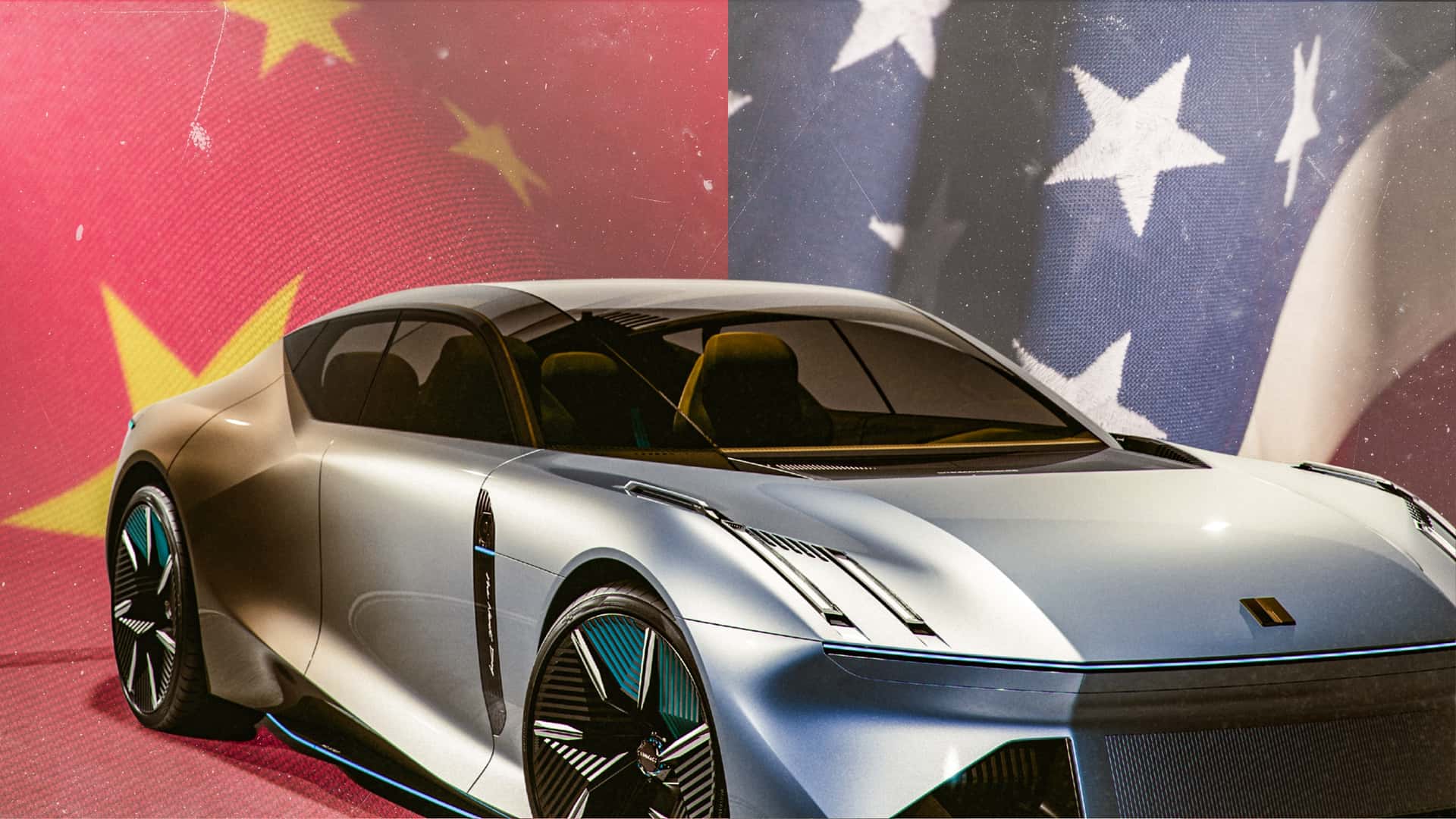
One of China’s largest auto conglomerates, Geely, said it plans to sell vehicles in the US by the end of the decade. The company behind Volvo, Polestar, and Lotus hopes to establish a Stateside presence for its Zeekr and Lynk & Co brands—two marques Geely believes are best suited for American consumers.
"Right now, we’re looking at all global markets where we can expand," Ash Sutcliffe, Geely’s Head of Global Communications, said in a recent interview with Autoline. "We’re currently very strong in China. We’re developing strongly in Southeast Asia. Europe is very stable. But the big question for us is when and how we go to the USA."
"From what we’re seeing, there’s strong demand for affordable, premium, and luxury vehicles," Sutcliffe continued. "I think we’re in a good place to offer the American consumer something very different."
Geely's rough proposal involves building Chinese vehicles at its Volvo Ridgeville Plant in South Carolina. These vehicles would be designed specifically for the US market, with the potential to export them elsewhere.
The plans are still in the early stages. Sutcliffe notes that nothing has been finalized, but said a clearer picture should emerge within the next two to three years.
Political Pressure

Of course, it’s impossible to ignore the potential political ramifications of Geely bringing cars to the US.
Last January, former President Joe Biden effectively shut the door on the idea of Chinese cars being sold in America, introducing bans on Chinese vehicle software and hardware set to take effect in 2027 and 2029, respectively. Those rules would make it nearly impossible for Chinese automakers to sell cars in the US, regardless of where they’re built.
President Trump shares similar skepticism. In 2024, he said Chinese automakers would face "a 100 percent or maybe even a 200 percent tariff" if they attempted to sell cars in the US. That said, he hasn’t completely closed the door on the idea.
'They’re going to pay a 100 percent or maybe even a 200 percent tariff.'
Trump has said that Chinese companies would be welcome to sell cars in America—so long as they build them here and hire American workers.
“If they want to build a plant in Michigan, in Ohio, in South Carolina, they can, using American workers,” Trump said. “They can’t send Chinese workers over here, which they sometimes do. But if they want to do that, we’re welcome, right?”
But this all raises a key question: Do Americans even want Chinese cars?
Americans Say… Maybe To Chinese Cars

According to a 2025 study from AutoPacific, more Americans are warming up to the idea of owning or leasing a Chinese vehicle. Of the 18,987 consumers surveyed, just over half said they would consider buying a Chinese car—up 10 percent from the previous year.
About 22 percent of respondents said they were "very familiar" with Chinese-made vehicles, while another 43 percent described themselves as "somewhat familiar." Brands such as Huawei (27 percent), Xiaomi (23 percent), and BYD (19 percent) ranked among the most recognizable, meaning 65 percent of respondents had at least some awareness of Chinese automotive brands—up from 52 percent in 2024.
"We’ve seen awareness of disruptors like BYD, Geely, Huawei, and Zeekr grow substantially year over year," said Robby DeGraff, manager of product and consumer insights at AutoPacific. “That growth is driven by increased media coverage, both within and outside the automotive space, as well as more real-world exposure to these vehicles."
'We’ve seen awareness of disruptors like BYD, Geely, Huawei, and Zeekr grow substantially year over year.'
A separate study by the Dave Cantin Group (DCG) found that roughly 40 percent of Americans would consider buying a Chinese car. Interestingly, 75 percent of dealers surveyed said they wouldn’t be surprised if they began selling Chinese vehicles within the next year.
"Affordability is reshaping purchase decisions," said DCG President Brian Gordon. "Interest in cheaper Chinese vehicles is growing, and absorbing tariff costs without passing them on to consumers would be nearly impossible without sacrificing market share."
Security concerns, of course, remain a major hurdle for most Americans. In 2024, 80 percent of consumers surveyed by AutoPacific said they were worried about data and security issues in Chinese vehicles. That number fell to 77 percent last year—still high, but trending downward.
Cost Is Key
Ultimately, the success of Chinese vehicles in the US may come down to one thing: price.
Chinese cars are known for having excellent technology, tons of features, and—especially in EVs—excellent range, all at comparatively lower prices. If Geely is able to manufacture vehicles in the US and avoid heavy tariffs, it’s possible they could undercut some current alternatives in pricing.
In China, Geely sells a swath of inexpensive gas and electric vehicles. The Geely Geome, a small EV, starts around ¥69,800 (roughly $9,800–$10,000) and offers just under 200 miles of range. The Geely Emgrand compact sedan can cost as little as ¥48,900, or about $6,800.
That said, Americans are far more likely to gravitate toward SUVs from Lynk & Co or Zeekr than tiny EVs or entry-level sedans. Even so, Lynk & Co’s cheapest SUV, the 02, costs roughly ¥135,900–¥138,900 (about $18,600–$19,000) in China. Zeekr, meanwhile, offers several SUVs and sedans priced below $20,000 when converted directly from Chinese pricing.
Sure, those prices aren’t dramatically different from today’s compact and subcompact SUVs sold in the US. But if Chinese automakers can offer the same level of value here that they do at home, with more and better features, there’s little reason to believe Americans wouldn’t at least give them a serious look.