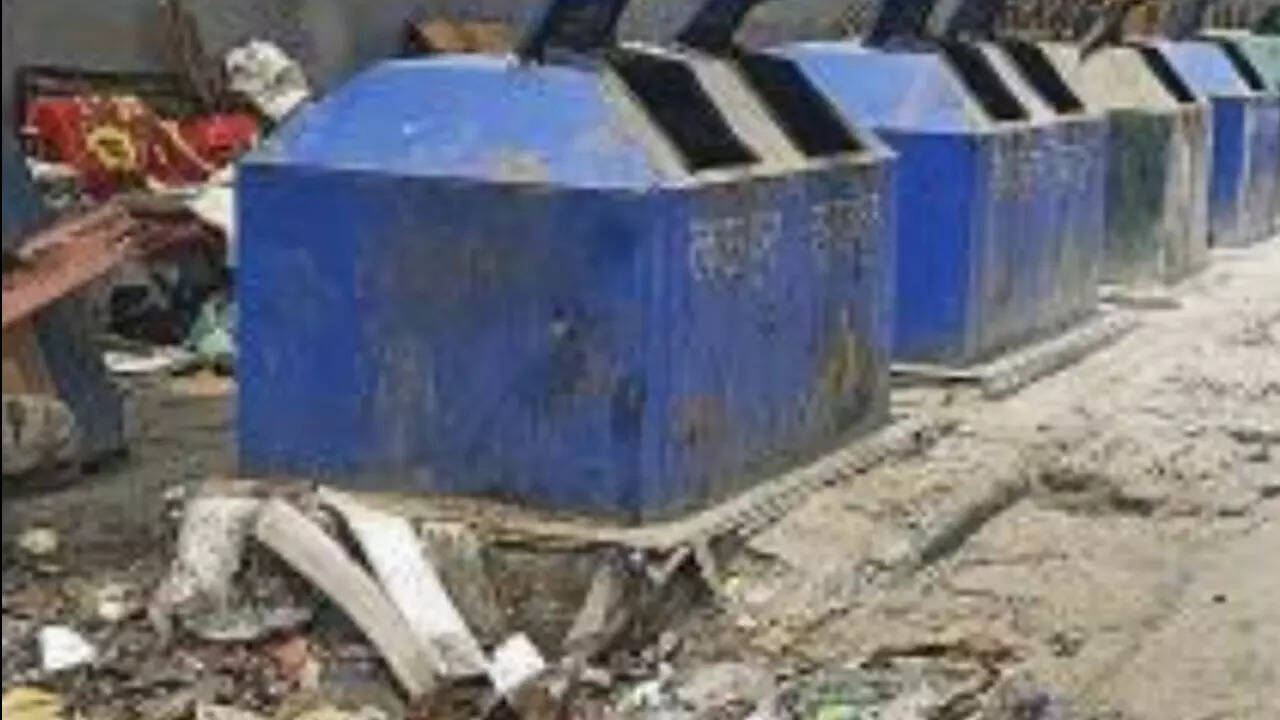
DEHRADUN: The Dehradun Municipal Corporation (DMC) installed 80 underground garbage bins five years ago, taking a cue from Haldwani, in a bid to add aesthetic value and free up space. They were installed at a cost of Rs 3.5 crore. The civic body decided to install 20 more such bins in the city, which, however, has been shelved now as the bins have “been found ineffective” in tackling the littering issue in the city.
The trash bins have a capacity ranging from 1.5-3.5 metric tonnes. The plan was to increase the capacity to 4 metric tonnes to keep up with the garbage generation in the city. However, any such plans have now been put on hold.
Chief health officer, Dr Avinash Khanna, said, “It has been observed that there is littering around the mouth pf the bins. So for now, we will not increase the quantity and we are anyway working towards the goal of a bin free Dehradun.”
Officers also said that for maximum optimisation, instead of one large underground bin, four smaller ones were being used which was taking up way more space than intended. Also, because the mouth of the bin is narrow, there were troubles transferring the waste to the garbage trucks. However, at the time of installation, the best part had been considered the fact that they could be emptied into garbage trucks using a crane without sanitisation workers’ help.
The project drew appreciation and was considered successful in the beginning but with the passage of time, it fizzled out.
Nonetheless, the officials maintain that during monsoon, these bins are more effective as the design prevents any sort of water accumulation. Public, however, has a different story to tell. A grocery shop owner at Kargi chowk, Mahesh Kangar, said that the area gets congested when trucks come to pick up garbage from these bins as it is a slow process. “One can see garbage outside bins, which defeats the purpose of their installation. Though vehicles come to lift garbage every day, those are unable to clean the entire place as every nook and corner is littered,” said Kangar.
Meanwhile, an automated composting machine was inaugurated at Harrawala on Saturday. It is capable of producing nearly 100 kg compost daily and after an initial trial phase, it is now running at 70% capacity, officials said.