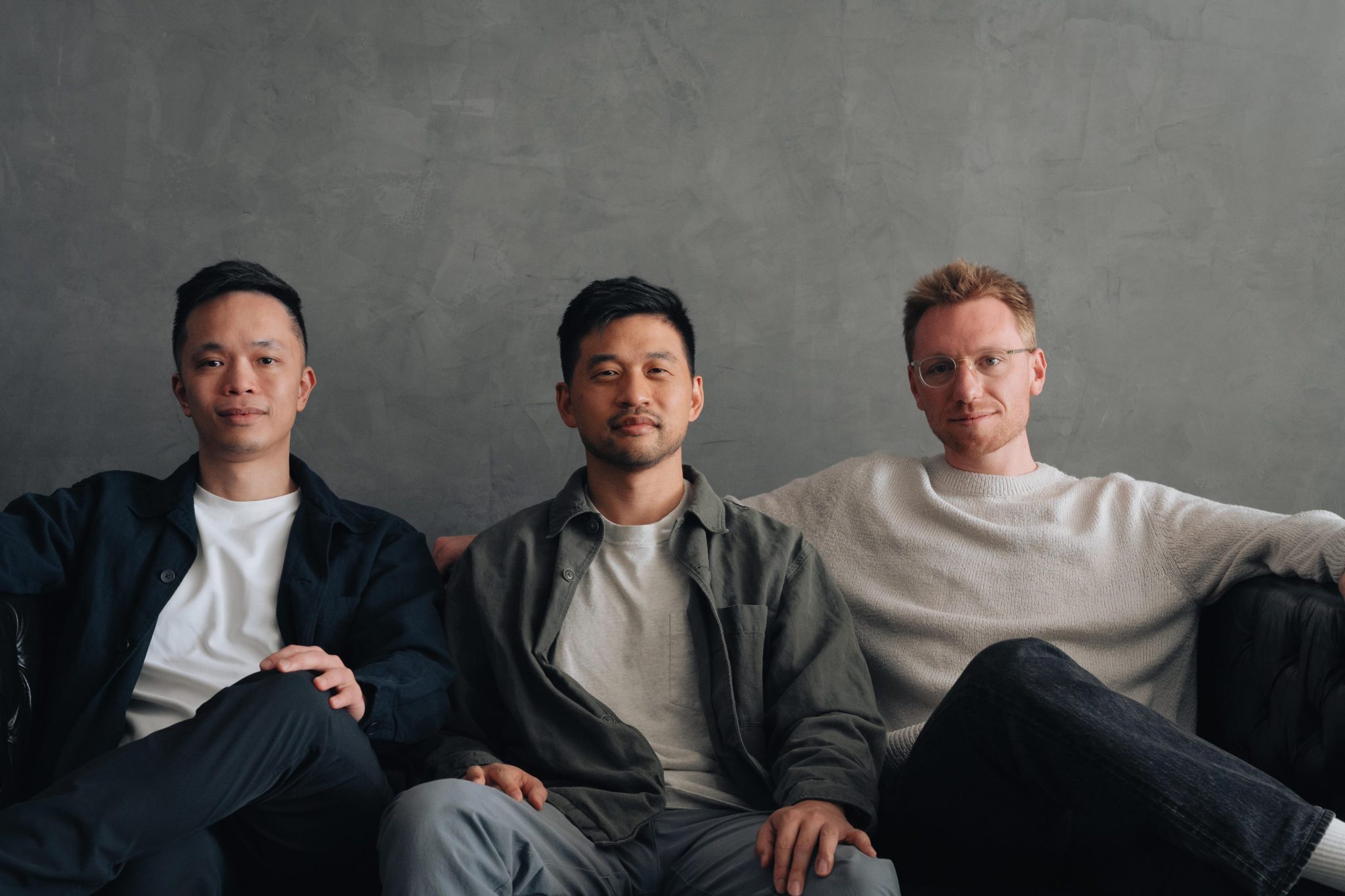
Eddie Koai, Patrick Mandia, and I are watching Crazy Lamp Lady on someone’s computer.
It’s a town hall of sorts. Crazy Lamp Lady is actually a big deal—her real first name is Jocelyn, but as Crazy Lamp Lady, she has more than 800,000 followers across platforms and an online marketplace attracting thousands. She’s reassuring her audience of hundreds that they shouldn’t be worried about listing items that aren’t ultra-rare (TJ Maxx last season can count, too) and generally talking shop. We’ve dropped in on her regular “state of the union” check-in for her followers on District, an AI-powered platform that helps online sellers build stores and marketplaces without technical know-how. It was founded in 2022 by former Snapchatters Koai, Mandia, and Khoi Tran.

“We came in with a very ‘duh’ hypothesis, which is that people actually like to buy from people who they like and from people who they trust,” said Koai. “It’s the same reason you buy something in a store.”
District recently raised a $14.7 million seed round, led by Andreessen Horowitz and Kindred Ventures, Fortune has exclusively learned. Other investors include Greylock Partners, SV Angel, and 20VC. District also attracted an eclectic group of angels, including ex-Depop CEO Maria Raga, famed solo investor Gokul Rajaram, and former Snap executives Peter Sellis and Imran Khan.
“Services like Amazon, Facebook, and eBay were built two to three decades ago for another era when making payment transactions or social feeds work were hard enough to get right,” said Steve Jang, Kindred Ventures founder and managing partner. “Today, people want to have that all happen fluidly in one easy, real-time, community-driven experience where transactions happen instantly.”
Jang additionally points out a few simultaneously true things: the $7 trillion worldwide ecommerce market is in flux as consumer behavior ever shifts towards the instantaneous, while live shopping finally takes hold in the U.S., particularly with the rise of companies like $11.5 billion Whatnot. There’s opportunity for independent sellers, but usually, those people have had to manage many different platforms at once, said Ben Smith, founder of sports card collectors community Midwest Box Breaks.
“Before I found District, I was piecing together several different platforms (a commerce site, YouTube, Discord, Twitter, and manual invoicing),” said Smith, the startup’s first customer, via email. “That disconnected workflow slowed me down and constantly confused customers… District brought everything into one place.”
District is sort of like a Matryoshka doll of online sales platforms: To wit, the startup has brought 1,000 businesses onto its platform over the last three years, and those businesses are often marketplaces with their own universes of sellers on them. Consider Stacked Golf—a golf-obsessed resale marketplace founded by a Florida couple that got their start reviewing found golf balls on YouTube—which generates $150,000 in weekly sales via District, the company says. There are more than 1,000 sellers on Stacked Golf, hawking putters, irons, and golf towels. As much as anything else, these marketplaces are full-fledged subcultures.
“Live [selling] is so well-suited to this because they already have that niche community,” said Koai. “They have that audience, and the founder gets to bring the business to life on an intimate level… Some live sales aren’t even sales. They’re like ‘we’re choring together’ or ‘we’re watering plants together… It’s very fulfilling for us to build the economy around these subcultures.”
To be sure, there are single-seller businesses on District, like Quentin Tarantino’s New Beverly Cinema, but it does seem as though the most thriving communities are quite sprawling. Take Niknax—a hub for antique, vintage, and home decor founded by “Crazy Lamp Lady”—which in 2025 generated north of $5 million in sales across more than 5,000 sellers. Among those sellers: Mandia’s grandmother, Patricia Finch, who runs her shop Poppy and Rose Jewelry. Grandma has an evocative feature request: “A feature I would love to see on District would be: what inspired or a history of a listing,” Finch wrote to Fortune. “I believe buyers connect both to the history and passion behind each item.”
This aligns, perhaps unsurprisingly, with her grandson’s thesis: That commerce is swinging back towards something more deeply personalized and relationship-based than what we’ve seen in the last few decades.
“The early 2000s brought this wave, for marketplaces in particular, of mass centralization,” said Mandia. “I think people, both on the supply side and demand side, are now seeking more intimate, direct relationships as they participate in this larger ecosystem.”
And online, that ecosystem can be lamps, plants, sports cards, or used golf balls.
See you tomorrow,
Allie Garfinkle
X: @agarfinks
Email: alexandra.garfinkle@fortune.com
Submit a deal for the Term Sheet newsletter here.
Joey Abrams curated the deals section of today’s newsletter. Subscribe here.