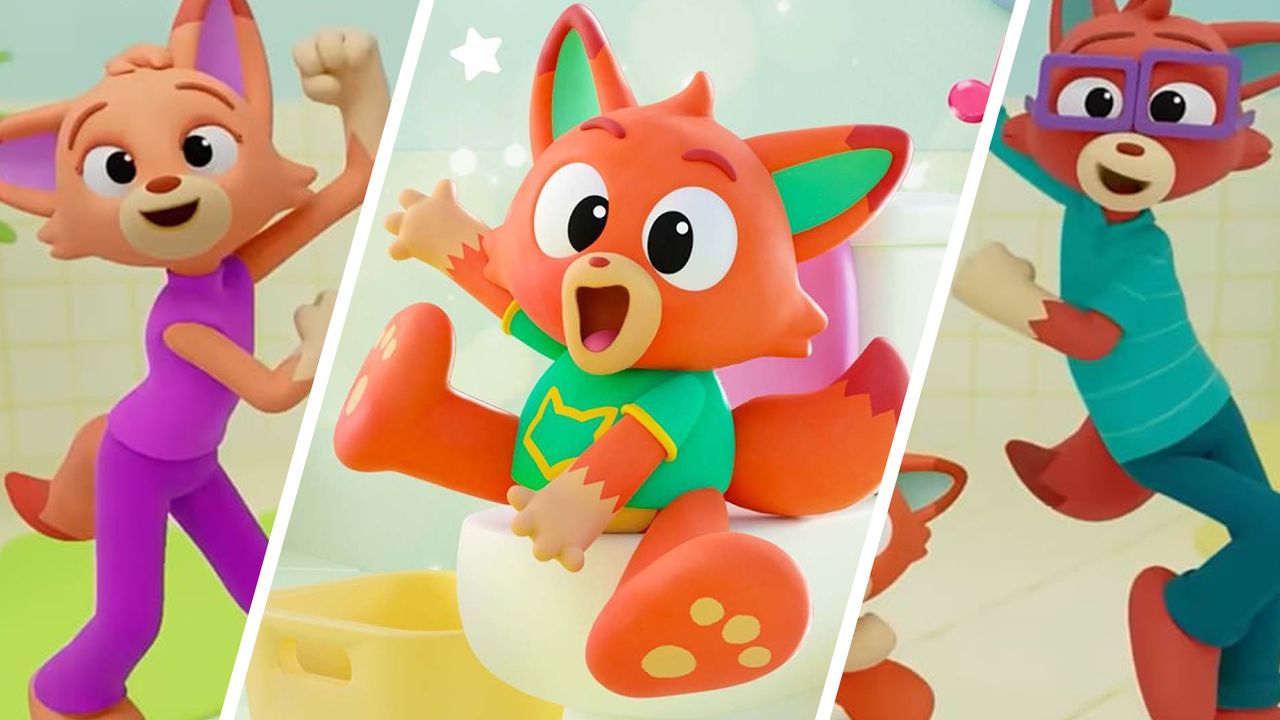
Chances are you might never have heard of the new Disney series Ozzy Fox if it weren't for one thing: some kind of AI-related technology was used somewhere in the process of making it. That's prompted an outcry that's won the animation far more visibility than it would have received otherwise.
Suddenly a cartoon for preschoolers that was launched on YouTube with little fanfare is generating headlines about Disney feeding kids AI slop. People have been quick to spot the hallmarks of AI video generators, from incomplete props to bad lip synching and a suspicious lack of any text or numbers in backgrounds. It's put Ozzy Fox up among the most controversial cartoons, helping it rack up thousands more views.

The irony is that it isn't really generative AI.
Ozzy Fox is about a family of anthropomorphic foxes who dance around to songs about tidying up and going to the toilet. Zootopia 3 it is not, but then it is intended for preschool kids.
The animation is a joint production with French animation company Animaj as the result of the 2024 edition of Disney Accelerator, a business development programme for startups that's been running since 2014.
It was created by Jennifer Oxley, who's previously worked on Peg + Cat, Wonder Pets!, and Little Bill, and developed by Animaj creative director Guillermo García Carsí. Chen Neeman, Kat Rende and JP Rende wrote those catchy songs about chores and using the potty.
AI does form part of Animaj's development process, something that Disney made sure to point out to investors in its press release back in 2024. But Ozzy Fox is not a text-to-video or even image-to-video AI-generated cartoon like Showrunner, or Google DeepMind's Dear Upstairs Neighbor, or Amazon's proposed AI KPop Demon Hunters mockbuster.
Animaj's workflow uses two proprietary AI tools trained on the show’s assets: sketch-to-pose prediction and motion in-betweening. The 3D models that appear in the cartoon are created by artists, and human animators draw the storyboards and sketch key poses.
The first AI system poses the corresponding 3D model based on a sketch, kind of like mocap but for 2D to 3D animation instead of live action to 3D animation. The second model then handles the repetitive task of filling the in-between frames, something many 3D animation pipelines have done for years. Artists then review and manually correct the files in Maya, one of the best animation programs.
Ozzy is AI-assisted, not AI-generated. Whether people think it's any good is another matter, but any stiffness or weird-looking sequences are the result of either the intended art style or human error rather than AI hallucinations. Animaj's Pocoyo, which has a comparable style, has been running since 2005.
I'm not sure why one of the character's clothes seems to change colour in the middle of a scene, but I guess it's a lighting issue.
Much has been made of the fact that Disney published no official press release about Ozzy Fox's launch. The suggestion is that the studio hoped the show would slip under the radar, but I don't remember the company shouting about productions from previous Disney Accelerator cohorts either. Who remembers the "community-driven animated NFT series" The Gimmicks House of Chico?
Each of the two Ozzy Fox episodes released so far already has over 500,000 views. The flipside of the criticism of the perceived use of AI is that if the series really takes off, people will take it as proof that the public is perfectly happy to accept AI cartoons, when that's not what it would be showing.
It's no secret that Disney has been exploring the use of generative AI for animation. It had a massive deal with OpenAI that collapsed when the company behind ChatGPT flip-flopped away from its Sora AI video platform as abruptly as it launched it. If everything gets called out as AI slop when it's not, it could normalise the real slop when it comes.