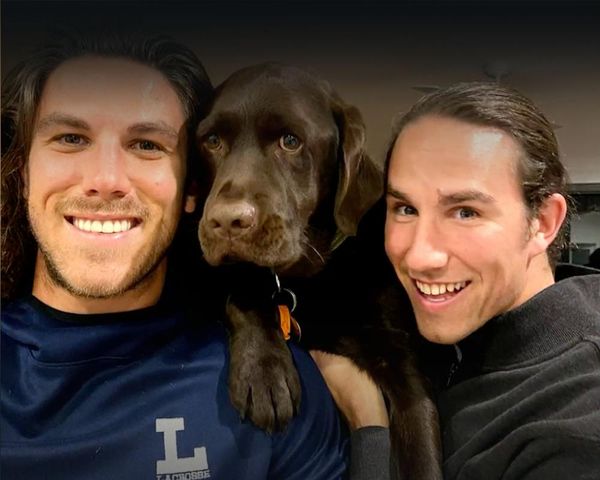
Was that really Peter Mandelson getting into a police car on Monday? Was it really the same Mandelson who had supposedly been about to flee to the British Virgin Islands, the man called “a traitor” to his country and the buddy of a sex trafficker of girls? Was he really to be questioned for nine hours by the police over “misconduct in public office”, an offence few people have ever heard of? For a moment, I thought it must be a trailer for a new Epstein docudrama “inspired by real-life events”.
For two months, news desks on both sides of the Atlantic have been trawling through the Epstein files, daily releasing sensational details. This one story – now years old – is crushing out many others. The name of Jeffrey Epstein this past week has claimed precedence over Donald Trump, China, Iran and Ukraine. Each night’s BBC television news has demoted Keir Starmer, the NHS, tax reform and student loans. Preference is relentlessly ceded to Epstein, with bit parts for the former prince Andrew, Mandelson, Bill Gates, the Clintons and a galaxy of billionaires and celebrities.
The issue of misconduct was anyway to be discussed by Mandelson with the police next month. For Lindsay Hoyle, the Commons speaker, to pick up some jet-set gossip about Mandelson about to run off to the British Virgin Islands beggars belief. For Hoyle then to pass the gossip on to the police suggests both he and they were suffering Epstein frenzy. And as for the police then apologising to Hoyle for revealing him as their source – what about apologising to Mandelson? The latter had no conceivable interest in incriminating himself by going into exile.
The idea is clearly gaining ground that the concept of innocence until guilt is proven is defunct, at least for public figures. The slightest taint of trouble becomes guilty unless innocence is proven – and possibly not even then. Lives and friends can be exaggerated and dramatised at will. The assumption on display with the TV series The Crown was that royals, like celebrities, must expect a degree of intrusion and fabrication as the price of fame. The makers of royal docudramas are clearly gambling on the royal family’s policy – wise in the past – of never suing.
Only a day before Mandelson was arrested, ITV aired The Lady, a docudrama about the murder of her boyfriend by an aide to Andrew’s former wife, Sarah Ferguson. It claimed to have been “inspired by a true story”, though some names had been changed, “and some characters, events and scenes … created and merged for dramatic purposes”. There was simply no way to tell which passages were made up. Around the same time, Channel 4’s Dirty Business weaved together the stories of two men investigating sewage leaks in the Cotswolds, and the gruesome death of a young girl from E coli after playing on a beach in Devon. It was a vivid attempt to repeat 2024’s drama about the Post Office scandal. But was it true, and if so, why not give it to Dispatches and avoid doubt?
The onlooker is left wandering in a no man’s land between fact and fiction. In cases such as privatised water companies and the Post Office, film-makers act as self-appointed investigative journalists, but with an artistic licence to “faction”, to help jazz things up. They are right that something is wrong with some public institutions. This wrong is a subject for serious journalism and for parliament. The Post Office had clearly failed and docudrama did the trick. But the responsibility to justice lies in seeking to convey the truth, not risking its distortion.
In the Epstein saga, I have every sympathy for his victims and none for his associates. I have little sympathy for the celebrities who succumbed to his charm. But the idea that anyone’s entire store of emails, however private or intimate, can be gpublished by a government and treated as global property I find appalling. That it should give such addictive delight to the media is not the issue. Is this really the route down which we intend to go?
The Epstein emails will, I am sure, be used as raw material for fictional drama. It will doubtless ruin the lives of dozens of people, maybe more, by implying guilt by unwise association. We are not living in China or Russia. A fundamental principle of liberal justice is that citizens really are innocent until proved guilty. That means proved by a court, not a screenwriter.
Simon Jenkins is a Guardian columnist
Do you have an opinion on the issues raised in this article? If you would like to submit a response of up to 300 words by email to be considered for publication in our letters section, please click here.