
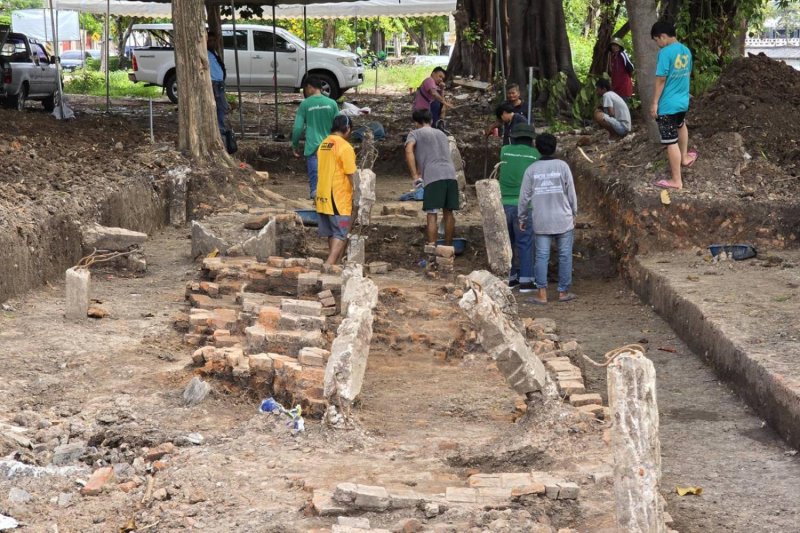
NAKHON RATCHASIMA: Archaeologists have uncovered a long-lost eastern section of the Korat city wall, a major discovery not seen in more than two decades.
The excavation, conducted by the 10th Regional Office of Fine Arts in cooperation with Nakhon Ratchasima Municipality, is part of a project to study soil layers and the history of the ancient city before landscape improvements in the Phon Lan moat area.
The dig, which runs from July 20 to Aug 8, revealed the wall alignment that was missed during a 2024 survey. Experts said the discovery marks the most significant study of Korat's fortifications since research conducted between 1999 and 2006.
Archaeologist Wannapong Palakawong Na Ayudhya said the excavation also uncovered evidence of human habitation dating back 1,500–2,500 years, including animal bones, pottery fragments, charcoal, ash and shells. The findings provide insights into daily life from the Bronze Age and Iron Age through to the period when written records began. Although some soil layers were damaged by past land use and waste dumping, researchers said the wall remains an important part of Korat's heritage.
Samples of organic material beneath the brick foundations, along with rice husk traces in the bricks, will undergo scientific dating to determine the construction period of the walls, gates and fortifications.
Historical studies suggest the Korat city wall enclosed a rectangular city about 5.2 kilometres long, surrounded by a moat and 15 fortresses with gates at all four cardinal points.


