
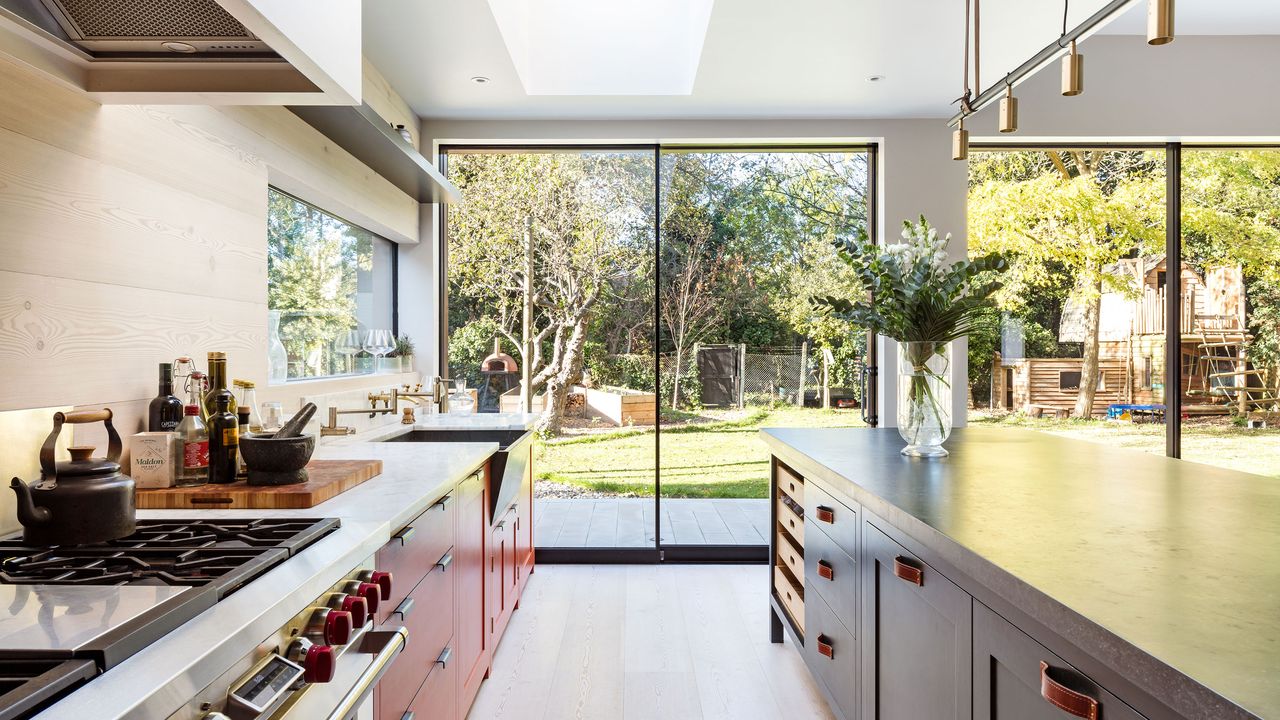
The orientation of an extension should be one of your main considerations when formulating its design, particularly when it comes to the amount and type of glazing that gets incorporated. While the dream might be kitchen extension ideas that enjoy a deluge of natural light throughout the day, thanks to their south-facing situations, additions that face north can present a few more challenges.
As with so many aspects of home design, though, it is far better to view challenges as opportunities for creativity — the chance to produce something really unique to your property — as opposed to obstacles. Edward Stobart, technical sales manager at IDSystems, agrees that, with a tailored approach, north-facing extensions can feel every bit as welcoming as their south-facing counterparts. "With the right glass specification and the correct combination of products, these elevations can become some of the most pleasant and dependable spaces in a building — bright without glare, warm without being inefficient, and comfortable in every season."

It's time to banish the belief that north-facing extensions will always feel chilly and dull — these six expert tips explain exactly how to choose glazing to achieve the space of your dreams.
1. Prioritize Plenty of Roof Glazing

Standard windows and vertical glazing have their place within any kind of extension, but where natural light is at a premium, it is best to look at additional ways of introducing light, as Sophie Chapman, associate and interior designer at The Vawdrey House, explains. "Rooflights, clerestory glazing, and carefully-angled openings can be incredibly effective, drawing daylight deeper into the plan and capturing unexpected pockets of brightness."
Ran Ankory, founder and managing director at Scenario Architecture, agrees. "North-facing extensions can be wonderfully calm and evenly lit, but they can also feel cool and slightly flat if the glazing is not considered carefully," he picks up.
"For many north-facing extensions, roof glazing and high-level glazing can be transformative in allowing an abundance of natural light to flood into the space," continues Ran. "Rooflights can lift the whole plan and help daylight reach deeper into the original house.”
2. Focus on Thermal Performance

While there should most definitely be a strong focus on pulling in natural light when designing a north-facing extension, a practical take also needs to be adopted in terms of keeping the new space feeling comfortable, as Rebecca Clayton, a director at IQ Glass, explains.
"North-facing extensions are about maximizing daylight without losing warmth," says Rebecca. "Because you are not relying on direct sun, priorities shift towards whole-system insulation, high light transmission, and careful junction detailing. A high-transmission, neutral specification can help keep the space bright and true-color."
Edward Stobart agrees. "Because north-facing glazing gains very little solar heat, its primary role is retention rather than gain. If you are planning a kitchen extension that will be north-facing, it is important to note that you don’t need to match the same glazing specification to the other elevations of the house," he continues. "Adapting the glass you use to the size and location of the window or door will benefit the usability of the finished rooms."
3. Consider Using a Low-Iron Glass

The glass you choose to fit into your extension matters almost, if not just as much, as its size and positioning — and it isn't just a case of double or triple-glazing.
"With very limited direct sunlight, the key is to allow as much light in through the glass as possible," picks up Edward Stobart. "For this, you should consider low-iron glass, which offers exceptional clarity and increased light transmission compared to standard glazing.
"By reducing the iron oxide content of the glass, the finished glazing has a clearer and more transparent appearance than standard glass," elaborates Edward. "When it comes to coatings, the solar control designs that have become so popular on glass for south-facing elevations are not the correct option for north-facing windows and doors. Instead of opting for low-e (low-emissivity) coatings, low-iron is the way to go. They reflect internal heat back into the building while still allowing daylight to pass through."
4. Keep Framing to a Minimum

Slimline glazing has almost become the norm these days — rarely do homeowners specifying large areas of glazing ask for thick, chunky framing that will block light and views from their internal spaces.
In the case of north-facing extensions, even greater care needs to be taken when selecting frames — something Edward Stobart is keen to emphasise. "Beyond the glass, it is important to consider the design of the frame and even the material you choose. Opting for maximum glass area and minimal frame will increase the amount of light coming in. Choosing slender-framed aluminium sliding doors with large panes of glass and minimal frames will allow in far more light compared to uPVC or timber windows and doors.
"For windows, it is also worth considering how they open," adds Edward. "Choosing configurations with single-opening sashes rather than split openers or bifold doors will reduce the amount of frame."
5. Understand That Less Is Sometimes More

While it would be natural to assume that the more glazing you can squeeze into the design of your modern extension, the better, this is, in fact, not always the best way forward. Sophie Chapman explains why: "Expanses of floor-to-ceiling glass are not always the answer. In cooler, north-facing rooms, too much glazing can leave a space feeling exposed rather than cosy.
"A thoughtfully-planned arrangement of doors and windows, shaped around how the room will actually be used, often creates a far more welcoming result than simply adding a large glass box to the rear of a house," says Sophie.
Ran Ankory agrees that choosing glazing is about more than just maximizing light and garden views. "Choose the system that suits how you actually live," he advises. "If you want a full-width clear opening for indoor-outdoor connection, a well-specified sliding system can be excellent.
"If you want a more flexible opening pattern, a folding system might suit. Either way, make sure the threshold is detailed for weather protection, drainage, and airtightness, and include an opening strategy for ventilation that works even in bad weather.”
6. Don't Forget to Consider How the Space Will Feel After Dark

The importance of how windows will look when the views of your carefully-curated garden are obscured by the dark and the sun that was flooding in through them has set should not be underestimated. Failure to think through window treatments is a huge glazing mistake that should be avoided at all costs, according to Sophie Chapman.
"It’s worth considering how the space will feel in the evening. Soft, modern window treatments such as sheer curtains or layered blinds can bring warmth and intimacy after dark, helping the extension feel as comfortable as it is light-filled."
Considering your window treatments at the stage when you are still specifying your glazing is actually crucial. Some glazed units can be fitted with internal blinds for a minimalist finish, while in other cases, the space required around frames to accommodate curtain tracks or fittings for blinds will need to be taken into account.
FAQs
How Can You Avoid Condensation in a North-Facing Extension?
Condensation occurs when warm, moisture-laden air touches a cold surface — the water vapor held in the air cools and changes back from a gas into a liquid.
As north-facing elevations receive less warmth from the sun than those located to the south, the glass used in these spots does tend to be colder, meaning condensation is more likely. But how to stop condensation on windows in your new extension?
"Condensation and ventilation planning should be addressed early on in the process," advises Rebecca Clayton. "North-facing glass stays cooler, so specialist solutions, such as IQ Glass' Anti Condensation Glass, can be helpful where humidity is higher, alongside good airflow and proper detailing."
"While the windows and doors don’t receive direct sunlight for most of the year, they can still play a crucial role in the comfort, efficiency, and visual quality of both the extension and the house itself, if the glazing is chosen correctly," adds Edward Storbart. "North-facing glazing is less about chasing the sun and more about delivering comfort, clarity, and efficiency."
If patio door ideas form a large part of the elevation of your north-facing extension, you'll want to consider both their framing (slimline will give you better sightlines) and their opening mechanism. While bifold doors can make it possible to open up entire walls and even corners, they do tend to feature chunkier frames than sliding doors.