
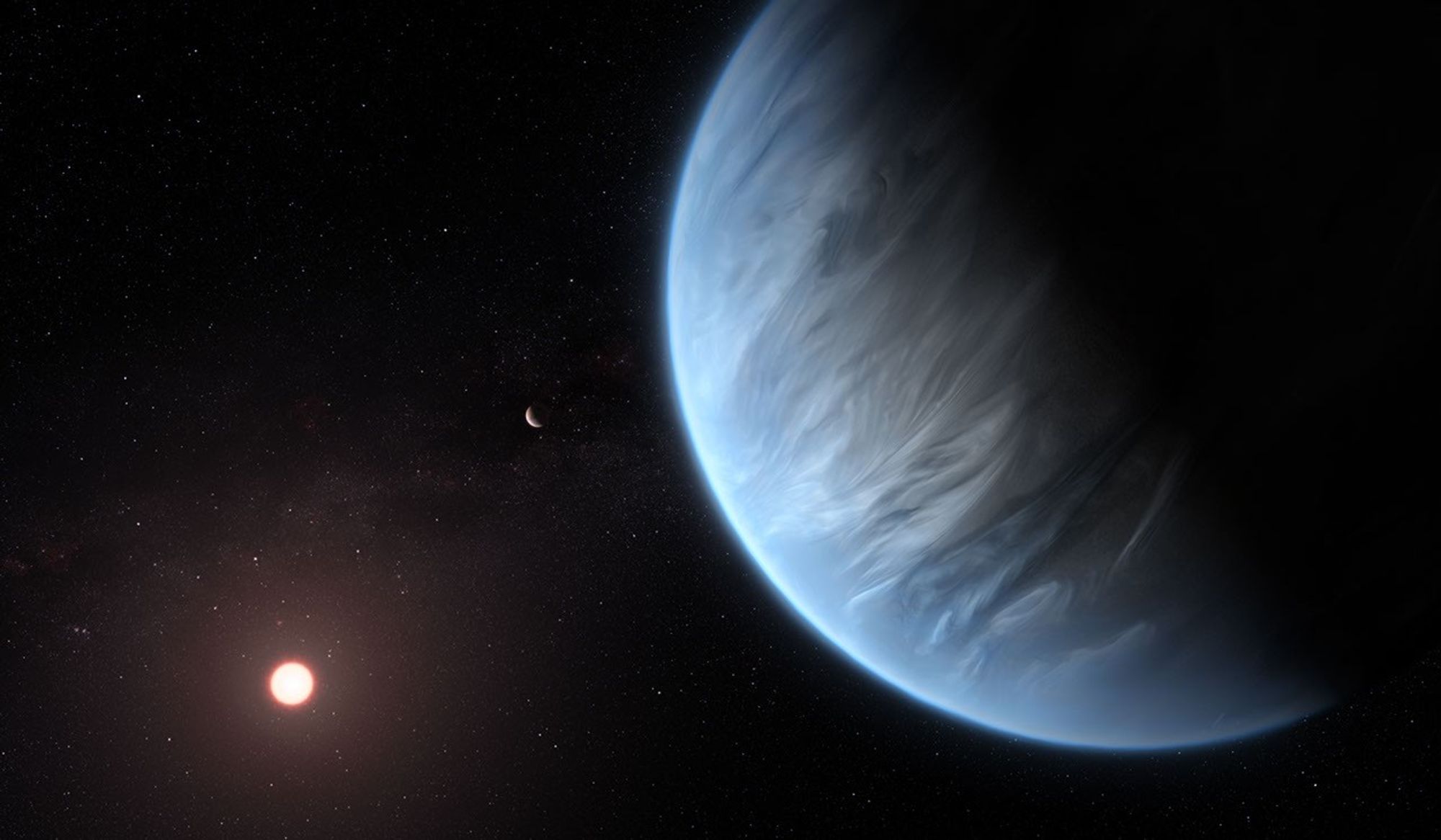
Last week, a team of astronomers ignited global headlines by announcing the "strongest evidence yet" for life beyond our solar system, ushering in what appears to be the latest chapter in humanity's search for aliens — but is it?
The team's findings, based on their analysis of James Webb Space Telescope (JWST) data, point to an abundance of dimethyl sulfide (DMS) molecules in the atmosphere of a planet known as K2-18b, which circles its star about 120 light-years from Earth in the Leo constellation. Because DMS is almost exclusively produced by life forms like marine algae on Earth, astronomers consider it a potential "biosignature" in the search for life — past or present — elsewhere in the universe. According to Nikku Madhusudhan of the University of Cambridge and his colleagues, the best explanation for the presence of these molecules — DMS and its chemical cousin dimethyl disulfide, or DMDS, which is also a potential biosignature — on K2-18b is therefore that the planet could be an ocean world "teeming with life."