
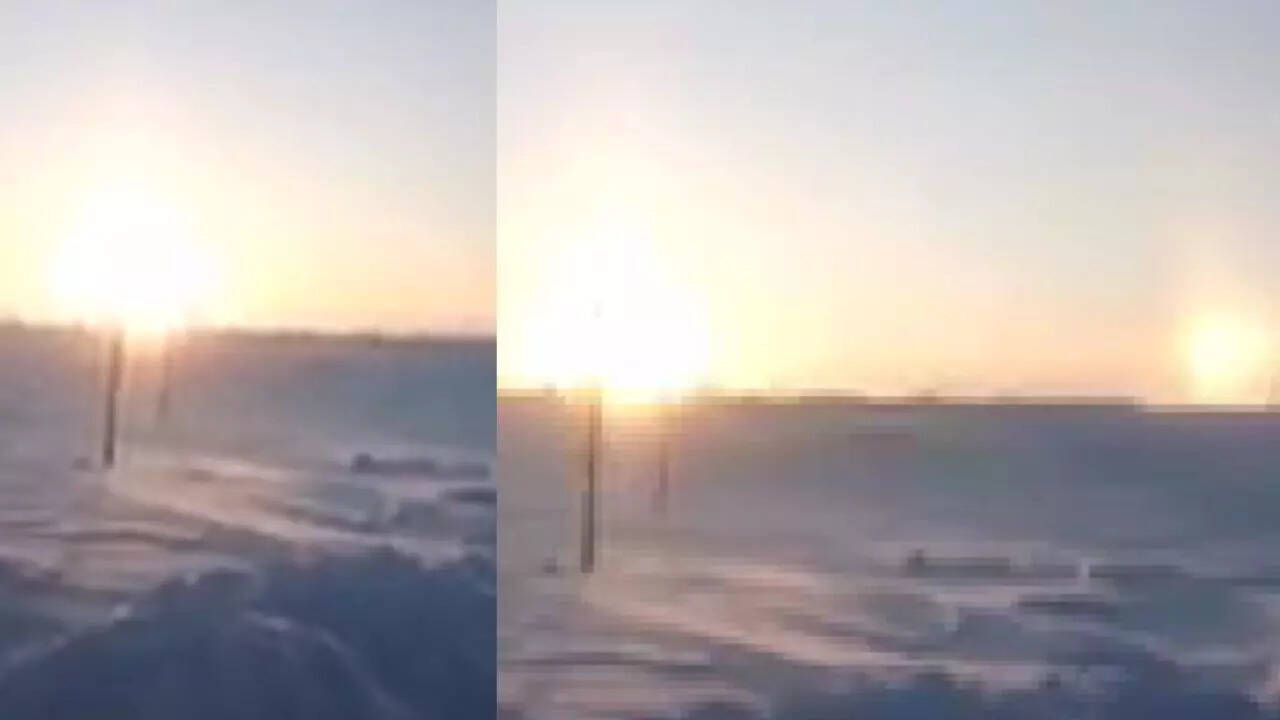
Residents of Russia's Sakhalin region were treated to a surreal sight recently: what looked like two suns rising side by side in the morning sky. The breathtaking view quickly went viral on social media, but it's not some sort of celestial aberration-it's an atmospheric optical phenomenon known as a sundog. Sundogs, also referred to as mock suns or parhelia, form when sunlight intersects with hexagonal ice crystals that hang suspended in the atmosphere, most commonly in high cirrus clouds or as diamond dust under extremely cold conditions. When the sun's rays pass through and are refracted by such crystals, they create bright, often colorful spots flanking the real Sun. Though unusual and striking for the ordinary observer, sundogs are well-known to scientists, offering a stunning demonstration of the ways in which light and ice can transform the sky for a time.















